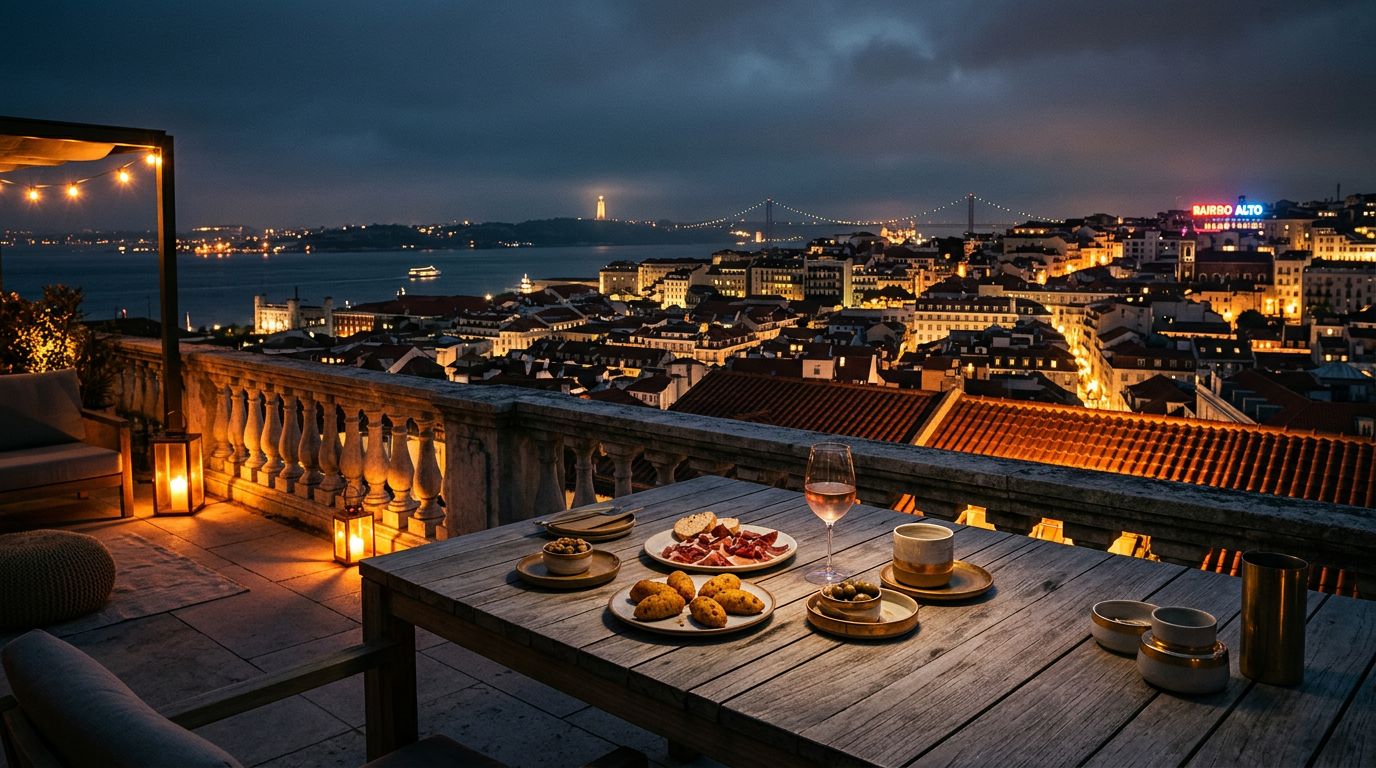
When you decide where to stay in Lisbon for nightlife, you are essentially choosing between a perfect evening and a long uphill walk home through the historic center. That is the whole game.
If food matters as much as the bars, your choice of neighborhood changes everything. One area provides rooftops and cocktails. Another offers packed lanes, loud bars, and a 4 a.m. snack. A third is defined by long dinners and the promise of a quiet night of sleep.
Pick your base with intention. That is when Lisbon starts working for you, rather than against you.
Key Takeaways
- Prioritize location over luxury: When planning a nightlife-focused trip, choose your neighborhood based on your desired nocturnal rhythm rather than hotel star ratings.
- Balance energy with sleep: Areas like Bairro Alto offer immediate access to the party scene, but staying in a nearby district like Cais do Sodré provides better sleep while remaining within walking distance of the action.
- Match the neighborhood to your pace: Choose Chiado or Principe Real for elevated dining and cocktail lounges, or head to Alfama and Graca for a traditional, lower-key experience.
- Understand the terrain: Lisbon’s hills and cobblestones are challenging late at night; choosing a base near transit or your primary dining spots prevents long, exhausting walks home.
Pick the neighborhood before you pick the hotel
If you are planning your stay in Lisbon around nightlife, do not start your search by looking at hotel star ratings. Instead, start with your midnight habits. Do you want to bar-hop on foot, catch live music, and grab late food without thinking? Or do you prefer one great dinner, one sharp cocktail, and a calm walk back to your room?
Lisbon looks compact on a map, but it feels much larger after dark. The hills are real, and the cobblestones will slow you down. Relying on public transport can be tricky late at night, and your legs will likely be tired after a day of climbing. While some travelers prefer to save money on a hotel across town, doing so often increases your spending on taxis and adds exhaustion to your trip. Choosing a property near a metro station or within walking distance of your preferred spots is the best way to maximize your time. Whether you seek vibrant hostels or the quiet comfort of luxury hotels, proximity is the ultimate amenity.
The best place to stay in Lisbon for food and nightlife is the area that fits your pace, not the one with the loudest reputation.
Here is the quick read:
| Area | Best for | Food scene | Night scene | What to know |
|---|---|---|---|---|
| Bairro Alto | Bar-hopping till late | Casual tascas, petiscos, late bites | Packed bars, street energy | Loud, steep, messy by design |
| Cais do Sodré | Clubs and live music | Seafood, trendy dining, market grazing | Pink Street, late bars, Musicbox | Tourist-heavy in spots |
| Chiado / Principe Real | Dinner-first nights | Strong restaurant scene, wine bars, cafes | Rooftops, cocktails, polished lounges | Higher prices |
| Alfama / Graca | Traditional evenings | Portuguese classics, taverns | Fado, mellow bars | Quiet after midnight |
| Campo de Ourique / Marvila | Food-led stays | Markets, bakeries, creative dining | Low-key in Campo, alternative in Marvila | One is calm, one is off-center |
Bairro Alto and Cais do Sodré are the top choices if nightlife is your main event. Chiado and Principe Real are better if you want style, strong restaurants, and sophisticated options after dark. Alfama, Graca, and Campo de Ourique fit travelers who want local flavor without the all-night soundtrack. Marvila is the wildcard, especially if warehouse venues, breweries, and newer creative spots are more your speed. Regardless of your choice, picking a base in Cais do Sodré or Bairro Alto puts the city’s energy right outside your door.
Bairro Alto and Cais do Sodre if you want nights that run late
Bairro Alto is noisy, fun, and built for wandering
If your idea of a good night involves grabbing a cold Super Bock and seeing where the evening leads, stay in Bairro Alto. This is Lisbon’s classic after-dark maze. The neighborhood is defined by its narrow streets where small bars spill out onto the pavement and people socialize well into the early hours. The energy here starts late and stays late.
Food in Bairro Alto is often better than people give it credit for, especially if you enjoy unfussy Portuguese spots, local petiscos, and late-night snacks rather than polished tasting menus. It is not necessarily where I would stay for the biggest formal dinner of your trip, but it is the perfect location if you want your dinner to flow seamlessly into whatever nightlife happens next.
The trade-off is sleep. If you are a light sleeper, do not try to talk yourself out of that reality. You need real soundproofing or a hotel on a quieter edge of the neighborhood. In 2026, Bairro Alto remains the undisputed center of bar-hopping in Lisbon because the formula still works for travelers who want to be in the middle of the action.
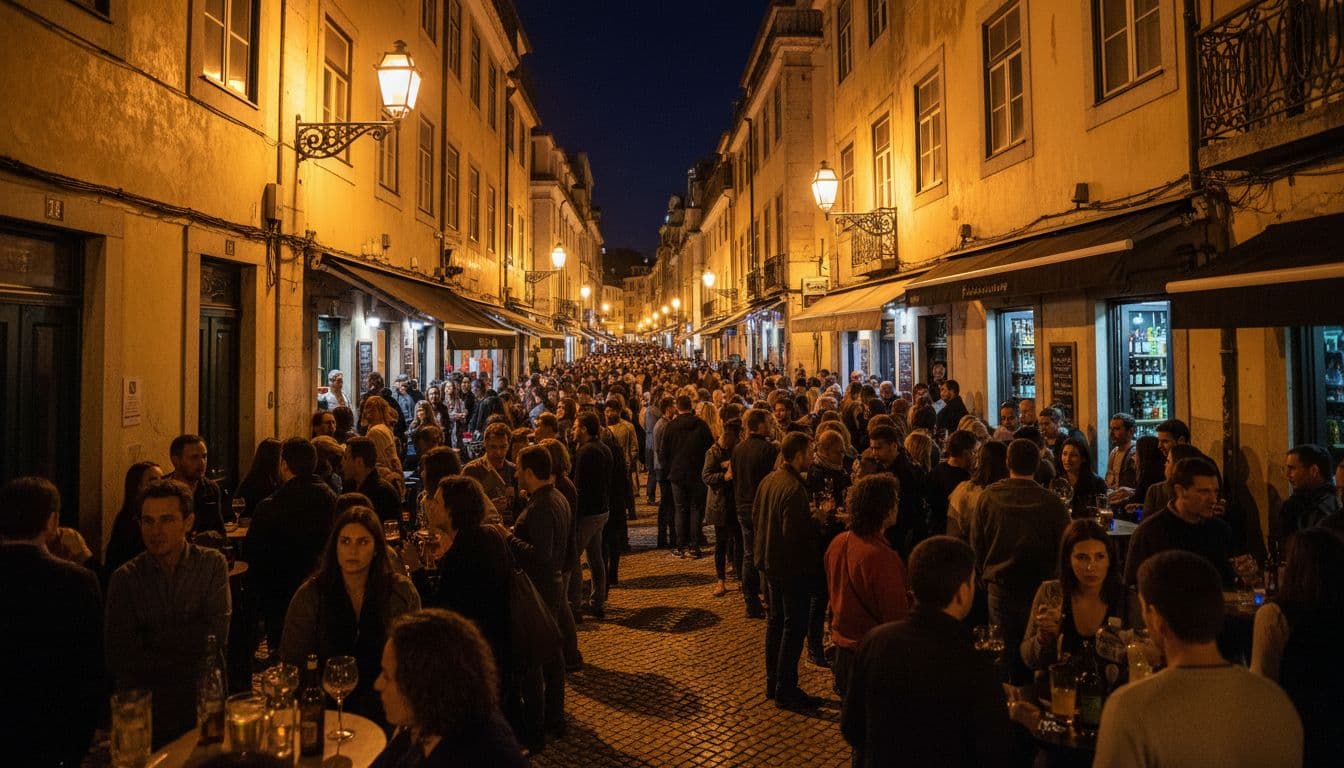
This guide to favorite Lisbon neighborhoods makes the same call. If nightlife is the primary reason you are visiting, Bairro Alto keeps you at the heart of the city.
Cais do Sodre gives you more range
Cais do Sodré is the better move if you want a vibrant nightlife scene, but also desire more variety. Situated right along the Tagus River, this area provides excellent transit connections, strong dining options, and faster movement between different scenes. Pink Street is the famous headline, of course, but the bigger advantage here is the range of experiences. You can start with fresh seafood or a lap through the Time Out Market, move into craft cocktails, catch live music at a local venue, then grab a bifana on the way home.
Music matters here. Venues like Musicbox anchor the late-night scene, and the area surrounding it attracts people who want more than just pub-crawl energy. If a night at the iconic club Lux Fragil is on your list, Cais do Sodré is a much simpler launch point than staying higher up in the hills.
This is one of the smartest answers if you want to stay in Lisbon for nightlife without living inside constant street noise. To get the best of both worlds, book a hotel a block or two away from the main hub of Pink Street rather than right on it. You get the same easy access, but with much better sleep.
Chiado and Principe Real for great meals and better balance
Some trips aren’t about max volume. They’re about the long dinner, the second bottle, the rooftop view, and one last drink somewhere that knows what it’s doing. That is where Chiado and Principe Real shine.
Chiado works well if you want a central base with easy reach to Baixa, Bairro Alto, and Cais do Sodre. It is polished without feeling stiff. You can have a serious dinner, walk to one of the city’s popular rooftop bars like Park or TOPO Chiado, then decide if the night keeps going. That flexibility matters, and because many of the best boutique hotels in the city are tucked into these historic streets, you are never far from luxury.
Principe Real feels a little more local, a little more dressed-up, and often a little pricier. The restaurant mix is strong, and the local selection of Portuguese wine is second to none. The nightlife here is defined by intimate cocktail bars and sophisticated rooftop bars that offer a more refined experience. In 2026, the Lisbon night scene still leans toward elevated views and speakeasy-style rooms, and this part of town fits that shift better than the louder districts. If a tucked-away wine bar sounds better than shoulder-to-shoulder crowds, this is your zone.

Photo by Jean Lorilleux
For first-timers, this local guide to where to stay in Lisbon points to Baixa and Chiado as easy central bases. I agree on Chiado. Baixa is convenient, but if food and nightlife are your focus, it can feel like you are staying next to the action instead of in it, whereas Chiado puts you right at the heart of the culinary scene.
Choose Chiado or Principe Real if your trip is restaurant-first and nightlife-second. You still get the city at night, but you get a much better mattress afterward.
Alfama, Graca, Campo de Ourique, and Marvila for more specific moods
Not everyone wants Lisbon after dark to feel like a party.
Alfama is for travelers who want the historic center of Lisbon at night, not the loud version. Think Fado houses, small taverns, and narrow stairs that make you feel like you are traveling back in time. You can navigate these steep hills by jumping on the iconic Tram 28, which adds to the charm of the area. Dinner can be excellent here, especially if you want traditional Portuguese cooking and a strong sense of place. The trade-off is range, as your options for late night dining narrow fast after midnight unless you head toward the nearby Santos neighborhood for a more vibrant scene. Many digital nomads choose to base themselves here for a while to enjoy the authentic atmosphere.
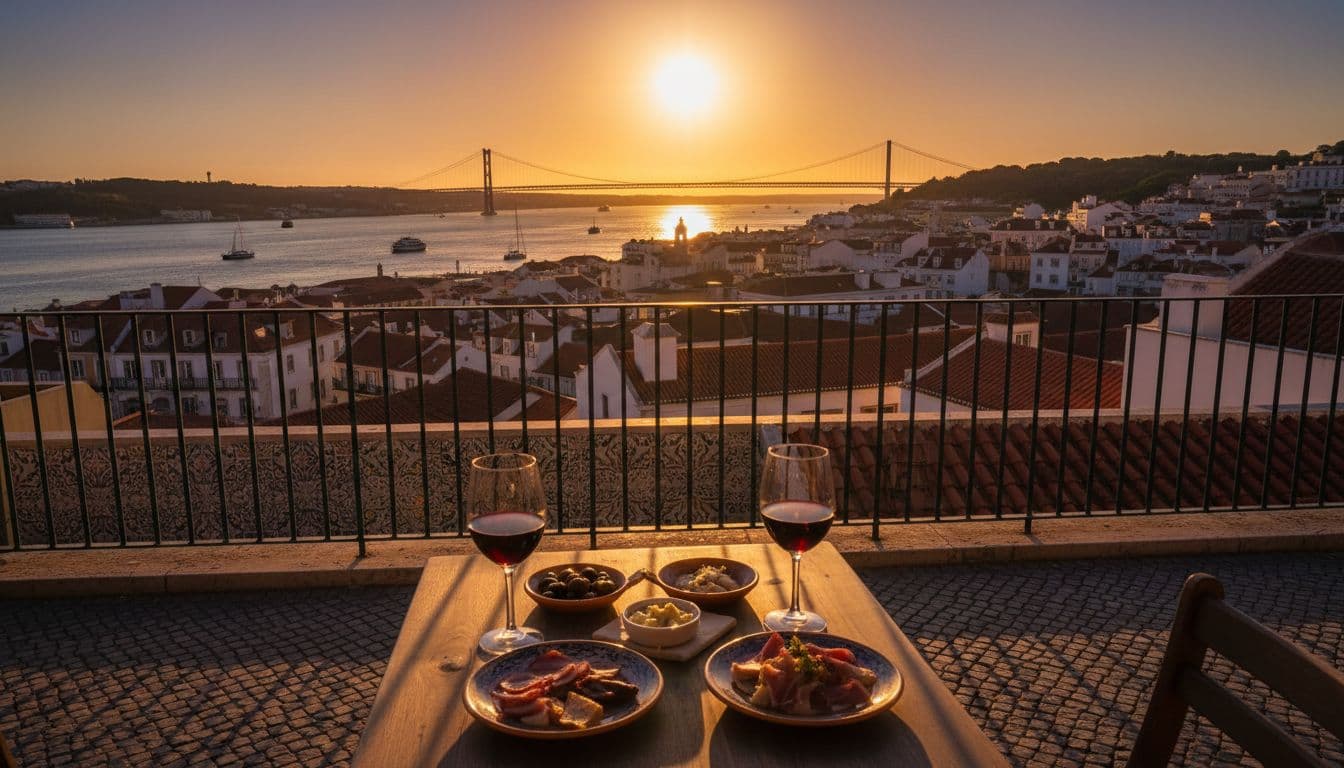
Graca gives you a similar feel with a bit more breathing room. It works well if local Miradouros, neighborhood bars, and lower-key evenings sound right. You are still close enough to reach the busier parts of town, but you can enjoy incredible sunset views without stumbling into the tourist crowds on your way home.
Campo de Ourique is the sleeper foodie pick. It does not have much nightlife by Lisbon standards, and that is the point. Markets, bakeries, casual restaurants, and a local rhythm carry the stay. In this traveler discussion on Campo de Ourique for food lovers, people praise it for exactly that reason. Stay here if food is the anchor and nightlife is optional, not essential.
Then there is Marvila. If old-school nightlife is Bairro Alto, Marvila is the newer cousin in a warehouse jacket. Think breweries, industrial spaces, creative restaurants, and more alternative nights out. It is one of the city’s rising after-dark areas in 2026, along with nearby Alcantara, but it is not the easiest base for a first trip. I would choose it if you have been to Lisbon before, or if you care more about the creative scene than the postcard aesthetic of Alfama.
This is where a lot of people get stuck. They ask for the best area when Lisbon is really a set of moods. Fado houses and stone lanes, rooftops and cocktails, loud bar streets, or late clubs. Whether you want market lunches or a spot with great late night dining, pick the mood first, then pick the room.
Frequently Asked Questions
Is it safe to walk home late at night in Lisbon’s nightlife areas?
Yes, Lisbon is generally very safe, even after dark in busy neighborhoods like Bairro Alto and Cais do Sodré. It is always wise to remain aware of your surroundings, especially in crowded areas or when navigating the steep, dim streets of the older districts.
Can I rely on public transport to get home after a night out?
While Lisbon has a functional metro and bus network, many lines have limited service in the deepest hours of the morning. Taxis and ride-sharing apps like Uber or Bolt are affordable and highly recommended for getting back to your accommodation safely and comfortably after a late night.
Which neighborhood is best for a first-time visitor who wants a bit of everything?
Cais do Sodré is an excellent choice for first-timers because it sits at the intersection of transit hubs, diverse dining, and iconic nightlife. It offers a perfect middle ground between the intense energy of Bairro Alto and the more polished, sophisticated atmosphere found in Chiado.
How steep are the hills in the nightlife districts?
Lisbon is famously hilly, and the elevation changes are significant in neighborhoods like Bairro Alto and Alfama. If you have mobility concerns or prefer not to climb steep inclines after a night of drinking, look for accommodation in flatter areas like Baixa or along the waterfront in Cais do Sodré.
Final thoughts
The right Lisbon base can make the whole trip click. Pick the wrong one, and every dinner ends with a climb, a cab, or a compromise.
If food and late nights are your priority, Cais do Sodre is the safest all-around bet, offering peace of mind regarding safety at night. Choose Bairro Alto if you want pure bar energy, Chiado or Principe Real if you want stronger restaurants and better balance, and Alfama, Graca, Campo de Ourique, or Marvila if you already know the kind of night you are chasing.
Keep in mind that your location also dictates your transit options. Selecting a central base near major rail hubs makes it much easier to organize a Sintra day trip or head to the Cascais beaches for a quick escape. Lisbon does not need a perfect plan. It just needs the right neighborhood. After that, the city does a lot of the work for you.