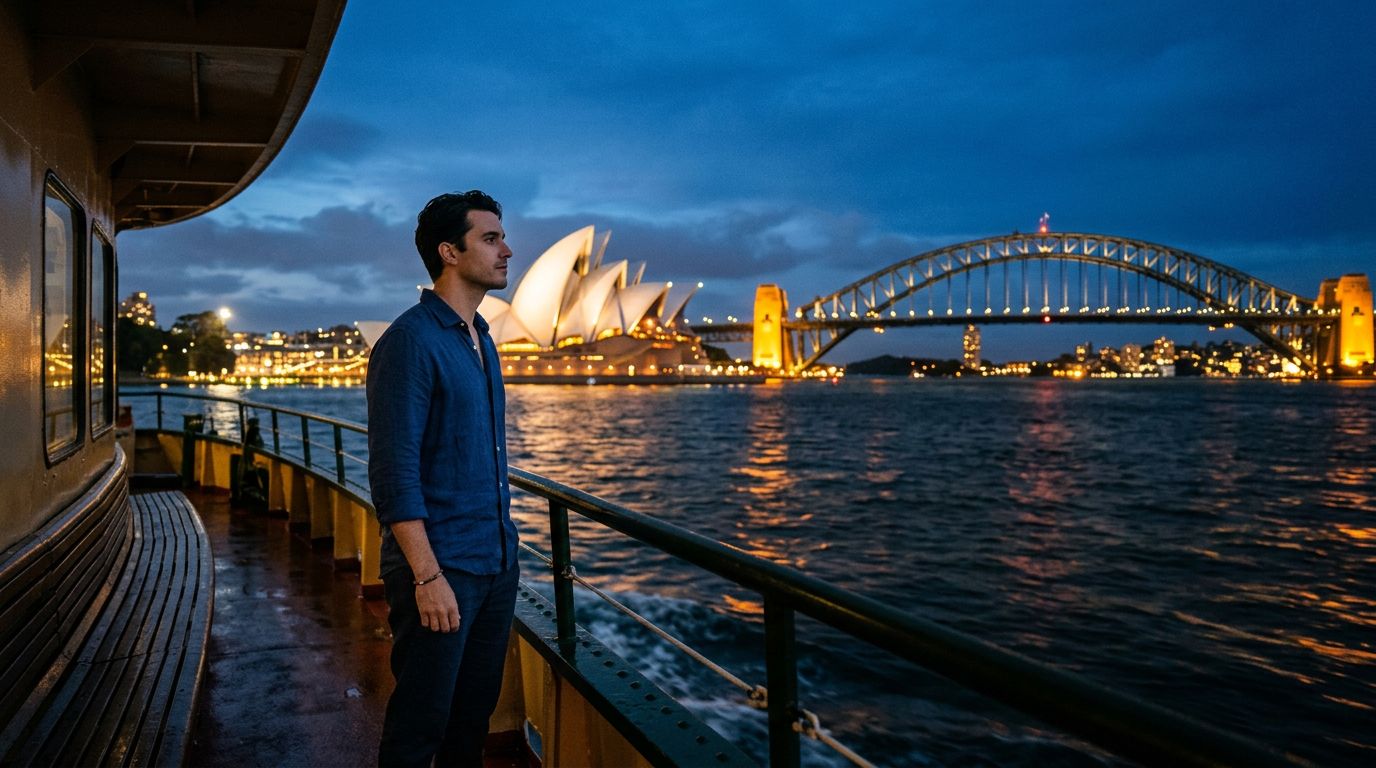
The quickest way to ruin Sydney is to treat it like a driving city. You can spend half a day in traffic, miss sunset, then arrive at dinner already irritated.
Done well, Sydney without a car feels loose in the best way. Around Sydney Harbour, ferries from Circular Quay replace stressful drives, beach walks lead into long lunches, and a late night does not need to end with a search for parking.
I keep the rule simple: cluster each day around one area, one proper meal, and one easy route home.
Key Takeaways
- Stay near the CBD, Circular Quay, Central Station, or Surry Hills to keep trains, ferries, restaurants, and late-night routes close.
- Use one Opal card or contactless payment method throughout the day, and remember to tap on and off when required.
- Build beach days around one stretch of coast, such as Bondi to Coogee, Manly, or Watsons Bay, instead of trying to cover them all.
- Keep nightlife in one neighborhood and plan the route home before the first drink, especially around Surry Hills, Newtown, or Enmore.
- The Blue Mountains are the easiest car-free day trip by train, while Jervis Bay, Hunter Valley, and Royal National Park need more planning or organized transport.
Choose a Hotel Base That Protects Your Evenings
Sydney is big enough to punish a scattered itinerary. A hotel that looks cheap on a map can become expensive once you add late rides, missed ferry connections, and the energy you lose crossing town before dinner.
For a first visit, I would prioritize a hotel near the city center, on the CBD edge, in Surry Hills, or near Circular Quay. You want trains, ferries, and strong dinner options close by.
Circular Quay and The Rocks for harbor access
Circular Quay works when Sydney Harbour is the point. You can walk to the Opera House, board a Manly or Watsons Bay ferry, have breakfast in The Rocks, and get home after a waterfront dinner without making the city work too hard.
The Rocks has more heritage, tourist energy, and postcard views. That is not a bad thing when it is your first Sydney morning. The trick is to use it as an opening scene, then move into a more local neighborhood later.
Surry Hills for better nights out
Surry Hills is the stronger base if food, bars, and live music matter as much as the harbor. Central Station is close, the airport train is easy, and you can walk into the CBD or catch a quick train toward Newtown.
Bondi is tempting, especially for beach-first trips. Still, staying there means buses for most cross-city plans and a longer ride home after a city dinner. I would stay central, then give Bondi a full day.
A hotel within 10 minutes of your final drink is usually worth more than a larger room across the city.
Read recent reviews for street noise, air conditioning, and whether the room faces a busy road. Sydney knows how to stay out late.
Landing in Sydney: Start Clean
Sydney Airport is well connected by public transportation, but the first decision sets the tone. Sort out your Opal card payment before you land, know your hotel station, and understand your public transport options. Don’t turn arrival day into a transfer puzzle.
The Airport Link is fast, not cheap
The Airport Link is the cleanest move for most central hotels. For a hotel near the city center, public transport is the cleanest arrival choice. Trains reach Central Station in roughly 15 minutes, then continue through City Circle stations such as Town Hall, Wynyard, and Circular Quay.
The catch is the airport station access fee. It sits on top of the normal train fare, so an adult airport-to-CBD trip is commonly around A$22 one way. The airport charge also sits outside the usual daily and weekly travel caps, as Transport for NSW explains on its adult Opal fare page.
If you are staying near Central, Surry Hills, the CBD, or Circular Quay, take the train. It is faster than sitting in traffic after a long flight.
When a taxi or rideshare makes more sense
A taxi or Uber is right for three people splitting the fare, a very late arrival, lots of luggage, or a hotel in an awkward beach-side location. Plan on roughly A$55 to A$75 for a CBD taxi ride, though traffic, tolls, and pickup conditions can move that number.
Route 420 is the cheaper public option when you want to avoid the airport rail charge. It can be useful within the wider transport network, but it is not an express service. After an overnight flight, saving money is not always the same as making the right call.
Use Opal and contactless payments the Right Way
Sydney’s public transport network is easy once you stop overthinking it. Metro, trains, buses, ferries, and light rail all run through the Opal network.
Visitors can pay with an Opal card, a contactless debit or credit card, or a linked phone or watch. Transport for NSW lays out the current visitor payment options, including where each method works.
Tap with one device all day
Pick one payment method and stick with it, using the same Opal card or payment token throughout the day. Your physical card and the same card loaded into Apple Pay or Google Pay count as different payment tokens. If you tap in with one and out with another, the system cannot match the journey correctly.
That small detail matters. So does tapping on and off whenever the service requires it. Miss the tap-off, and you can be charged a default fare.
Fares are distance-based and change periodically. Check the current fare and payment rules before the trip instead of building your budget around an old blog post.
Let transit make clean jumps
Trains handle the big moves across the train network, with Central Station a useful starting point. Ferries handle the memorable ones. Buses are the useful but less glamorous links between Bondi Junction, Coogee, beach neighborhoods, and rail stations.
Use the Transport for NSW Trip Planner each morning, especially for Sunday service, ferry service changes, and outer-suburb buses. It can also compare walking, rideshare, and public transit.
My rule is simple: walk when the streets are part of the experience. Take public transit when it puts you directly into the next good part of the day.
Build Beach Days Around One Stretch of Coast
Sydney beaches are not a quick photo stop between museums. Give them room. The best beach day has salt in the air, enough time for swimming, coastal walks, a proper lunch, and no pressure to rush across town afterward.
Bondi to Coogee is the full-day move
Take the train to Bondi Junction, then the bus down to Bondi Beach. Start with coffee, walk the sand, and head south on the Bondi to Coogee Coastal Walk.
The full route is about six kilometres, but there is no prize for racing it. Stop at Bronte, take a swim if conditions look good, and let the light decide your pace. Coogee is a natural finish because you can catch a bus back toward the city.
August water is cold, but the coastal walk still lands. Bring a layer for late afternoon. Sydney winter sun can look perfect, then the wind arrives.

Photo by Talha Resitoglu
Pick Manly or Watsons Bay, not both
Manly is one of the best arguments for leaving the car behind, and an easy introduction to the Northern Beaches. Take the public ferry from Circular Quay, stand outside for the harbor ride, then walk through town to Manly Beach or Shelly Beach.
Watsons Bay has a different mood. The ferry is shorter, the views at South Head are bigger, and the day feels more like a harbor escape than an ocean-beach mission.
Do not try to stack Manly, Watsons Bay, and Bondi into one day because they all involve water. They are separate experiences. The Sydney transport overview is useful for checking ferry and bus connections before you leave the hotel.
Let Seafood Set the Pace of the Day
Sydney has no shortage of seafood, but location matters. The best meals feel connected to where you have been, not like a random reservation dropped into the schedule.
Start with one harbor meal. Make it count.
The Rocks and Barangaroo for a polished lunch
The Rocks Cafe works for an early harbor breakfast before a ferry or a waterfront walk. If you want a quick CBD coffee before a train day, Bowery Lane opens early and keeps the morning moving.
For a longer seafood lunch or dinner, Harbourfront Seafood Restaurant sits in the historic Campbell’s Stores precinct near The Rocks. It is a good call when harbor views are part of the meal, not a background detail.
Barangaroo gives you a cleaner, more modern waterfront mood. love.fish Barangaroo is the better fit for travelers who want seafood without turning dinner into a formal event. Book ahead for Friday or Saturday nights.
Match dinner to the day you had
After Bondi to Coogee, keep dinner close to your hotel or on the eastern side of the city. You will be tired, probably windblown, and not in the mood for two trains and a bus.
After a Manly ferry day, return to Circular Quay for a city center dinner. You are already back on the harbor. Let the ferry deliver you toward dinner.
One serious seafood reservation is enough for a short trip. Leave the other nights open for neighborhood restaurants, wine bars, and whatever you find when the plan has room to breathe.
Keep Sydney Nightlife in One Neighborhood
Sydney’s nightlife has range, but the best nights aren’t built by hopping between distant districts. Pick a lane, book dinner nearby, and know how you’re getting home before the first round arrives.
Surry Hills for cocktails and live music
Surry Hills is a polished choice when you want dinner, a serious cocktail, and a late room without a huge commute. Soultrap Bar has the hidden-speakeasy feel and is open Tuesday through Saturday from late afternoon.
The Soda Factory, on Wentworth Avenue, works when live music is part of the night. It opens Tuesday through Sunday and runs late, with an American-diner setup that makes it easy to start casual and stay longer.
Check the venue calendar before locking dinner. A 7:00 p.m. booking is a better concert-night plan than an ambitious 9:00 p.m. table.
Newtown and Enmore for more local energy
Take the train from Central Station to Newtown when you want record stores, smaller bars, looser dinners, and a crowd that feels less polished. Enmore Theatre is within walking distance of Newtown station, which makes the area strong for a show night.
The neighborhood doesn’t need an overbuilt plan. Grab an early dinner, leave time for the walk to the venue, and keep one nearby bar in reserve afterward.
The same rule applies to every city with a good music scene: one neighborhood, one good meal, one show or bar, one easy route home. For more of that approach, planning travel around live music keeps the night from taking over the entire trip.

Photo by Talha Resitoglu
Take Car-Free Day Trips With Honest Expectations
You can leave Sydney without renting a car. Choose trips that fit rail and ferry connections rather than pretending every trailhead and vineyard is equally accessible.
The Blue Mountains work by train
This is the cleanest full-day escape. Intercity trains leave Sydney at least hourly and take around two hours to reach Katoomba, according to Transport for NSW’s Blue Mountains train guide.
From Katoomba Station to Echo Point is about 2.5 kilometres. It is manageable on foot, but the return climb can feel long after a full morning. Use a local bus or taxi if you want to save your legs for lookouts and trails.
Start early, check the weather, and don’t pair this with a big late-night plan. The Mountains deserve the day.
Royal National Park needs more intention
Royal National Park is possible without a car, but it is less forgiving. One workable route is the train to Cronulla, then the ferry across to Bundeena. From there, you can access coastal walks and quieter stretches of bushland.
The train gets you toward the park. It doesn’t solve every trailhead, changing weather condition, or return connection. If your group wants a serious hike, remote beaches, or a trail that starts and ends far apart, a guided trip or private driver may be the better use of money.
Jervis Bay needs more planning
Jervis Bay is possible without a car, but the distance makes it a different kind of outing.
The South Coast Line can take travelers toward the South Coast, but it doesn’t deliver them directly to Jervis Bay. Check the South Coast Line timetable and your onward connection before committing.
The distance to Jervis Bay may justify an overnight stay. An organized day tour to Jervis Bay can simplify a single-day visit.
Organized tours can remove much of the transfer and timing work on the longer trip.
If you choose Jervis Bay, treat it as a dedicated outing and confirm the return connection before leaving.
Hunter Valley takes more coordination
Hunter Valley is possible without a car, but the logistics make it less flexible than a city outing.
Reaching Hunter Valley means coordinating regional connections, winery transfers, and return times. Pre-arranged tours are the practical choice for visitors who don’t want to manage those connections themselves.
Treat Hunter Valley as a dedicated outing, and check pickup times, return arrangements, and booking requirements in advance.
The public transport network is excellent for Sydney’s core. Public transit works well on selected regional routes, but it won’t solve every trailhead or return connection. Respect the distances.
A Four-Day Sydney Itinerary That Flows
A great Sydney trip should not feel like a transit challenge. This four-day shape keeps the geography tight and gives food and nightlife the room they deserve.
| Day | Daytime plan | Night plan |
|---|---|---|
| 1 | Airport Link, hotel reset, The Rocks and Circular Quay walk | Sydney Harbour seafood dinner, then drinks near the hotel |
| 2 | Bondi to Coogee Coastal Walk with time for Bronte and Coogee | Relaxed dinner in Surry Hills or the CBD |
| 3 | Manly ferry, beach time, Shelly Beach, then return by water | Newtown or Enmore dinner and a live show |
| 4 | Blue Mountains by train, or Watsons Bay and South Head if you want a lighter day | One final dinner within walking distance of your hotel |
The key is not doing every beach or squeezing in too many day trips. It is giving the right beach enough time. On a three-night trip, I would choose Manly or the Blue Mountains, not force both.
With extra nights, consider Jervis Bay or Hunter Valley as a longer regional excursion. Jervis Bay needs more transfer planning, while Hunter Valley is easier with organized tours. Choose one, since either option can take time away from Sydney.
With an Opal card, allow A$20 for weekday public transit in the city center, plus the airport train. Add a taxi budget for one late night or a difficult hotel transfer. Ferries are part of the experience, so do not treat them as an unnecessary splurge.
For birthdays, group trips, or a schedule built around a concert, tailored food and nightlife itineraries can put hotel selection, ferry timing, tables, show tickets, and backup plans into one clean trip.
Frequently Asked Questions
Is Sydney easy to visit without a car?
Yes, especially if you stay near the CBD, Central Station, Circular Quay, or Surry Hills. Trains, ferries, buses, and light rail cover the main city areas, while rideshares can fill the gaps late at night.
Where is the best area to stay without a car?
Circular Quay and The Rocks are best for harbor access, while Surry Hills is stronger for restaurants, bars, and live music. A central hotel also makes airport transfers and evenings much simpler.
What is the easiest way to get from Sydney Airport to the city?
The Airport Link is the fastest and cleanest choice for most central hotels, with trains reaching Central Station in roughly 15 minutes. The airport station fee makes it relatively expensive, so a taxi or rideshare can make more sense for groups, late arrivals, or hotels in awkward locations.
Which Sydney beach day is best without a car?
Bondi to Coogee is the strongest full-day option, combining public transport, swimming, coastal walks, and easy bus connections home. Choose Manly or Watsons Bay instead if you want a ferry-centered harbor day.
Can I take day trips from Sydney without renting a car?
The Blue Mountains are the simplest major day trip, with regular trains to Katoomba taking around two hours. Royal National Park, Jervis Bay, and Hunter Valley are possible but need more careful connections, an organized tour, or extra time.
The Sydney You Will Remember
A car-free Sydney trip works because the city already gives you the right ingredients. A ferry can become your harbor cruise. A bus ride can end at Bondi. One train can take you from a late night in Newtown to a quiet hotel room near Central.
Keep the plan tight. Give each day one anchor, one neighborhood cluster, one meal worth dressing up for, and one easy way home.
The best Sydney itinerary is not the busiest one. It is the one that leaves you with ocean air, a great seafood dinner, and enough energy to say yes when the night gets good.