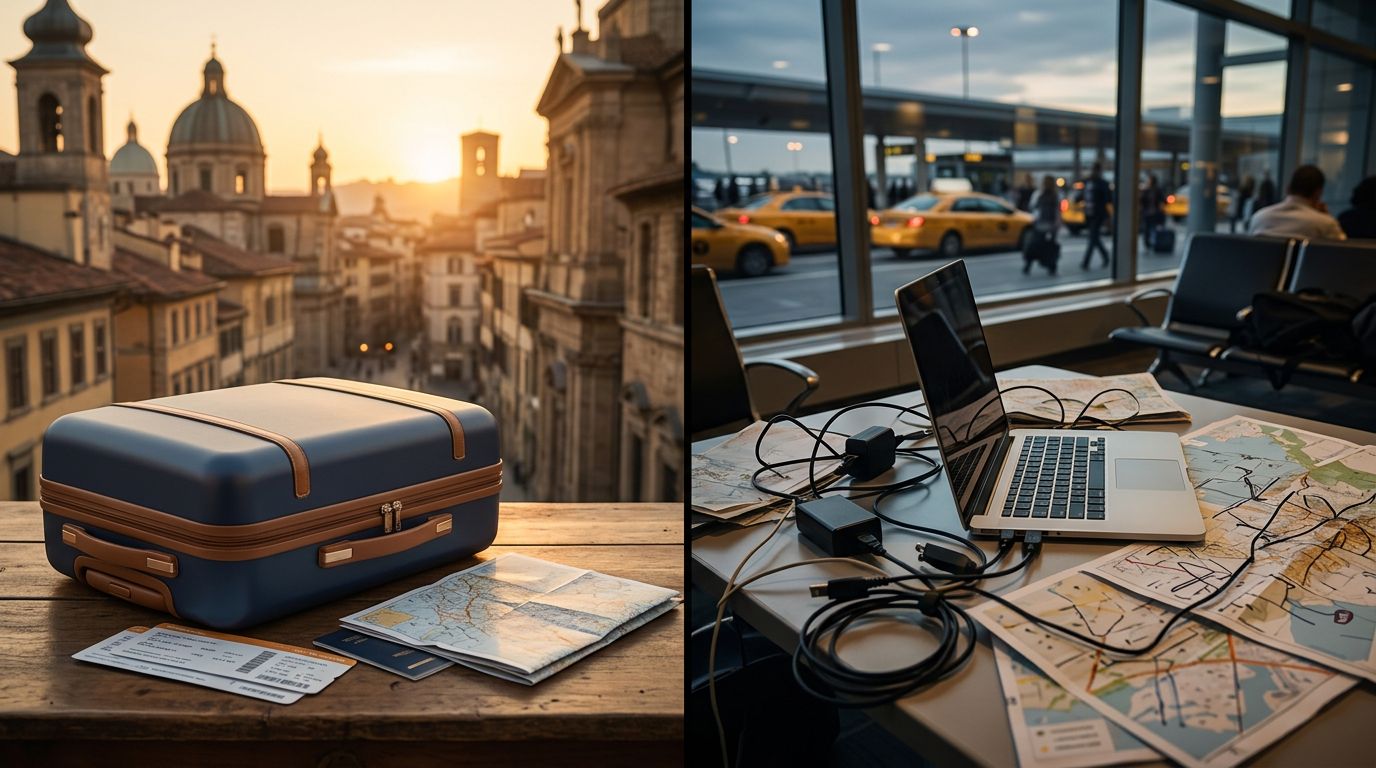
Complex trips rarely fall apart because of one bad hotel choice. They unravel in the gaps: a late arrival that kills dinner, a concert venue across town, a transfer that looked easy on a map, or a packed day that leaves no energy for the part you came to experience.
DIY booking is perfect for a clean, low-stakes getaway. A custom travel planner earns their place when the trip has real moving parts and you want every part to feel intentional.
The question isn’t whether you can book it yourself. It’s whether you want to spend your trip fixing browser-tab decisions. A personal travel planner can offer practical travel advice and handle the travel logistics.
Key Takeaways
- A custom travel planner is most valuable when a trip has multiple cities, fixed events, group needs, or logistics that need to work together.
- DIY booking is a smart choice for simple trips, especially when you enjoy researching, booking, and improvising along the way.
- A strong custom itinerary reflects your travel style, groups nearby plans, builds around non-negotiable events, and leaves room for unexpected discoveries.
- Planning fees vary by complexity and support, so ask what the planner will research, book, monitor, and handle if plans change.
- AI and DIY tools can help create a first draft, but current details, timing, neighborhood judgment, and disruption support still require careful review or human expertise.
When Professional Travel Planning Is Worth It
A personal travel planner isn’t for every trip. If you want a long weekend in a familiar city, one hotel, and no hard reservations, booking directly can be the right call.
The value shows up when one choice affects five others.
Your trip has too many moving parts
Multi-city trips, different arrival times, milestone dinners, sold-out events, family needs, and limited vacation days all raise the stakes. You need the hotel to work with the neighborhood. You need the dinner to work with the show. You need the flight arrival to leave enough room for the first night to still feel good.
A planner sees the trip as one connected experience. That practical travel advice matters when one decision affects flights, hotels, meals, and events.
That means looking beyond the property photos or the restaurant rating. Is the hotel a 12-minute walk from the venue? Does the neighborhood have a great coffee shop when you wake up late? Is there a backup bar nearby if your table runs long?
That work has a price. Travel Weekly reported that more than half of U.S. travel advisors charge fees, but pricing models vary. Fees can reflect research, booking management, revisions, and support.
DIY booking still has its place
Book it yourself when the plan is simple and you enjoy the process. A direct flight, two hotel nights, and a short list of places to eat does not need a heavy planning process.
DIY also works when you are happy to improvise. The trade-off is that you become the operations team. You handle the reservation changes, the transit questions, the closed restaurant, and the hotel that was technically central but nowhere near the evening you wanted.
For a trip that matters, that can be a lot to carry.
A custom itinerary should feel like you
A custom travel itinerary is not a spreadsheet with breakfast, lunch, dinner, and a few landmarks wedged between. It is the result of bespoke travel planning, with taste, pacing, and enough structure that you can stop thinking about logistics once you land.
Taste is more than a search filter
At 21, I circled the world on Semester at Sea, taking classes aboard a ship while seeing places I had only known from maps. I have traveled internationally every year since. As a personal travel planner, I learned something early: two people can visit the same city and have completely different trips.
One traveler wants a classic seafood lunch by the harbor. Another wants natural wine, a tiny listening bar, and a late set in a room with actual character, perhaps tucked off the beaten path. Both are right.
A good planner asks what you remember from your favorite trips. Maybe it is a cafe with locals in line, a dinner that ran long, a hotel with the right walk home, or hidden gems you found while wandering.
Sample itineraries help a prospective client evaluate a planner’s pacing and taste before deciding whether the approach feels right.

Photo by Nataliya Vaitkevich
The logistics should disappear into the background
The best plans make room for the details without making you stare at them all day. Depending on the scope, a strong itinerary can include:
- A day by day itinerary that groups nearby neighborhoods instead of sending you back and forth across town.
- Hotel research focused on accommodation options and your actual plans, not a generic list of highly rated properties.
- Restaurant recommendations, local recommendations, walking routes, transfers, and ticket reminders.
- Clear booking instructions or direct reservations for flights, hotels, tours, and ground transport.
- Rain options, late-night alternatives, and a backup plan when the original idea stops working.
Not every planner includes every item. That is why scope matters. A travel itinerary service might deliver a bespoke itinerary, while another may cover only research. Custom travel planning services should spell out what is being designed, booked, monitored, and supported before money changes hands.
Human Planner, DIY Booking, and AI Trip Planner
There is no reason to treat AI, DIY research, and human planning as enemies. Each has a different job.
| Trip Need | DIY or AI Can Help | A Human Planner Adds |
|---|---|---|
| A simple city break | Quick research, price checks, broad ideas from an AI trip planner | Better hotel and neighborhood judgment |
| A multi-city route | First-pass routing and option lists | Timing, booking coordination, practical pacing |
| An event weekend | Venue research and general suggestions | A full night built around the event |
| A disruption mid-trip | Re-searching alternatives | A person who knows the plan and can respond |
The best choice depends on how much uncertainty your trip can absorb.
AI is useful for the first draft, not the final call
ChatGPT, Mindtrip, Layla, and similar tools can move fast. An AI trip planner can turn dates, a destination, and a few preferences into a usable list of neighborhoods, restaurants, and rough daily ideas in minutes.
That is helpful for a first pass, but it isn’t the same as travel advice grounded in context.
AI can miss current hours, ticket rules, seasonal closures, neighborhood context, travel fatigue, or a restaurant that no longer fits the moment. Treat an AI trip planner’s output as a draft, not confirmation. Check official supplier sites before booking flights, hotels, visas, event tickets, and timed entries.
A plan is not ready because it looks full. It is ready when the reservations, distances, timing, and energy level all work together.
DIY booking works best with a clean brief
Even if you are booking it yourself, think like a planner. Use sample itineraries as a starting point, pick one main reason for each day, and keep the rest nearby.
A city is rarely improved by three museums, two cross-town transfers, and a reservation that starts 45 minutes after you arrive exhausted. You do not need every famous place. You need the right sequence.
What Custom Travel Planning Costs and Covers
The honest answer is that there is no standard per-day price. Some planners charge by trip length, others by complexity, and high-touch concierge work is usually priced as a broader project.
Custom vacation packages and luxury custom travel may be priced differently from a basic itinerary. Supplier coordination, premium properties, and high-touch support can change the total.
A five-day itinerary that costs $350 works out to $70 per day on paper. But a five-day trip across three cities can take far more work than a ten-day beach escape with one hotel.
Typical planning fee models
Published examples show how wide the range can be, so the figures below are illustrative rather than universal. Fora’s service-fee overview includes examples beginning around $50 for basic hotel or airline support and about $350 for a weeklong itinerary.
| Planning Scope | Common Fee Range | What Changes the Price |
|---|---|---|
| Travel consultation or simple booking help | $50 to $250 | Research depth and accommodation options |
| Custom itinerary planning | $100 to $500+ | Cities, revisions, and reservations |
| High-touch trip management | $600 to $4,000+ | Groups, premium stays, complex logistics |
For a complex Europe route, a multigenerational vacation, or a group trip with multiple rooms, budgeting $500 to $1,000 or more for planning is realistic. A travel advisor fee guide from Host Agency Reviews is a useful reminder that planning, air ticketing, and changes can be separate paid services, while commissions are handled separately.
Ask who actually makes the bookings
A travel advisor may book flights, hotels, transfers, transportation options, and experiences directly. Others design the itinerary, then provide booking links or supplier recommendations for you to purchase yourself. Many use a mix of both.
Ask four questions before hiring anyone:
- Which bookings will you handle directly?
- What will I need to book myself?
- Are reservation support and changes included?
- What happens if a flight is canceled or a hotel falls through?
Supplier commissions may support part of an advisor’s business, but they do not replace planning fees in every case. Travel advisor commissions vary by supplier and booking channel, which is another reason transparent pricing matters.
Complex Groups and Event Trips Need a Different Plan
Group travel planning isn’t one itinerary multiplied by eight people. It means coordinating different flight schedules, room preferences, budgets, energy levels, and opinions across multi-city trips.
Add a wedding, festival, conference, or concert, and the event becomes the fixed point around everything else.
Build the trip around the moment that cannot move
I’m a musician, and I still see about one concert a week. That has made me particular about music travel. A dinner reservation across town before a 7:30 p.m. show isn’t a plan. It’s a gamble.
Lock in tickets and venue logistics first. Then build the hotel, dinner, drinks, and transportation around that one night. The same principle works for festivals, sports, comedy, and major conferences.
For more practical ideas, start with this concert trip planning guide. The point is simple: the event should be the spine of the trip, not an afterthought squeezed between tourist stops.
Groups need choices, not chaos
Good group planning gives people room to opt in without breaking the whole day. That might mean a shared dinner with a flexible afternoon, two hotel room categories, or restaurant choices for different budgets. Transportation options can reflect mobility needs and whether everyone wants to travel together.
Start complex group trips weeks or months ahead, not because planning needs to feel formal, but because flights, room inventory, event tickets, and the best dining times disappear first. A planner can keep the details organized, send clear options, and stop one person from becoming the unpaid travel coordinator.
Start With a Better Travel Brief
Good vacation planning begins with better information, and the travel planning questionnaire isn’t busywork. It is where vague requests become a trip with a point of view.
Share the details that shape the experience
Before anyone starts booking, get clear on these questions:
- What dates are fixed, and where do you have flexibility?
- Who is traveling, including ages, room needs, mobility considerations, and arrival cities?
- What is the total comfort range for hotels, food, experiences, and transportation?
- What are your travel preferences and non-negotiables, whether that is a headline restaurant, beach time, a museum, or a live show?
- How do you want the trip to feel, and what is your travel style: slow and food-first, packed with culture, outdoorsy, nightlife-forward, or somewhere in between?
The more direct you are, the better the recommendations become. A personal travel planner can use the brief to tailor travel advice, not lock you into a rigid schedule. “We want authentic” is a start. “We want late dinners, strong coffee, small music rooms, and no tourist-trap meals” is a real brief.
Leave room for the part you cannot plan
A well-built day has one clear anchor and enough white space around it. You should have time for the wine bar you notice after lunch, the market stall with a line, or the walk that looks better than the route you saved.
Use public transit for clean jumps across town. Walk when the streets connect naturally. Take a taxi late when your feet are done and the night is still good.
The goal is not a packed calendar. It is a trip with flow.
Frequently Asked Questions
When should I hire a custom travel planner?
A custom travel planner is worth considering when your trip includes multiple cities, fixed events, group coordination, or several reservations that need to work together. For a simple getaway with one hotel and few commitments, DIY booking may be the better fit.
What does a custom travel planner actually do?
Depending on the service, a planner may research hotels, restaurants, transportation, experiences, and daily pacing, then book some or all of the arrangements. Always confirm which bookings, revisions, reservation support, and changes are included before hiring one.
How much does custom travel planning cost?
There is no standard price because fees depend on trip length, complexity, group size, and the level of support. Simple planning may cost a few hundred dollars, while complex group trips or high-touch travel management can cost significantly more.
Can AI replace a human travel planner?
An AI trip planner is useful for a first draft, broad ideas, and quick comparisons. It can miss current hours, seasonal closures, ticket rules, travel fatigue, and the practical details that make a full itinerary work.
Is DIY booking still a good option?
Yes, especially for straightforward trips where you enjoy the research and can handle changes yourself. DIY becomes more demanding when flights, hotels, events, transportation, and different traveler preferences all need to connect.
The Trip You Will Remember
DIY booking is a smart choice when the trip is simple and planning is part of the fun. For multi-city routes, meaningful events, groups, and premium experiences, a custom travel planner gives you back time and protects the moments that matter.
The best trips don’t feel overproduced. They feel personal, well-paced, and effortless where it counts.
That’s what good planning buys: more time at the table, greater confidence in the details, and fewer moments spent staring at your phone instead of living the trip.