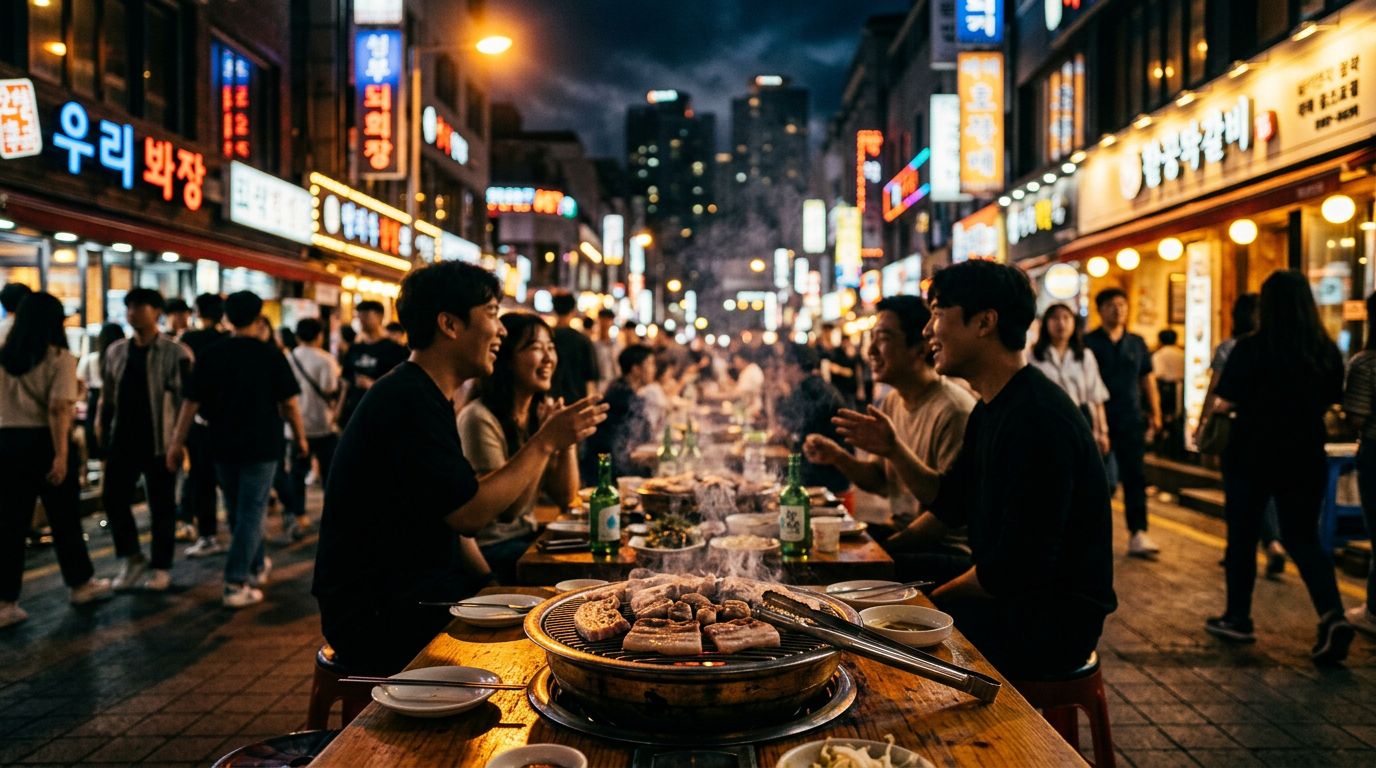
Seoul can swallow a schedule whole if you let it. One dinner turns into three bars, a live music set, and a taxi ride you did not plan on.
That is why a well-planned Seoul 3 day itinerary is built around a few sharp choices, not a long checklist of sights. If you are traveling to South Korea for the first time, keep your focus narrow. Give the city one serious Korean BBQ night, one polished night, and one loose night that can run until sunrise. Keep the days tight, and the city starts feeling generous.
Key Takeaways
- Focus on Neighborhoods: Avoid burnout by staying within one district per day, as crossing the city repeatedly wastes time and creates unnecessary friction.
- Master Your Evenings: Build your schedule around three distinct night vibes: one dedicated to authentic Korean BBQ, one for polished drinks, and one for a loose, late-night adventure.
- Prioritize Convenience: Choose accommodation that aligns with your preferred night scene—such as Hongdae for live music or Gangnam for upscale bars—to make returning home simple.
- Smart Navigation: Use the T-money card for seamless public transit and rely on Naver Maps for accurate directions, saving taxis for when the night runs long.
Where to Stay for Easy Nights Out
Seoul is incredibly efficient, but your base still shapes the flow of your trip. Since most travelers arrive via Incheon International Airport, it is worth choosing an area that balances convenience with the vibe you want for your evenings, or you will spend too much of your time crossing the city.
| Area | Best for | Night feel |
|---|---|---|
| Hongdae | live music, clubs, younger energy | loud, fast, easy to extend |
| Itaewon | cocktails, mixed crowd, LGBTQ+ scene | international, flexible, very late |
| Gangnam | polished dinners, rooftop bars, wine | sharp, pricier, glossy |
| Myeongdong | street food, shopping, accessibility | busy, classic, central |
| Seongsu or Hannam | cafes, design shops, food-first days | stylish, local, a little calmer |
If you are looking for a central hub in South Korea, Myeongdong is a fantastic choice. It serves as the primary shopping district and is famous for its vibrant street food stalls. If you want to be within walking distance of the flagship Olive Young stores to stock up on skincare, staying here puts you right in the heart of the action.
If you want a broad comparison point, this 3-day Seoul weekend itinerary is useful, but it reads more like a sampler. The version below is tighter on food and nightlife.
Seoul works best when the day is narrow and the night has room to grow.
Day 1: Hongdae, Korean BBQ, and the First Late Night
Start your trip in Hongdae and keep the morning easy. Enjoy some coffee, street-level wandering, a few shops, and perhaps a slow lunch. Do not overbuild the first half of the day. Seoul rewards momentum, but it does not reward being rushed before your evening plans.
By evening, make authentic Korean BBQ the anchor of your itinerary. This is not the kind of meal you squeeze between other activities; it is the main event. Pick a place where the grill is part of the room, then stay long enough for the side dishes, the smoke, and the second round of soju to do their work.
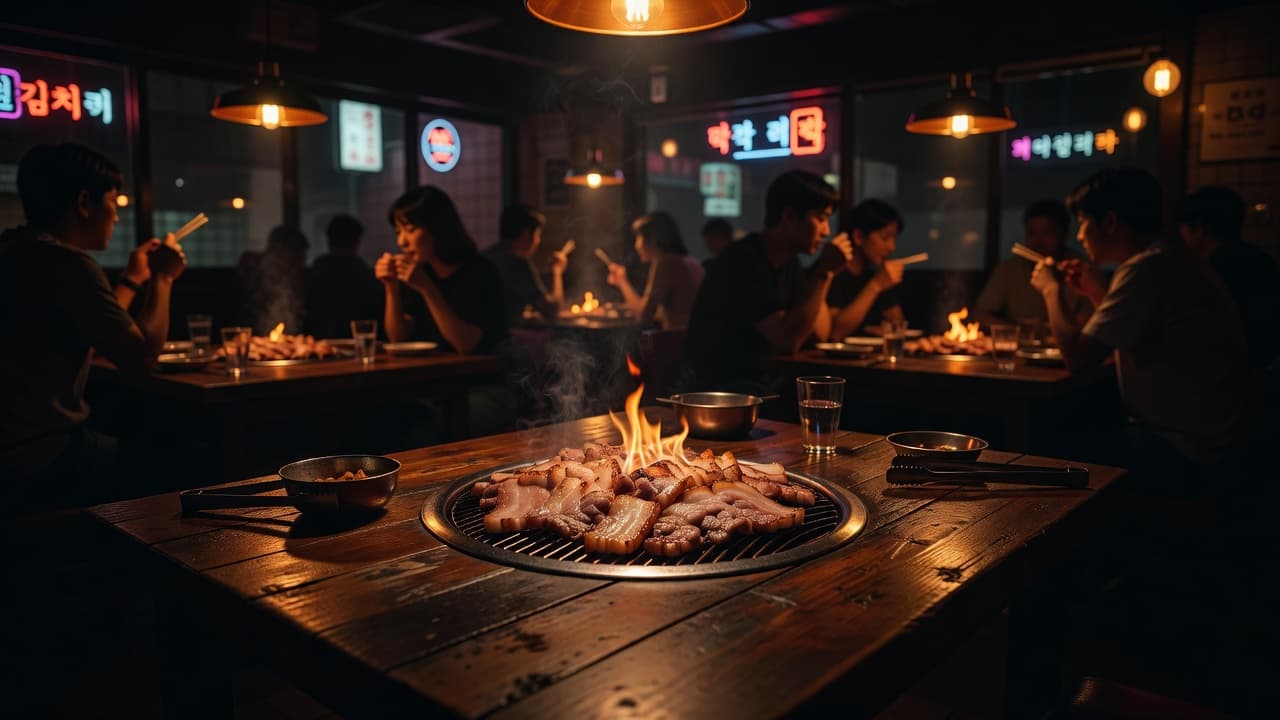
After dinner, Hongdae gives you plenty of options without forcing a decision. Rolling Hall and DGBD are excellent choices if you want to experience the live music scene in South Korea. Tickets usually sit around ₩10,000 to ₩20,000, which is a clean entry point for a night that still feels local. If you prefer clubs, NB1, NB2, Cocoon, and m2 keep the room moving, and cover charges are often in the same range, usually with one drink included.
Friday and Saturday nights bring street performers and vendors selling local street food into the main playground area, which provides the district with a nice warm-up before the bars fill in. If the night keeps going, BBQ Olive Chicken Cafe is the kind of late-night stop that saves your mood at 1 a.m.
For a bigger crew, Seoul group dining options are worth checking before you lock the reservation. Hongdae works best when dinner is early enough to set the tone, not so late that you start bargaining with your own energy.
Day 2: Seongsu and Gangnam Keep the Pace Sharp
Day two should feel more polished. Start in Seongsu-dong, where Seoul feels current without trying too hard. The cafe scene is strong, the streets are easy to walk, and the neighborhood has enough design energy to keep the morning interesting. It is a good place to slow down before the evening gets louder.
Before heading into the evening, take a quick subway hop to Myeongdong for a visit to Olive Young to restock your beauty essentials. Once you are finished, make your way into Gangnam for a change of pace. Before the sun sets, stop by the Starfield Library to see the iconic floor to ceiling bookshelves. This is where Seoul gets truly glossy. If you want a Korean BBQ anchor for the evening, the Seocho branch of Yeontabal is a reliable choice, and it runs until 10 p.m. Woo Sung Galbi is another solid pick if pork galbi sounds better than beef. If you want a single high-end meal away from the grill, the MICHELIN Guide Seoul & Busan 2026 shortlist is worth checking before you book.
Gangnam also handles the after-dinner stretch well. Apgujeong and Cheongdam are strong for wine bars and polished cocktail rooms. If you want a more obvious night out finish, Han Chu Korean Fried Chicken & Beer is a clean chimaek option in the district, especially when the evening needs a softer landing.
This is a good day to stay in one zone. Seoul can make a cross-town dinner look harmless on a map, then punish you with traffic and a tired finish. Keep the flow tight, and the night feels intentional instead of improvised.
Day 3: Itaewon, Haebangchon, and the Long Finish
Day three is for the loose edge of South Korea and its rich cultural history. Start your morning with a trip to Gyeongbokgung Palace to witness the grandeur of the Joseon dynasty. If you arrive early enough, you can catch the Changing of the Guard ceremony, a spectacle that defines the scale of Gyeongbokgung Palace. While you are in the area, consider a Hanbok rental to fully immerse yourself in the experience.
After exploring the palaces, wander through the winding alleys of Bukchon Hanok Village. Seeing these beautifully preserved traditional Korean houses provides a quiet contrast to the city’s neon-lit streets. Bukchon Hanok Village is perfect for photography, or if you prefer a different route, Changdeokgung Palace offers equally stunning historical architecture. From there, head to the bustling craft shops of Insadong or the trendy boutiques hidden in the narrow streets of Ikseon-dong.
As the afternoon fades, make your way toward Namsan Mountain. Riding the cable car up to the N Seoul Tower is the ultimate way to watch the sunset over the horizon. The panoramic views from N Seoul Tower are unmatched, offering a final look at the urban sprawl before the evening begins.
Then, move into Itaewon and let the night breathe. This is still one of the easiest neighborhoods in Seoul for international food, cocktail bars, and late movement without friction. Start slower in Haebangchon or nearby, where the pace is a little rougher and more relaxed, making it a good place for a late brunch or a long coffee before the final night takes over.
Charles H, Southside Parlor, Cobbler, Bar Tea Scent, and Bar Musk all fit that later-night mood. You do not need a huge plan here. One proper dinner, one room for drinks, and one last stop if the night still has a pulse. That is enough.
If your Seoul trip is really a music trip, this is where the schedule should bend around the show. The concert travel planning guide keeps that kind of night from unraveling, especially when dinner, venue doors, and the after-hours plan all need to line up cleanly.
Itaewon is also the easiest place to let a final night run long without feeling trapped by geography. In a city this big, that matters.
Getting Around Seoul Without Killing the Mood
The Seoul subway is excellent, so rely on it for clean, efficient jumps across South Korea. To make your travel seamless, pick up a T-money card at any convenience store; it is the universal key for the Seoul subway, buses, and even taxi payments. While transit is vital, walking remains essential. It is the best way to notice the small things, like the cafe you almost missed, the side street that looks better than the main road, or the hidden snack stop that saves your night. If your route allows, use the subway to visit Gwangjang Market for world-class street food before heading to your next destination.
Do not ask transit to rescue a poorly planned route. If your dinner is across town and your bar is on the other side of the map, the day is already working too hard. Build your plan by neighborhood and use Naver Maps to navigate the connections, as it provides the most accurate walking and transit directions in the city.
Late at night, taxis or ride-share apps are the smart move. That is especially true after a second drink, when one more subway stop starts sounding like a poor decision. Small friction adds up fast in a city with this much energy. Remove enough of it, and the trip starts feeling easy.
Frequently Asked Questions
Is it necessary to learn Korean to get around Seoul?
No, you can comfortably navigate Seoul using English. While basic phrases are polite, major subway stations, street signs, and many restaurants feature English, and navigation apps like Naver Maps include English support for travelers.
Do I need to carry cash for Korean BBQ and nightlife?
While most places accept credit cards, it is wise to carry some KRW cash for street food stalls or smaller market vendors. For taxis and transit, your T-money card or a contactless credit card will handle almost every payment you encounter.
Which neighborhood is best for a first-time visitor?
Myeongdong is often the best starting point because of its central location and proximity to major shopping, street food, and transit hubs. It provides easy access to historical sites by day and a high-energy atmosphere by night.
How late do public transport and bars typically stay open?
The Seoul subway generally runs until midnight, making it reliable for most evening outings. For those planning to stay out until sunrise, taxis are plentiful and provide a secure, efficient way to return to your accommodation after the trains stop running.
Conclusion
Seoul does not need more from you. It needs better sequencing. One serious barbecue dinner, one polished night, and one loose late night are enough to make the city click. Whether you are wandering through the traditional beauty of Gyeongbokgung Palace or hitting the bustling streets of Myeongdong, the goal is finding the right rhythm.
If you keep your hotel close to your evening plans, stay within one district at a time, and use transit for clean jumps between neighborhoods, your Seoul 3 day itinerary will feel effortless. When planning your trip, remember that the best time to visit South Korea often depends on your tolerance for the seasons, but the city’s energy remains constant. Seoul gives you the food, the music, and the after-hours glow; the only trick is leaving enough room to actually enjoy it. For a completely different late-night food scene, the best Bangkok street food neighborhoods deliver smoky seafood and bustling night markets from dusk until late. If night markets are your thing, the 3 Days in Taipei guide covers the city’s best night markets and cocktail bars.