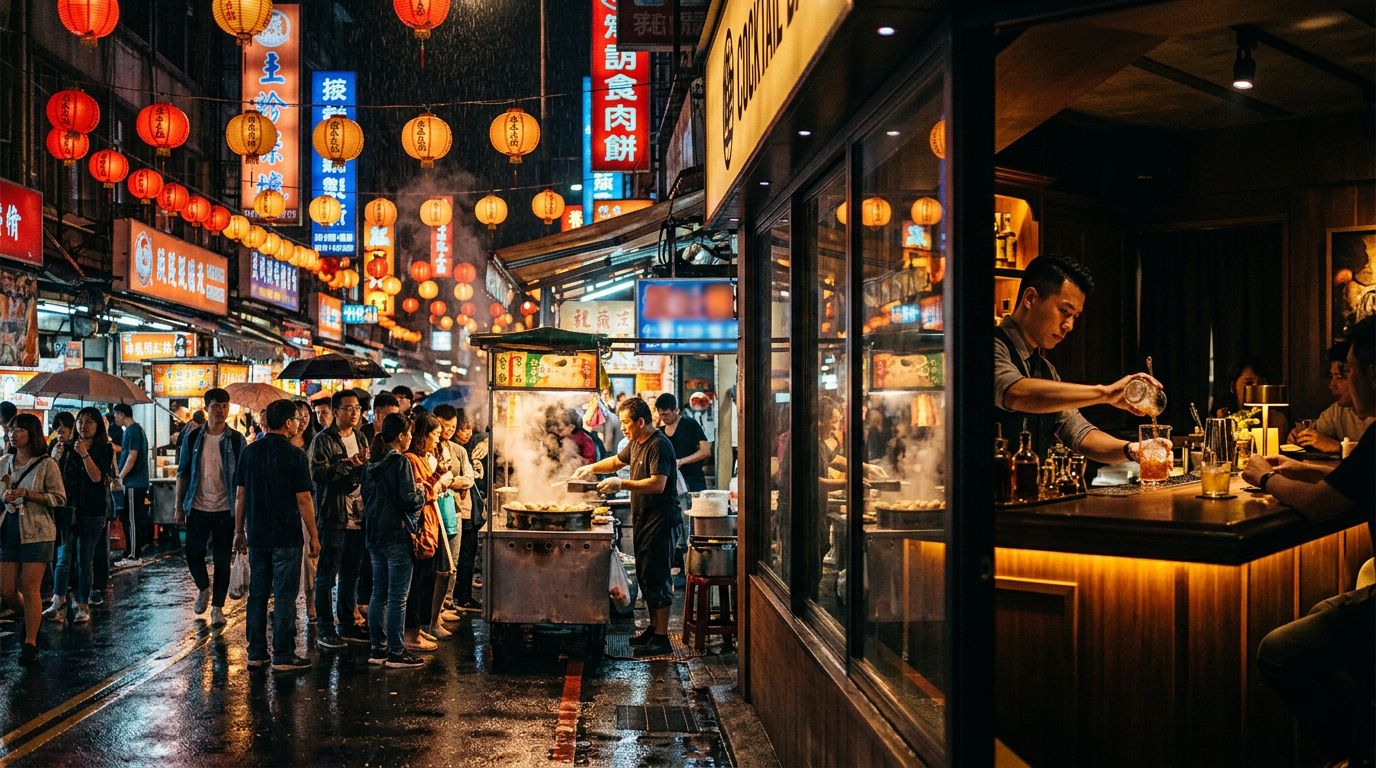
Taipei is one of those cities where dinner can become the whole night. You start with a pepper bun on a crowded sidewalk, share some authentic Taiwanese street food that you cannot quite name, then find yourself two hours later in a low-lit bar with a drink built around local tea.
The mistake is trying to treat every market like a landmark. Taipei night markets cocktail bars work better when the day has a little shape, the food has room to breathe, and your last stop is not across the city.
Three nights is enough to get the contrast right: old streets, serious snack stalls, polished drinks, and a few places that feel like you found them yourself.
Key Takeaways
- Build each night around one market rather than a rushed circuit of three so you can truly savor the Taiwanese street food on offer.
- Night market culture is central to the Taipei experience and serves as the perfect anchor for your evening plans.
- Stay near Da’an, Zhongshan, or Xinyi if world-class food and cocktail bars are the main focus of your trip.
- Eat in rounds at the markets, as one heavy meal consumed too early can end your night fast.
- Use the MRT for clean cross-city jumps, then switch to a taxi when it gets late.
- Reserve serious cocktail bars in advance, especially on Friday and Saturday nights.
Build Your Taipei Itinerary Around the Night
Taipei is efficient, but that does not mean you should spend the trip underground. The MRT is excellent for a clean jump between neighborhoods, and finding your nearest MRT station is often the best way to start any journey. Walking is where you notice the better details: noodle shops with ten seats, old apartment blocks, tea counters, and hidden spots serving up Taiwanese street food and other local delicacies behind almost nothing.
My rule for Taipei is simple. Keep the daytime loose, then let each evening carry the plan.
A three-day trip works best when you choose a base that protects your nights. Da’an is a strong all-around option for restaurants, cafes, and better cocktail bars. Zhongshan works if you like older streets, design shops, and a little more local texture. Xinyi is polished and convenient, especially if skyline views and newer hotels matter.
A cheaper hotel far from your evening plans usually stops being cheap after the third late-night ride home.
Pick up an EasyCard as soon as you can. It works across the MRT, buses, and convenience stores, allowing you to breeze through any MRT station without waiting in line for tickets. The Taipei Metro’s English site is useful for checking routes before you leave the hotel, but don’t over-script every transfer.
Bring cash for night markets. Many vendors now accept mobile payments, but cash still keeps things easy when the line is moving and the grill is smoking.
Day One: Yongkang Street, Tonghua Market, and Da’an Drinks
Start your first morning around Dongmen and Yongkang Street. This is an easy opening because the area provides excellent coffee, breakfast options, bookstores, and enough small streets to shake off the flight without turning the day into a project.
Grab a bowl of beef noodles if you are hungry early, or keep it lighter with soy milk, scallion pancakes, and fresh fruit. The city has range, so do not burn all your appetite before sunset.
After lunch, walk through the area or head to Huashan 1914 Creative Park for a slower afternoon. It is a former industrial site with galleries, pop-ups, small shops, and enough room to reset. This is not the day for stacking temples, museums, and observation decks just because you think you should. Taipei gets good when you leave space for the meal you did not plan.
For your first market, head to Tonghua Night Market, also known as Linjiang Street Night Market. It feels more neighborhood-focused than the sprawling Shilin Night Market, and it fits naturally with a Da’an or Xinyi stay. The food stalls are tight, the pace is quick, and the food is serious.
Start with a few smaller plates:
- Grilled skewers, Taiwanese sausage, and lu wei, the braised snack spread where you choose your own ingredients.
- An oyster omelette with sweet-savory sauce, plus a cold drink to cut through the richness.
- A final stop for sweet potato balls or shaved ice if you still have room.

Photo by 宇峰 吳
Do not force a full dinner at the first stall. Taipei markets reward curiosity, and the variety of food stalls keeps the experience engaging. Order one thing, walk fifty feet, then order the item that smells best.
Afterward, take a short ride to Bar Mood Taipei if you want a polished first cocktail. The room is refined without feeling stiff, and the drinks are built with real intent. If you want something more casual, Draft Land is the easier call. Cocktails on tap can sound like a gimmick until you are standing there with a clean highball and no interest in overthinking it.
Day Two: Dadaocheng, Ningxia Night Market, and a Late Bar
Day two should feel older, slower, and a little more textured. Start in Dadaocheng, a neighborhood that offers a traditional atmosphere where historical warehouses, tea shops, fabric stores, and restored buildings line the streets around Dihua Street.
This is a perfect place for tea. Taiwan’s tea culture runs deep, and a proper tasting gives the day a different rhythm before the fried food starts. Browse without treating every shop like a mission. The neighborhood rewards the kind of travel where you have nowhere urgent to be for an hour.
For lunch, stay nearby and keep it simple. A bowl of noodle soup, dumplings, a hearty helping of braised pork rice, or a classic bowl of lou rou fan is enough. You have a market night ahead.
By early evening, walk or take a quick ride to Ningxia Night Market. It is compact, focused, and one of the strongest food-first markets in Taipei. You won’t find much empty spectacle here. People show up to eat at the various food stalls that line the street.
Look for taro balls, pan-fried dumplings, fried chicken rolls, mochi, and the food stalls with lines full of locals who already know what they want. A good move is to share everything. Two people can cover far more ground when neither person commits to a full serving of every snack at the Ningxia Night Market.
This market is also a better choice when the weather turns rough. It is concentrated, so you are not spending half the night walking between far-apart vendors.
Once you have had your fill, do not add another major sight. Take a taxi to HANKO 60 in the Ximending shopping district for a bar that feels more hidden and theatrical, or go to Ounce Taipei if you want dim lighting, classic technique, and a night built around conversation rather than noise.
Taipei has plenty of loud rooms. It also has bars where one drink turns into three because the music is right, the service is sharp, and nobody is trying too hard.
Day Three: Songshan, Raohe, and a Proper Final Night
For the final day, shift east toward Songshan. Start around Songshan Cultural and Creative Park, where the old tobacco factory buildings now hold shops, exhibitions, cafes, and design spaces. It is an easy place to move slowly before the city gets louder.
If you want a more active afternoon, walk around the Xinyi district or book a table somewhere good before the night begins. Taipei can support a serious dinner, but do not make the mistake of showing up to the Raohe Night Market already full.
The Raohe Night Market is one of the city’s classics, and it earns its reputation. The market begins near Songshan Ciyou Temple, which is worth a quick look when the lights are on and the street energy starts building. As you enter, you will notice the organized layout of the food stalls stretching down the central corridor.
The non-negotiable order is a pork pepper bun. These famous buns have earned Michelin Bib Gourmand recognition for a reason. The sesame-crusted bread comes hot from the oven with savory pork, black pepper, and scallions inside. It is messy, heavy, and worth planning your evening around.
Then keep moving through the various food stalls. Try grilled king oyster mushrooms, herbal pork rib soup, and stinky tofu if you are feeling adventurous. If you are new to the local delicacies, stinky tofu is a staple that many visitors eventually learn to appreciate. Raohe Night Market is long enough to feel lively without becoming exhausting.
The food plan matters here. A pork pepper bun counts as a full course, not just a snack. Split one if you want more range to try other items afterward.
For your final cocktail, choose the mood rather than chasing a famous name. Aha Saloon is a good pick if you want playful drinks with Taiwanese ingredients. East End at Hotel Proverbs Taipei works when you want a more dressed-up room and a strong finish. Both are better with a reservation on busy nights.
If live music is part of your trip, check venue calendars before you arrive. Taipei’s smaller rooms, jazz bars, and DJ nights change quickly, and the best plan is often the one that lets a show shape the evening instead of squeezing it between reservations.
The Cocktail Bar Strategy That Keeps the Night Intact
Taipei’s bar scene has real depth, but it is not built for a ten-stop crawl. Instead, embrace the local night market culture by picking one bar that matters and letting the evening unfold around it. Whether you are craving local delicacies like stinky tofu or a quick grilled squid from various food stalls, the key is to keep your dinner and drinks in the same orbit.
If you are looking for a massive experience, the Shilin Night Market is a perfect choice. Beyond the food, you can spend hours playing fairground games at Shilin Night Market to break up your evening. Similarly, if you find yourself near the water, Keelung Night Market is essential for its unique seafood, while the Huaxi Street Night Market offers a more traditional atmosphere. For those who enjoyed the vibe at Raohe Night Market, remember that similar food stalls are often found near the top-rated cocktail lounges. Much like the experience at Raohe Night Market, these bars require a bit of planning.
Bar Mood is the polished reservation. Ounce is for classic cocktails and a darker room. Draft Land is the low-pressure stop when you want good drinks without a long ceremony. HANKO 60 works when Ximending’s late energy is already part of the plan. If you have time for a day trip, try pairing a sunset excursion to Keelung Night Market with a return to the city for a nightcap. Just remember that the popular fairground games at larger markets are best enjoyed before you settle in for high-end spirits.
Book ahead if the bar is a priority. Walk-ins can work midweek, but the city’s better rooms fill up fast on weekends.
The Taiwan Tourism Administration is also worth checking before departure for current travel information, seasonal events, and practical arrival details. Taipei’s weather can shift fast, especially during warmer months, so a light layer and shoes that can handle rain are never a bad call.
Frequently Asked Questions
Do I need to make reservations for street food markets?
No, night markets are casual, open-air environments where you simply walk up to stalls and order as you go. You do not need reservations for food, though it is highly recommended to book a table if you plan on ending your night at a high-end cocktail bar.
Should I carry cash for food stalls?
While digital payments are becoming more common in Taipei, cash is still the most reliable way to navigate night markets efficiently. Keeping a supply of small bills ensures you can move through lines quickly without holding up the service when the grills are busy.
Is it okay to share food at the markets?
Sharing is actually the best way to approach a Taipei night market. Because many snacks are filling, splitting portions allows you to sample a much wider variety of local delicacies without feeling overwhelmed or getting full too early in the evening.
What should I do if I have dietary restrictions?
Many street food items like oyster omelettes or grilled skewers can be customized, but keep in mind that markets are fast-paced environments with high cross-contamination risks. If you have severe allergies, it is best to ask vendors about specific ingredients directly or look for dishes that consist of single, recognizable components.
Final Thoughts
Taipei does not need a packed checklist to feel memorable. Whether you are planning a self-guided street food tour or simply wandering through the city, make sure to give each night one market, one strong drink, and enough time to follow the smell of something better down the next block.
The city rewards a genuine love for Taiwanese street food, good timing, and a little restraint. Eat in rounds, keep your neighborhoods tight, and let the night run longer when it deserves to, perhaps with one last stroll through the vibrant Raohe Night Market before you call it a night. If your Asian food tour keeps going, the Bangkok street food guide covers smoky late-night eats, while the Singapore hawker guide explores another world-class Southeast Asian food destination.