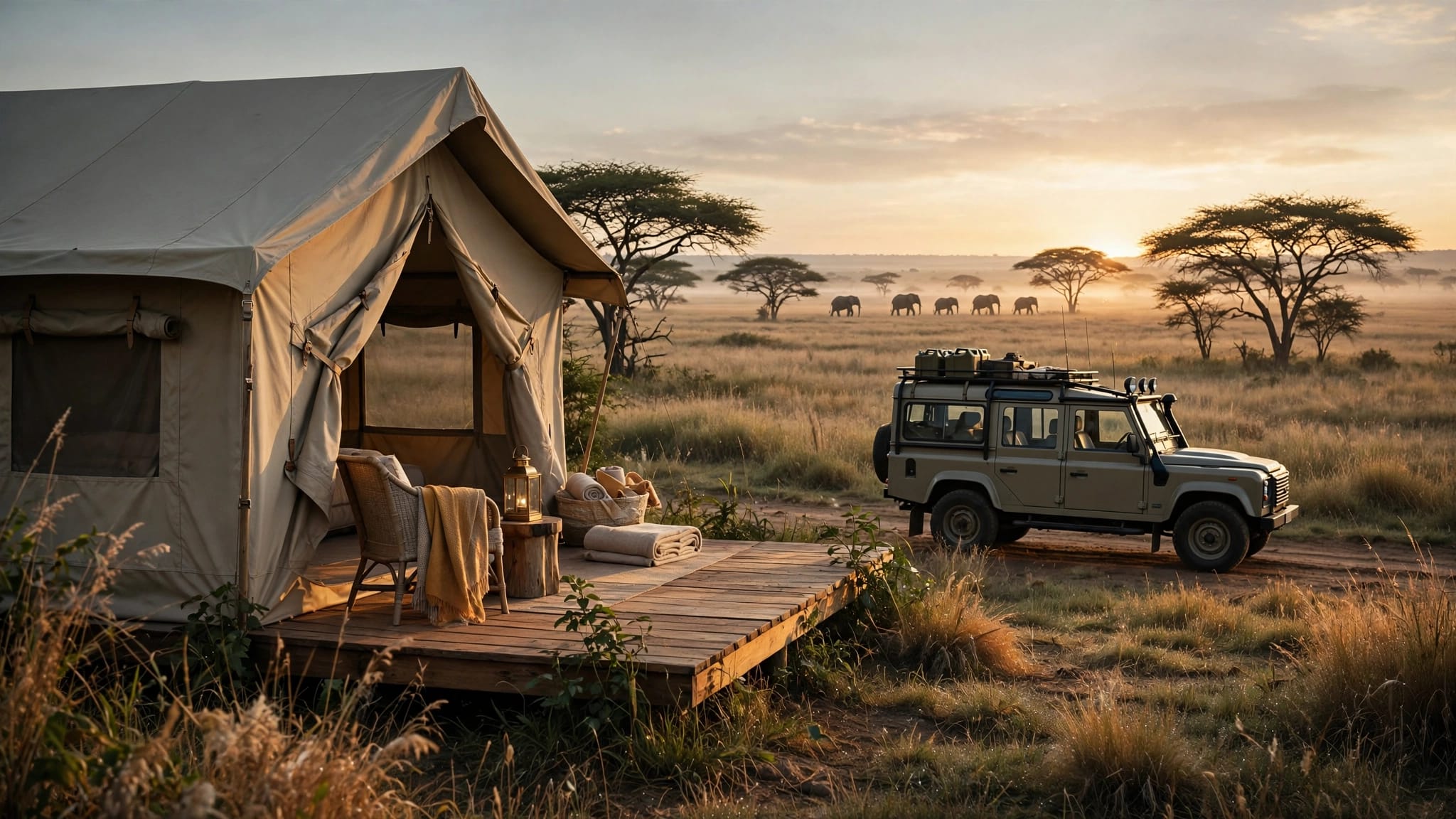
For your first safari experience, choose a camp by wildlife access, guiding, and daily pace before comparing suites. The strongest luxury safari camps put you close to the experiences you want, with enough time to enjoy them.
I prioritize time well spent: productive wildlife mornings, thoughtful meals, and transfers that don’t consume the day. A spectacular suite earns its place when the safari around it suits you. Start with the experience, then choose the address.
Key Takeaways
- Prioritize guiding, wildlife access, and vehicle arrangements before architectural extras.
- Give each camp three or four nights rather than moving every other morning.
- Compare complete journey costs, because a premium suite doesn’t automatically include private drives, flights, or conservation fees.
Choose the Camp Style That Suits You
Labels for luxury safari lodges overlap, so focus on how each property operates rather than what it’s called.
A permanent game lodge usually offers solid buildings, established facilities, and scheduled activities. It suits travelers who prefer predictable comforts and an easy daily rhythm.
Semi-permanent tented camps offer closer contact with the bush. Some relocate seasonally to follow wildlife; others remain in one location throughout their operating season. Canvas doesn’t necessarily mean fewer comforts.
Permanent high-end lodges and tented suites add larger living spaces, pools, and more extensive dining or wellness facilities. However, those extras don’t establish better guiding.
Ask whether the camp is in a national park, conservancy, or private game reserve, and what that means for vehicle access and activities. No setting guarantees better wildlife viewing.
For couples, I weigh suite privacy and dining arrangements. For photographers, vehicle exclusivity and guiding continuity come first. Groups often benefit more from an exclusive-use house than several individual suites.
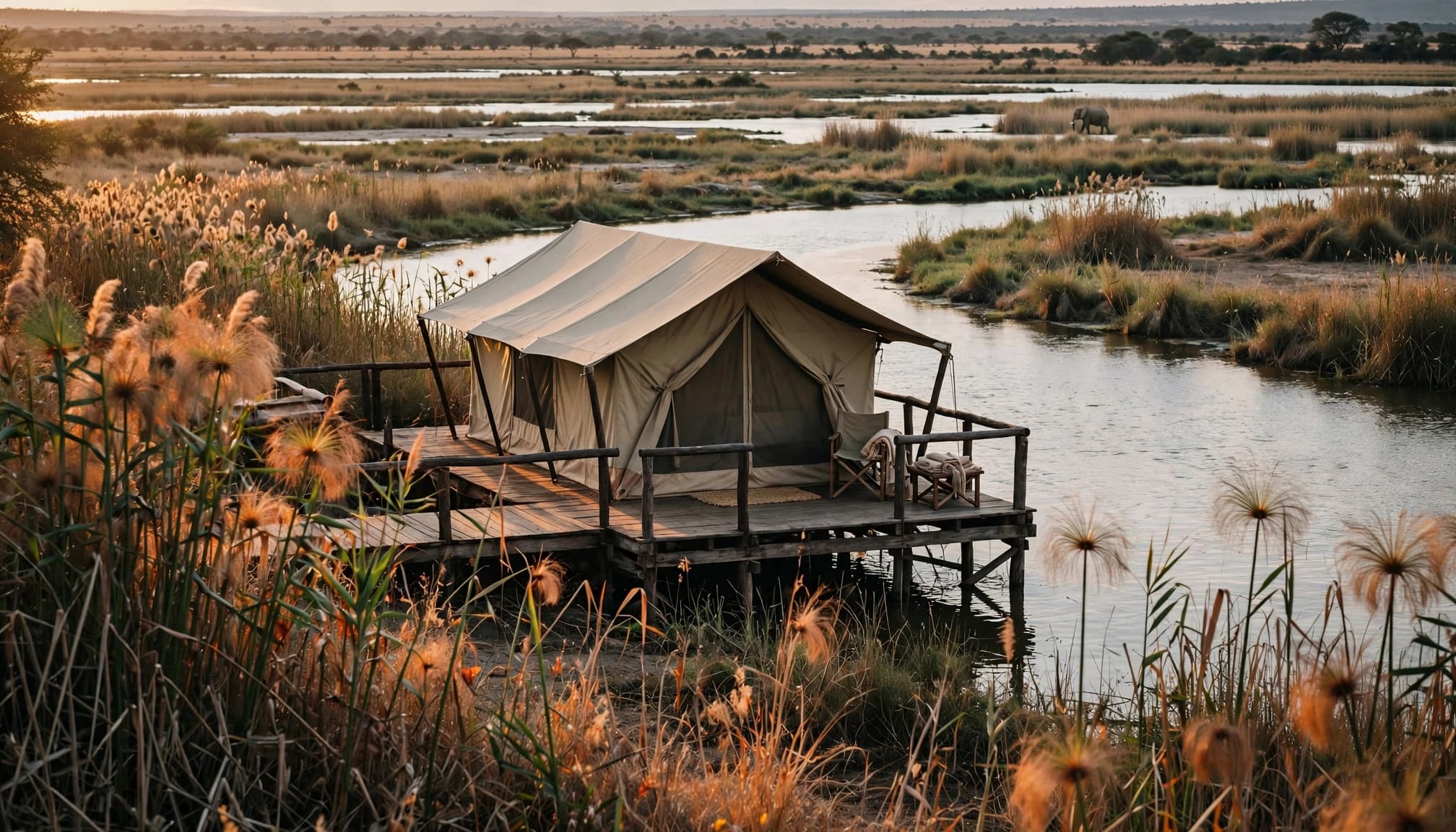
Botswana: Island Privacy or Salt-Pan Character
Sitatunga Private Island, Okavango Delta
With only three suites, Sitatunga suits travelers who value intimacy and a water-oriented Delta setting. Hospitality Ahead lists $2,000 to $3,500 nightly, although that reference doesn’t establish occupancy or inclusions. I’d pair this setting with a land-focused camp rather than assume every Delta property delivers the same wildlife experience.
Jack’s Camp, Makgadikgadi
Nine lavish canvas tents and a 36-seat communal table give Jack’s Camp a distinctive social character. Its family safari roots reach back to the 1940s. Choose it for salt-pan scenery and desert exploration, rather than as a substitute for an Okavango wildlife base.
My guide to choosing an Okavango safari experience explains how contrasting habitats can justify a second camp.
Kenya: Four Different Interpretations of Luxury
Mara Plains Camp, Olare Motorogi
Mara Plains has seven guest tents within the 35,000-acre Olare Motorogi Conservancy. The conservancy’s accommodation guide identifies its intimate scale. I’d shortlist it among Kenya safari lodges for travelers who want a small camp beside the broader Mara ecosystem, with guiding and wildlife access at the center.
The Ritz-Carlton, Masai Mara Safari Camp
Opened in 2025 above the Sand River, this camp has 20 tented suites, including a Presidential suite. Its suite facilities and services include private plunge pools, butler service, and personalised service. It suits travelers seeking a fuller hotel-style offering within a tented setting.
Segera Retreat, Laikipia
Segera occupies a 50,000-acre private reserve, with six garden villas among its accommodations. I’d consider it for travelers who want substantial time at the property alongside wildlife outings. It provides a different pace from a migration-focused Mara stay.
Ol Donyo Lodge, Chyulu Hills
Ol Donyo offers access to the 275,000-acre Mbirikani Group Ranch. Horseback safaris, mountain biking, and walking safaris distinguish it from vehicle-led stays. Riding ability and appetite for adventure should guide the choice.
For complementary regions, my Masai Mara and Laikipia itinerary gives each setting a clear purpose.
Tanzania: An Exclusive House or an Exploratory Camp
Singita Milele, Serengeti Ecosystem
Milele accommodates up to 10 guests in five suites, making it a strong option for a private group. Its exclusive-use format gives travelers more control over meals and daily timing. Compare the whole-house cost across your actual party size, rather than treating it as a conventional hotel room.
Kokoko Camp, Ruaha National Park
Asilia Africa’s Kokoko accommodates just six guests. Walking safaris and night drives are central attractions, so I’d shortlist it for travelers who want an active, intimate safari.
Its appeal lies in close attention to the bush rather than extensive resort facilities. For a first safari, balance that exploratory character with your comfort expectations and preferred amount of walking.
Southern Africa: Three Distinctive Alternatives
These examples show safari lodges Africa has to offer, including a shared-use bush house, a desert camp, and a railway stay.
Melote House, Limpopo
Melote House is an exclusive-use, off-grid property at Lapalala in South Africa’s Limpopo province. It suits families or friends who want shared living spaces and control over their group’s rhythm. The house format deserves particular consideration when meal times and energy levels differ.
Little Kulala, Namibia
Little Kulala’s accommodations pair private plunge pools with rooftop stargazing and star-bed experiences in the Kulala Wilderness Reserve. Choose it for desert scenery and access to the Sossusvlei area. It adds a compelling contrast to a wildlife-focused safari, rather than replacing one.
Kruger Shalati, South Africa
Kruger Shalati has 31 rooms: 24 Train Carriage Suites on the Selati Bridge and seven Bridge House Suites. The elevated railway setting is the defining feature. I’d consider it for travelers who want distinctive accommodation alongside a Kruger safari.
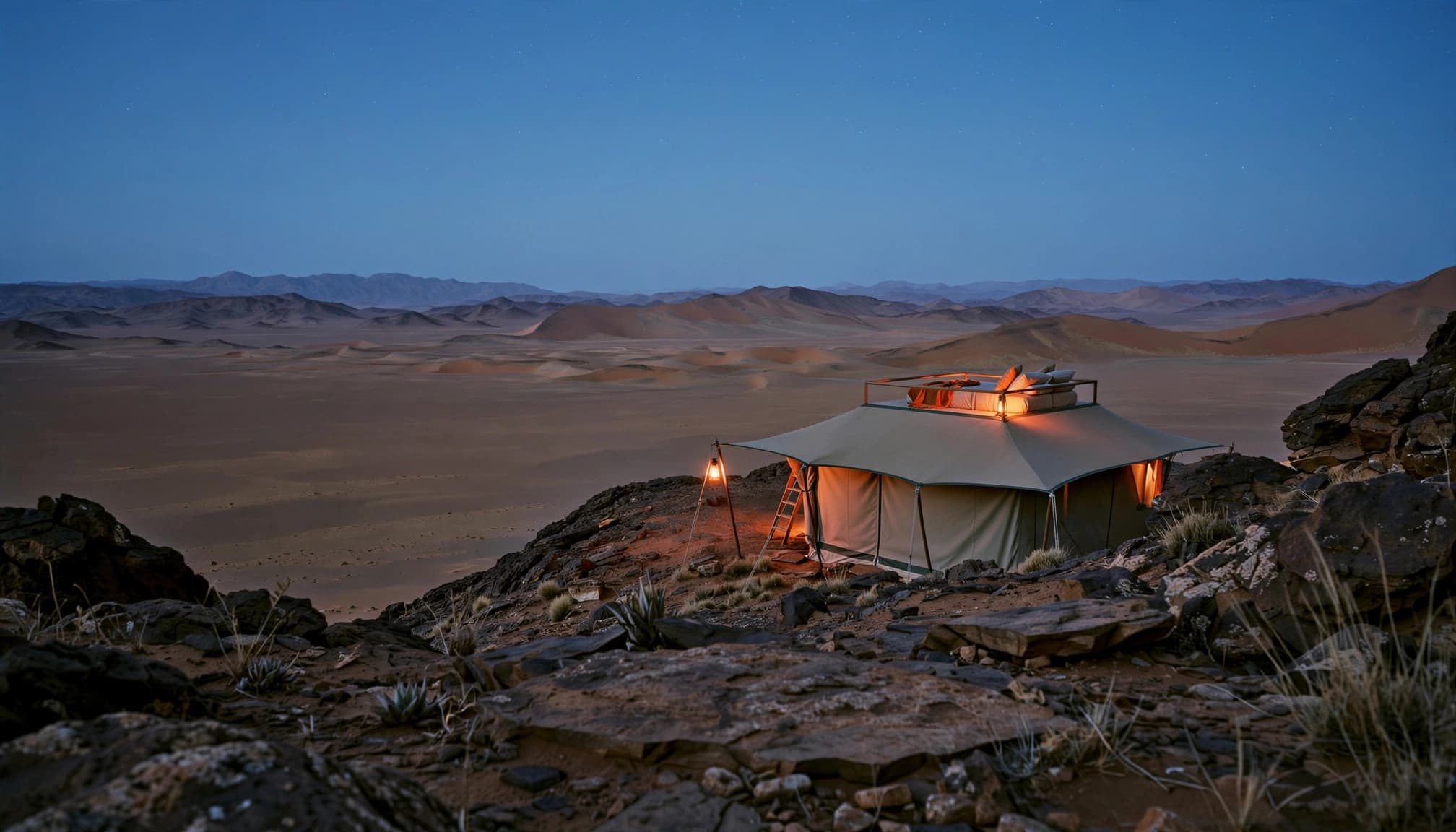
Rwanda and Beyond: Know What You’re Choosing
Wilderness Bisate Reserve, Rwanda
Opened in September 2024, Bisate Reserve has four villas near Volcanoes National Park. Mountain gorilla trekking is the central draw, rather than conventional game drives. The Bisate Reserve accommodation details also describe two villas that can connect for families.
Ask what habitat-restoration work the property supports and how its practices contribute to sustainable tourism. These are more concrete questions than relying on a generic “eco-luxury” label.
Longitude 131°, Australia
Longitude 131° has 16 luxury tents near Uluru. It belongs on a wilderness-luxury shortlist for desert scenery and a strong sense of place. However, it delivers a different experience from an African wildlife safari, so choose it for the destination itself.
Tierra Atacama, Chile
Tierra Atacama’s 32-room property looks toward Licancabur Volcano. Its appeal centers on high-desert exploration and lodge comforts. I’d consider it for travelers drawn to remote scenery, while keeping it separate from a shortlist built around big cats or the Big Five.
Compare Luxury Safari Camps by the Full Price
These published references use different pricing bases, so they aren’t interchangeable quotes.
| Property | Nightly reference | Pricing basis |
|---|---|---|
| Sitatunga Private Island | US$2,000 to US$3,500 | Hospitality Ahead listing; occupancy basis unspecified |
| Singita Milele | US$4,500 to US$6,000 | Hospitality Ahead listing; occupancy basis unspecified |
| Ritz-Carlton Masai Mara | From US$3,500 | Launch rate per person, all-inclusive |
| Arathusa Safari Lodge | R11,810 | 2026 sharing rate per person, including conservation contribution |
Before booking, ask whether the rate is per person or for the whole property, and which park or conservation charges it includes. Confirm whether internal flights, transfers, drinks, activities, and private vehicles are covered.
Milele has Hospitality Ahead’s highest listed band, but Singita’s published rate structure prices the entire villa for up to 10 guests. Its editorial reference isn’t a bookable whole-villa rate.
Arathusa provides a concrete South African comparison: R11,500 per person nightly, plus a R310 conservation contribution. Three nights for two adults total R70,860, before the wider journey costs.
Full board generally covers meals, while all-inclusive rates vary on drinks, laundry, activities, and transfers. Check each inclusion, then add separate flights, park charges, premium wines, gratuities, and optional experiences to your total. A lower headline rate can still produce a higher total journey cost.
A private suite doesn’t establish private game drives. Vehicle exclusivity changes your waking day and belongs beside the room category in any comparison.
Match the Season and Transfers to the Safari
Put Wildlife Geography First
For the safari experience you want, choose a region and season around the wildlife encounters that matter most. The northern Serengeti and Mara generally matter most for migration-focused travel from July through October. Southern Serengeti calving draws attention around January through March. Herd movements follow conditions, and river crossings never run to a timetable.
Therefore, I choose the region before the room. A beautifully designed camp in the wrong area can mean long drives toward the experience you came for.
In Botswana, flood levels also affect driving and water activities. A waterside setting alone doesn’t establish which outings operate during your stay.
Protect the Transfer Days
My starting point is four nights at a wildlife-led base, followed by three somewhere genuinely different. That’s a planning preference, not a universal minimum-stay rule.
Nairobi commonly connects Kenya’s international arrivals with bush flights through Wilson Airport. Botswana routes often use Maun, while northern Tanzania itineraries commonly connect through Arusha.
A tailor-made safari should account for airport changes, bush flights, airstrip transfers, and intermediate stops. I plan the full route and protect buffers before international departures.
For a seven-night safari, I’d choose two complementary camps before adding another country.
Frequently Asked Questions
Can a Luxury Safari Work for Families?
Yes, but accommodation format and age policies matter. An exclusive-use house can simplify meals and different activity schedules. Meanwhile, Arathusa admits guests aged 16 and older, so it doesn’t suit every family.
For younger children, flexible vehicle arrangements often add more value than a larger suite. Walking and riding also have separate participation requirements.
Are Balloon Rides and Chimpanzee Treks Included?
Budget a hot air balloon ride separately unless the package explicitly includes it. Balloon safaris operate in areas such as the Mara and Serengeti, with dawn departures that affect the surrounding schedule.
Chimpanzee trekking is available in Rwanda, Uganda, and Tanzania. It requires its own location and logistics; Bisate’s mountain gorilla focus doesn’t make it a chimpanzee-trekking base.
Build Around the Days You Want to Have
The right camp puts your preferred wildlife, privacy, and daily rhythm within reach. Guiding and location deserve the first investment, followed by enough nights to enjoy both.
I build a bespoke safari through my bespoke travel planning. Share your dates, interests, and preferred pace, and I’ll shape the stays and transfers around them.
Your safari should leave room for the sighting that lasts longer than expected and the lunch worth lingering over.