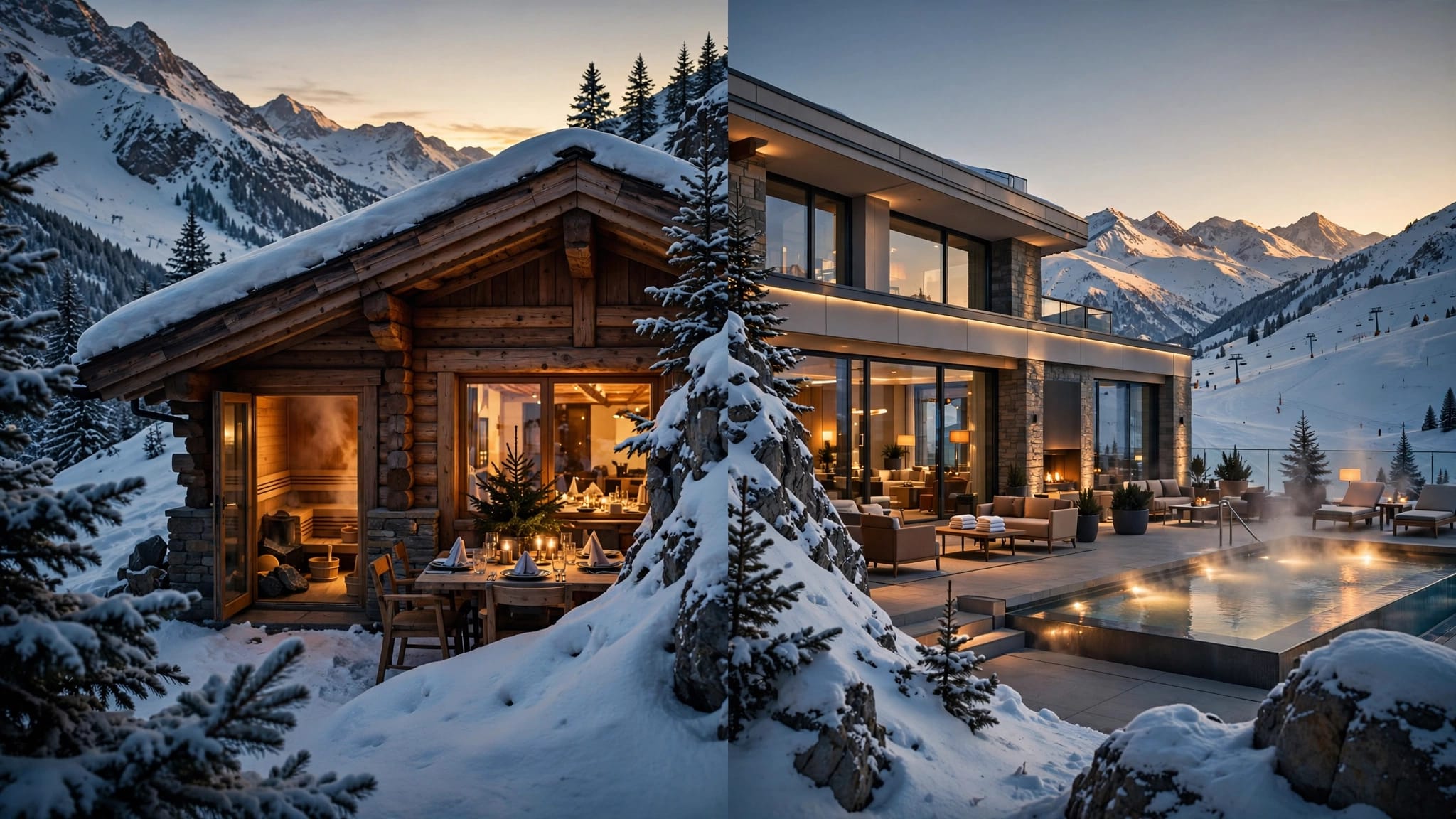
Choose a private chalet for shared space and control over your group’s routine. Choose a five-star hotel for flexible stays, independent schedules, and services close at hand.
Choosing between a ski chalet and a five-star ski hotel gets easier once you picture the trip beyond the slopes: breakfast together, a private sauna, a long dinner, or live music in the village. Your daily rhythm matters more than the accommodation label.
For a ski holiday, I’d start with who’s traveling, how long you’re staying, and what you want your evenings to feel like.
Key Takeaways
- A private chalet often suits a large group that wants shared meals, privacy, and several nights together.
- A five-star hotel suits couples, shorter stays, and travelers who want independent dining and substantial wellness facilities.
- Compare complete costs, including catering, transport, taxes, and staffing, rather than accommodation alone.
- Give ski lift access and the journey home after dinner as much attention as mountain views.
Choose the Format Around Your Group
Larger Groups Benefit From One Address
Private chalets are usually rented as whole properties, with a nightly or weekly price for the accommodation. Hotels generally charge per room. A shared chalet may be booked by the room, so confirm which living spaces and services are shared.
ShavyStays suggests chalets for six or more people staying four nights or longer, and hotels for two to four people staying one to three nights. That’s a useful starting rule, rather than a guarantee of value.
A chalet keeps everyone under one roof. Several hotel rooms can mean separate bills, scattered floors, and another group message whenever someone wants to meet.
Smaller Parties Gain Flexibility in a Hotel
For a couple spending a long weekend in the Alps, I’d usually favor a well-positioned hotel. You can choose a room that fits, arrive around your flights, and leave without funding unused bedrooms.
Chalets commonly have Saturday or Sunday changeovers, particularly during the ski season. That can dictate the entire trip.
Hotels generally offer more arrival flexibility, although peak dates can carry minimum stays. For time-limited travelers, fitting the accommodation around the journey protects usable vacation time.
Privacy Means More Than Having Your Own Front Door
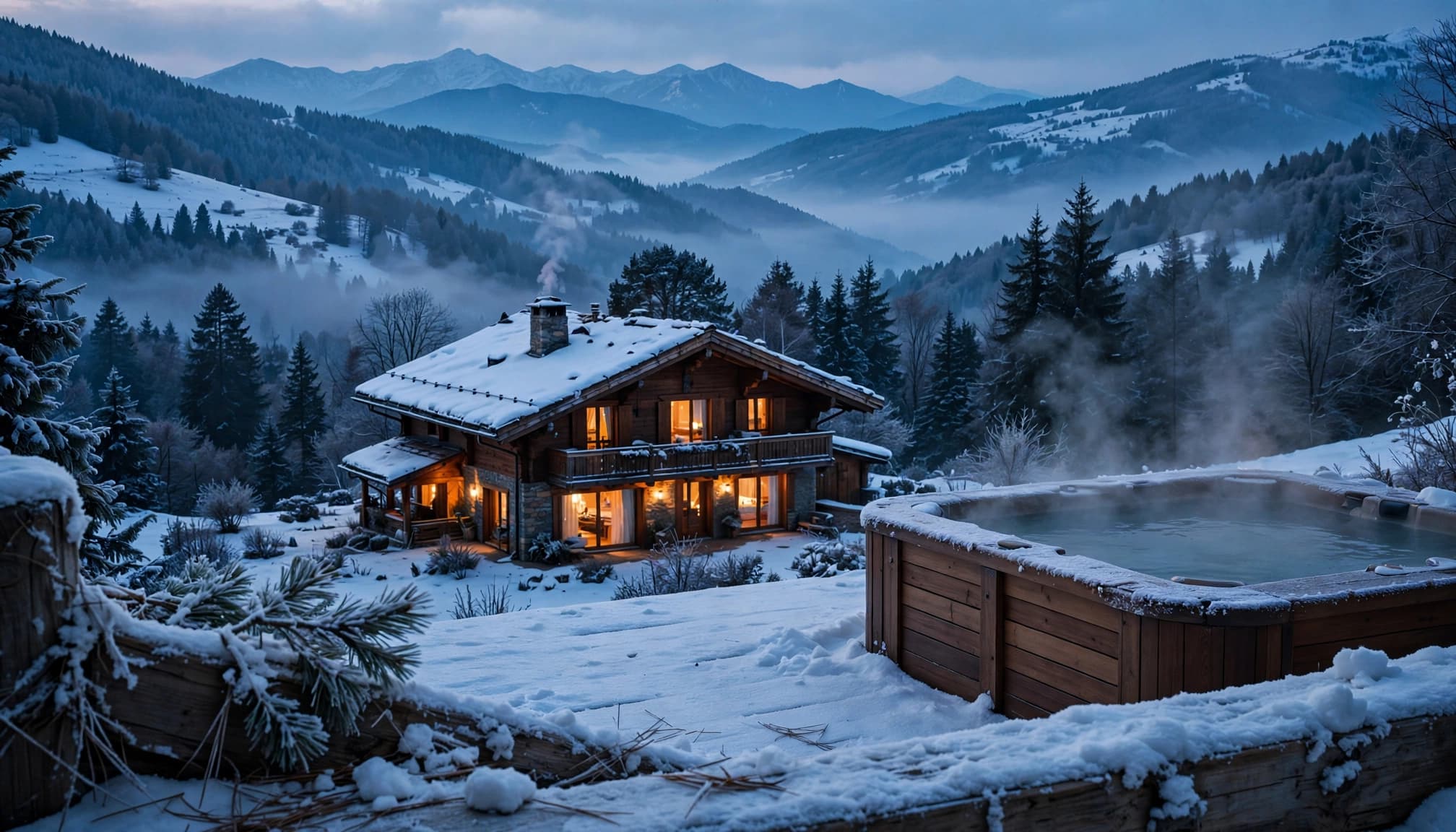
A chalet gives your group somewhere to gather without sharing the lounge with other guests. Some luxury properties add a private hot tub, sauna, or cinema room.
After a day on the slopes, the property can feel like a home away from home. It also gives you space for an early children’s dinner while adults settle in elsewhere.
But usable space matters more than impressive square footage. Bedroom quality, bathrooms, stairs, and noise separation decide whether everyone feels comfortable. A chalet advertised for ten can still create an awkward room allocation.
I apply the same principle to luxury multigenerational travel: the layout needs to support different routines. A dining table that seats everyone comfortably matters more than another decorative sitting area.
For friends sharing costs, agree on bedroom allocation before deposits. A bunk room and a mountain-facing primary suite aren’t equivalent purchases.
Ski Chalet vs Hotel Costs: Compare the Whole Stay
Use Occupancy to Find the Break-Even Point
Divide the full chalet cost by the number of paying guests. For hotels, add every room before dividing.
These accommodation-only comparisons assume two adults per hotel room and identical dates. Rates, staffing, amenities, and package inclusions vary by resort and property, so compare equivalent dates and services.
| Guests | Hotel rooms needed | Chalet matches hotel cost when its nightly total equals |
|---|---|---|
| 2 | 1 | One room’s nightly rate |
| 4 | 2 | Two rooms’ combined nightly rate |
| 6 | 3 | Three rooms’ combined nightly rate |
| 8 | 4 | Four rooms’ combined nightly rate |
The important number is actual occupancy. If two friends cancel, the remaining chalet guests may absorb their share. Hotel rooms may be individually cancellable, depending on the booking terms.
A large chalet doesn’t become good value simply because it has more beds.
Add the Services You’ll Actually Use
Mondschein argues that chalets can look cheaper upfront while extras accumulate. Groceries, lift transfers, equipment, and ski passes all affect the total.
Equipment and passes usually belong in either accommodation budget. Count them consistently rather than treating them as chalet-only expenses.
Compare accommodation, taxes, meals, drinks, airport transfers, local driving, housekeeping, childcare, and gratuities. Chef quotes also need to distinguish groceries, preparation, service, and cleanup.
A catered chalet menu can include breakfast, afternoon tea, and three-course dinners. Those inclusions change the comparison substantially against a room-only hotel rate.
Meals Should Match How You Want to Explore
Catered Chalets Make Staying In Appealing
Le Ski and Iglu Ski describe the familiar catered-chalet rhythm: breakfast, afternoon tea, a multi-course dinner, and a drinks package. Three-course dinners are common; some packages include unlimited wine.
Le Ski’s catered chalet offering illustrates how much of the holiday can happen at the property. Its program describes six dinners per week, leaving an evening for dining out.
That works beautifully when your group wants to return, shower, and gather around one table. It works less well when discovering restaurants is a major reason you’re traveling.
Self-Catering Buys Control, With Work Attached
Self-catered chalets give you control over meal times and food choices. They also bring shopping, cooking, and cleanup. Private chef quotes should clarify whether groceries, preparation, table service, and cleanup are included.
Kitchen quality varies. For a group, useful equipment means adequate refrigeration, a full-size oven, enough hob space, a dishwasher, and tableware for everyone. A kitchenette won’t deliver the same experience.
I’d choose catering around the evenings you want. Paying for dinner at the chalet while heading into the village every night duplicates spending. A hotel breakfast plan leaves evenings open for village dining, while half board suits travelers who prefer dinner arranged at the property.
Service, Wellness, and Family Logistics
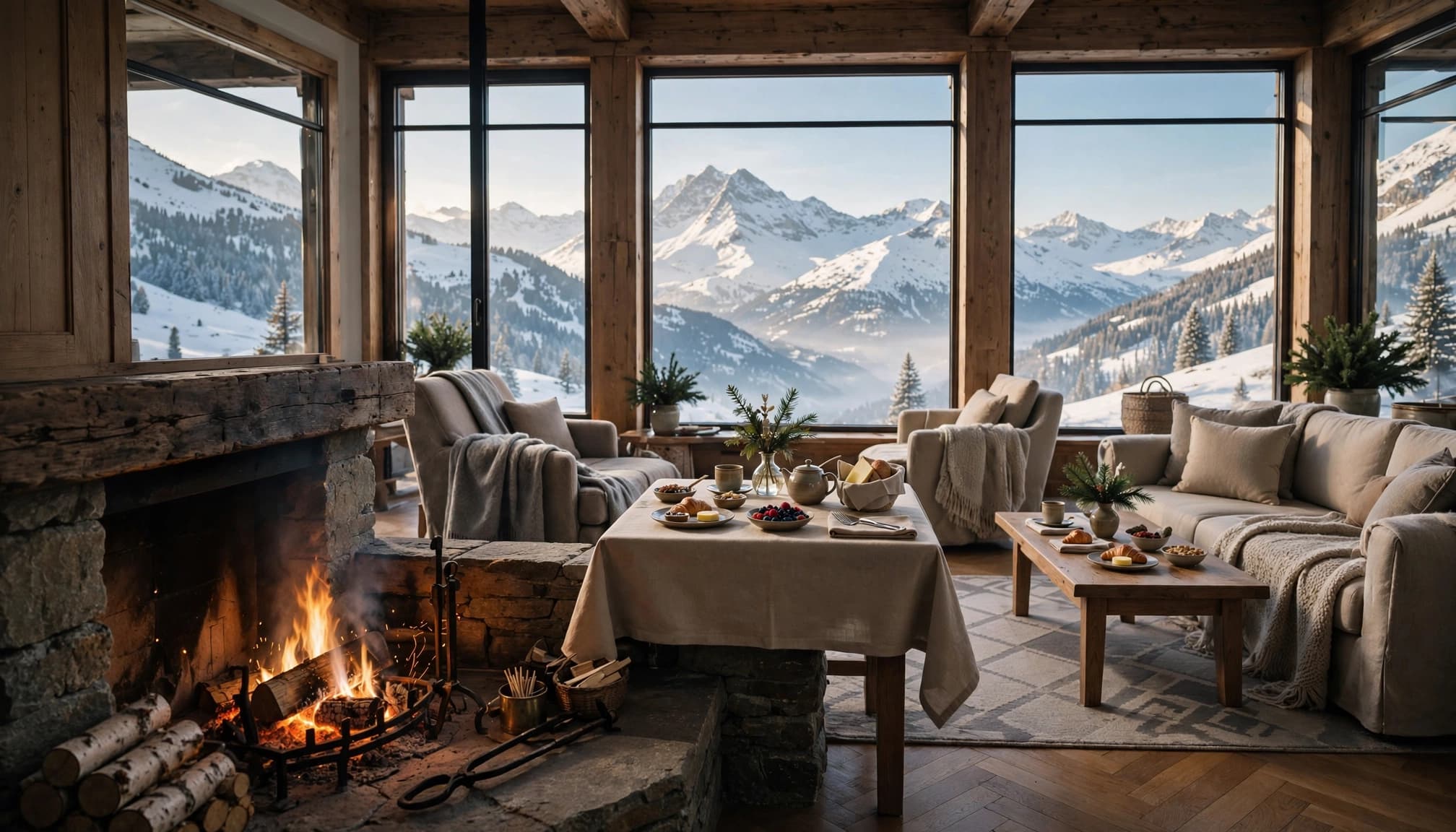
Hotels Offer Breadth; Chalets Offer Exclusivity
Five-star hotels typically provide daily housekeeping, reception staff, room service, and on-site restaurants. Many add pools, treatment rooms, and extensive spas, shared with other guests.
A private sauna gives you exclusivity. A substantial hotel spa gives you more facilities. Choose the one you’ll use.
Some luxury ski chalet bookings promoted by Bramble Ski and OVO Network include a chef, dedicated host or chalet manager, driver, and pre-arrival concierge. Daily housekeeping closes another part of the hotel service gap.
Those services belong to the individual booking, however. The words “luxury chalet” don’t establish staffing hours, driver availability, or overnight support.
Families Need Different Kinds of Help
Hotels are more likely to offer kids clubs, childcare, and organized activities. These services aren’t automatically included in the room rate, and age eligibility matters.
Chalets usually require separately arranged childcare or additional staffing. Larger groups can spread that cost, but a private address alone doesn’t provide supervision.
For a family holiday, I’d weigh early meals and separate living areas against reliable childcare and a pool for non-skiing afternoons. Connecting hotel rooms can work well, too. Their value depends on guaranteed placement, rather than a preference recorded on the reservation.
Location Can Outweigh the Accommodation Category
At a ski resort, a chalet isn’t automatically closer to the slopes. A hotel isn’t automatically in the center of the village.
Understand the Route to the Lift
Ski-in/ski-out needs more detail than a listing badge. The route may involve a particular piste, a short uphill walk, or snow conditions that don’t suit every date.
The useful comparison is door-to-lift access in ski boots, with equipment, at your group’s ability level. A short distance on a map can include steps or an icy incline.
For beginners and children, straightforward access to the meeting point can matter more than direct access to an advanced run. Heated boot storage, secure ski racks, and a practical changing area also improve every morning.
Plan the Return After Dinner
A secluded chalet can be perfect for evenings by the fire. It can also make every restaurant reservation dependent on a vehicle.
A dedicated driver helps only within the service’s operating hours and area. A daytime lift shuttle doesn’t solve a late return after après-ski or live music.
A property can be convenient for skiing and inconvenient for the evening you most want to enjoy.
I favor a walkable base when restaurants and nightlife are central to the trip. For a property-led stay, I’d prioritize privacy and dependable transport.
My custom travel concierge services bring accommodation, dining, activities, and ground transport into one coordinated plan. The room and the evening should work together.
Frequently Asked Questions
Is a Private Chalet Worth It for a Group?
Yes, when the group uses its shared spaces and fills the property comfortably. Six friends who want breakfast together, private wellness time, and dinners at home have a strong reason to choose one.
The case weakens when schedules diverge, bedrooms vary substantially, or most evenings happen elsewhere. Hotels let households choose their room category and daily pace without negotiating every meal.
Which Option Suits a Mixed Skiing and Non-Skiing Group?
A five-star hotel often has the advantage when non-skiers want treatments, a pool, restaurants, and independent outings. A central location adds freedom.
A fully staffed chalet can also work beautifully if its setting and services support the people staying behind. I’d choose around their daytime experience as carefully as the skiers’ lift access. Nobody should feel stranded while the others are on the mountain.
Choose the Base That Gives You Your Time Back
My decision rule is simple: choose a chalet when being together is the heart of the trip. Choose a five-star hotel when flexibility, independent plans, and extensive facilities matter more.
Then spend on the details that protect your time: the right layout, easy lift access, thoughtful meal arrangements, and a comfortable return after dinner.
The strongest alpine stay gives you freedom to enjoy the day, without turning every transition into another decision.