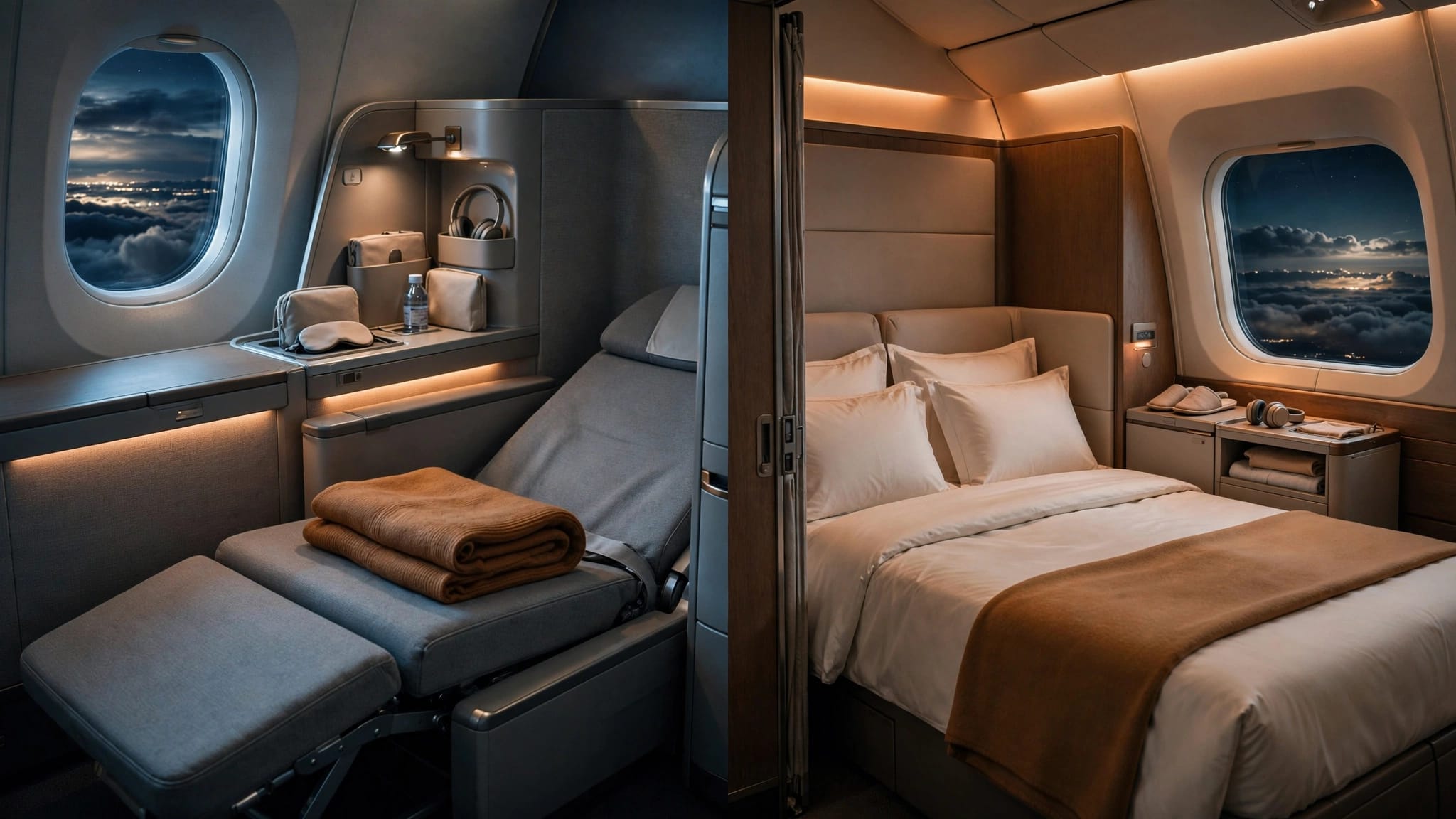
For most overnight flights, a well-designed business-class seat delivers what matters most: a flat bed and a better chance of arriving rested. First class earns its premium when extra sleeping space, greater privacy, and more personal service genuinely improve your journey.
I start with usable time at the destination, then work backward through the flight, airport, and arrival arrangements. A beautiful suite can improve the luxury travel experience, but so can a nonstop flight that gets you to your hotel without an exhausting connection.
Here’s how I’d make that decision.
Key Takeaways
- Choose business class when the priority is sleep, direct aisle access, and a comfortable arrival.
- Consider first class when the flight itself is part of the occasion, or additional personal space changes how comfortably you sleep.
- Judge the aircraft and seat layout before the cabin name. U.S. domestic first class usually means a wider recliner.
- Compare the complete journey, including connections, airport services, transfers, and hotel access on arrival.
The Business vs First Class Comparison That Matters
Modern long-haul business class on international flights can be excellent. United Polaris, for example, offers fully lie-flat seats, direct aisle access, and priority check-in and boarding.
First class generally adds space, exclusivity, and more individualized attention. The difference becomes less straightforward when an older first-class cabin competes with a newer business-class suite.
These are the practical distinctions to weigh.
| What matters | Long-haul business class | International first class |
|---|---|---|
| Sleeping setup | Usually a seat that converts into a flat bed | More personal space; some products have a separate bed |
| Privacy | Open seats, partitions, or doors, depending on aircraft | More secluded seating; enclosure varies by product |
| Aisle access | Common on modern layouts, but not universal | Usually direct access |
| Dining | Multi-course meals and fine dining, with scheduled or flexible service; champagne and wines vary by airline | More personalized pacing and elaborate presentation |
| Airport experience | Lounge access and priority services are common | More exclusive lounges and ground handling on selected journeys |
| Best reason to book | Comfortable overnight transportation | Greater privacy or a memorable onboard experience |
Business class usually covers the essentials well. First class makes the strongest case when its additional features match something you care about.
That might be a separate bed, room to dine together, or simply fewer people around you.
Protect the Sleeping Window First
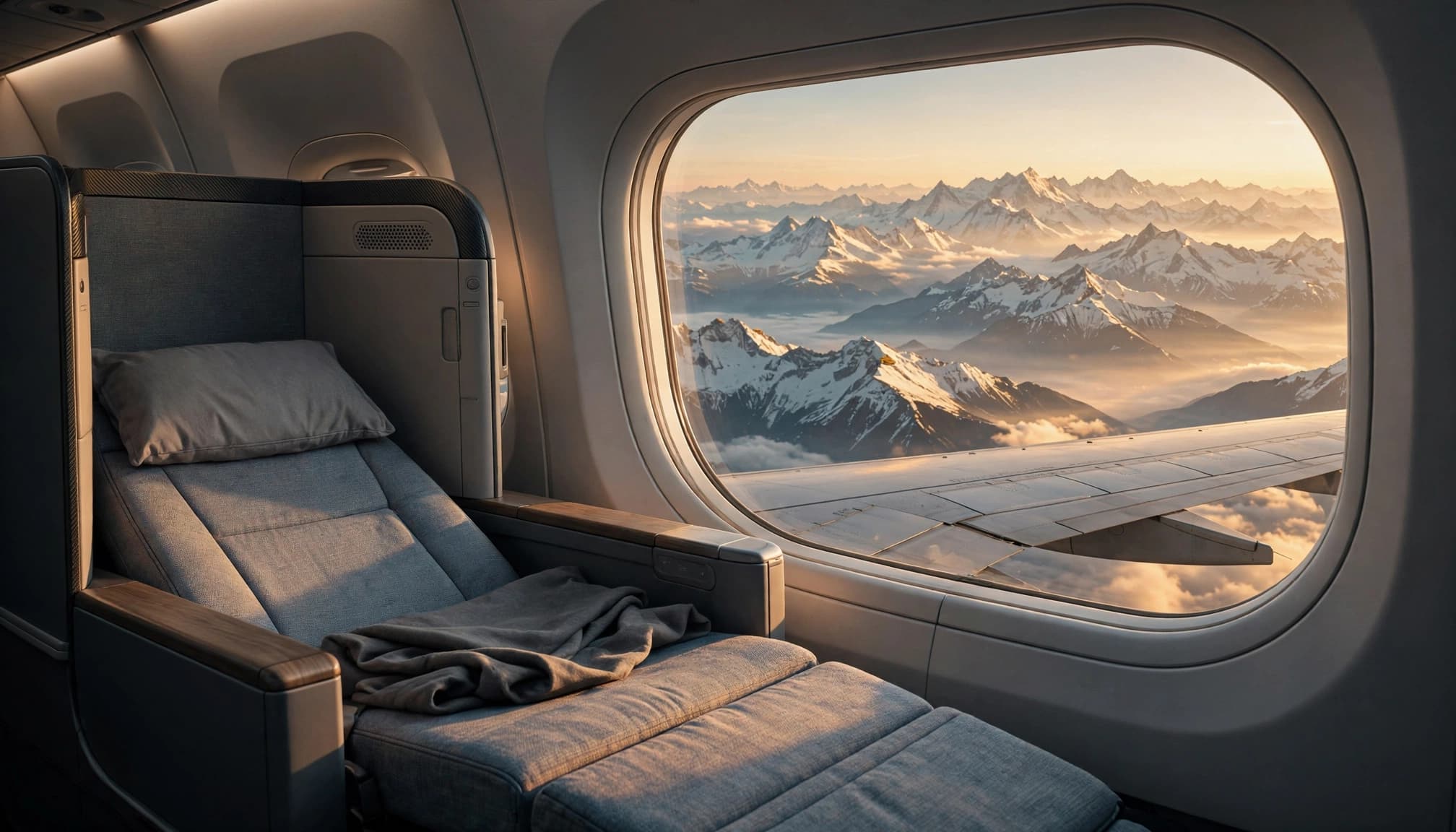
A flat bed helps, but the schedule determines how much of the sleeping window you can use on long-haul flights. Start there. Keep your amenity kit and sleep essentials within reach before service begins.
Short Atlantic Crossings
On an eastbound flight between the U.S. East Coast and Europe, dinner and breakfast can consume a meaningful share of the night.
I’d prioritize a nonstop departure that fits your natural bedtime, then choose a comfortable lie-flat seat. Eating before boarding can leave more time for uninterrupted rest.
First class won’t create extra flying time. Its value depends on whether the additional room helps you settle faster and sleep more comfortably. For many travelers, strong business class is enough on this shorter overnight.
Longer Overnight Flights
Longer flights give you more time to enjoy dinner, sleep, and wake up without rushing. This is where a spacious first-class suite becomes more compelling.
Bed length, shoulder room, footwell space, and privacy deserve more attention than the entertainment screen. Taller travelers and side sleepers may feel these differences immediately.
Favor seats away from busy galleys and lavatories when uninterrupted rest is the goal. For couples, adjacent seats matter less if the layout makes conversation awkward or leaves one person exposed to aisle traffic.
Which First-Class Suites Justify a Closer Look?
Emirates, Singapore Airlines, Etihad, and Air France offer distinctive international first-class experiences. They aren’t interchangeable, and the aircraft determines what you receive.
Singapore Airlines and Etihad: Separate Sleeping Spaces
Singapore Airlines Suites and First Class are different products. On the A380, Singapore Airlines’ private suites have a separate bed and reclining chair. Certain adjoining suites can form a double-bed arrangement.
Etihad’s A380 First Apartments also separate the armchair and bed. That layout matters when you want to relax, dine, and sleep without repeatedly converting the same seat.
Etihad’s The Residence is another category altogether: a three-room product rather than a standard First Apartment. Treat it as a distinct purchase.
Emirates and Air France: Different Approaches to Privacy
Emirates’ fully enclosed First Class suites on selected Boeing 777 aircraft emphasize separation from the cabin. Its A380 first-class experience has a different layout and includes access to an onboard shower spa.
Air France La Première takes another approach, using curtains to create privacy rather than relying on a conventional hard-sided door.
I’d choose between these experiences based on how you want the journey to feel. Enclosure, open space, and a separate sleeping surface are different benefits. A suite photograph rarely tells the whole story.
Airport Luxury Should Improve the Journey

Illustrative lounge setting, not a specific airline facility.
Ground service can make first class worthwhile before you board, especially during a long connection. Compare airport lounge access and priority boarding on the specific ticket, since availability and exclusivity vary by airline and fare.
Singapore Airlines’ The Private Room at Changi Terminal 3 is reserved for its Suites and First Class passengers. British Airways’ Concorde Room at London Heathrow Terminal 5 provides another distinct first-class lounge experience.
The Air France La Première experience also includes dedicated ground services. Its optional private airport suites at Paris Charles de Gaulle are a separate offering, rather than something every ticket automatically includes.
The useful distinction is comfort versus time saved. A lounge can provide an excellent meal and a quiet place to reset. It doesn’t shorten every security queue or eliminate connection time.
I wouldn’t add a connection simply to visit a lounge unless that experience is part of the trip’s purpose. A nonstop business-class flight can be the more luxurious choice when it protects an evening at your destination.
Compare the Fare Difference, Then the Upgrade Options
First class usually costs more than business class, sometimes substantially. Compare the ticket price and booking conditions across two equivalent journeys.
What the Additional Fare Buys
Airlines price premium cabins around demand, available inventory, route competition, and booking flexibility. First class also sells a much scarcer product.
Compare the full ticket, including changes, cancellation conditions, connecting segments, and included services. A first-class long-haul segment paired with an inconvenient connection may be less appealing than nonstop business class.
On shorter overnight routes, premium economy may be enough if a lie-flat bed isn’t essential. Check whether the actual seat will let you rest.
Then place the upgrade beside the rest of the trip. A guaranteed hotel room after an early arrival, private transfers, or another night in the right neighborhood may improve more of your vacation.
My preference is to fund those essentials before paying for extra onboard ceremony.
Miles, Status, and Paid Upgrades
Frequent flyer miles can provide access to first-class awards or eligible upgrades, but availability and fare rules control the outcome. Elite status alone doesn’t guarantee an international business-to-first upgrade.
Some airlines offer paid airline upgrades during check-in or at the airport. Availability isn’t guaranteed, so treat them as an opportunity, not the foundation of an important trip.
For travelers using points for premium flights, the complete cost includes taxes, surcharges, and any positioning flight needed to reach the departure airport.
If the better cabin requires another overnight stop or an awkward separate ticket, the apparent saving may come with a substantial time cost.
Build the Arrival Around the Flight
The business vs first class decision should sit inside the itinerary, not above it.
An early landing can work beautifully when a driver is waiting and your hotel room is available. Without that sequence, you may spend the morning tired, carrying luggage, and waiting for somewhere to shower.
I’d secure access to the room when immediate rest matters. An early-check-in request isn’t the same as a room reserved for your arrival.
Keep the first day flexible, too. A neighborhood lunch or relaxed evening works better than an expensive, tightly timed experience immediately after an overnight flight. Give the defining dinner or concert its own breathing room.
Through my Signature Concierge planning service, I coordinate flights, accommodation, dining, and transfers as one journey. The objective is straightforward: arrive with enough energy to enjoy the travel experience you planned for the destination.
A bigger seat helps. A well-timed arrival completes the job.
Frequently Asked Questions
Is U.S. Domestic First Class Suitable for an Overnight Flight?
On domestic flights, the U.S. domestic first-class cabin usually offers a wider reclining seat and extra legroom. It generally doesn’t provide the bed or privacy associated with international first class.
Selected transcontinental services have lie-flat premium cabins. For an overnight domestic flight, the sleeping surface matters more than whether the ticket says “first” or “business.”
Can Anyone Buy Business Class?
Yes. Business class isn’t restricted to business travelers, company bookings, or passengers with elite status.
Anyone can purchase an available ticket. Loyalty status affects certain benefits and upgrade opportunities, but you don’t need it to book the cabin. The same principle applies to buying an available international first-class ticket.
Should You Enjoy the Dining or Prioritize Sleep?
For a short overnight flight, I’d usually eat before boarding and protect the sleeping window. On a longer journey, there’s more room for both.
Water is a sensible default. Keep alcohol modest when rest is the priority, and avoid late caffeine if it disrupts your normal sleep. Even an elaborate meal has limited value if it leaves you exhausted on arrival.
Choose the Cabin That Protects Your Trip
Business class is the practical luxury choice when a good bed and a sensible schedule meet your needs. First class earns its place when additional privacy, sleeping space, or the onboard occasion matters enough to justify the premium.
Spend where you’ll feel the difference. Your arrival experience deserves as much attention as your departure lounge.
When you’re ready to plan a tailored journey, I’ll bring the flight and the days around it into one considered itinerary.