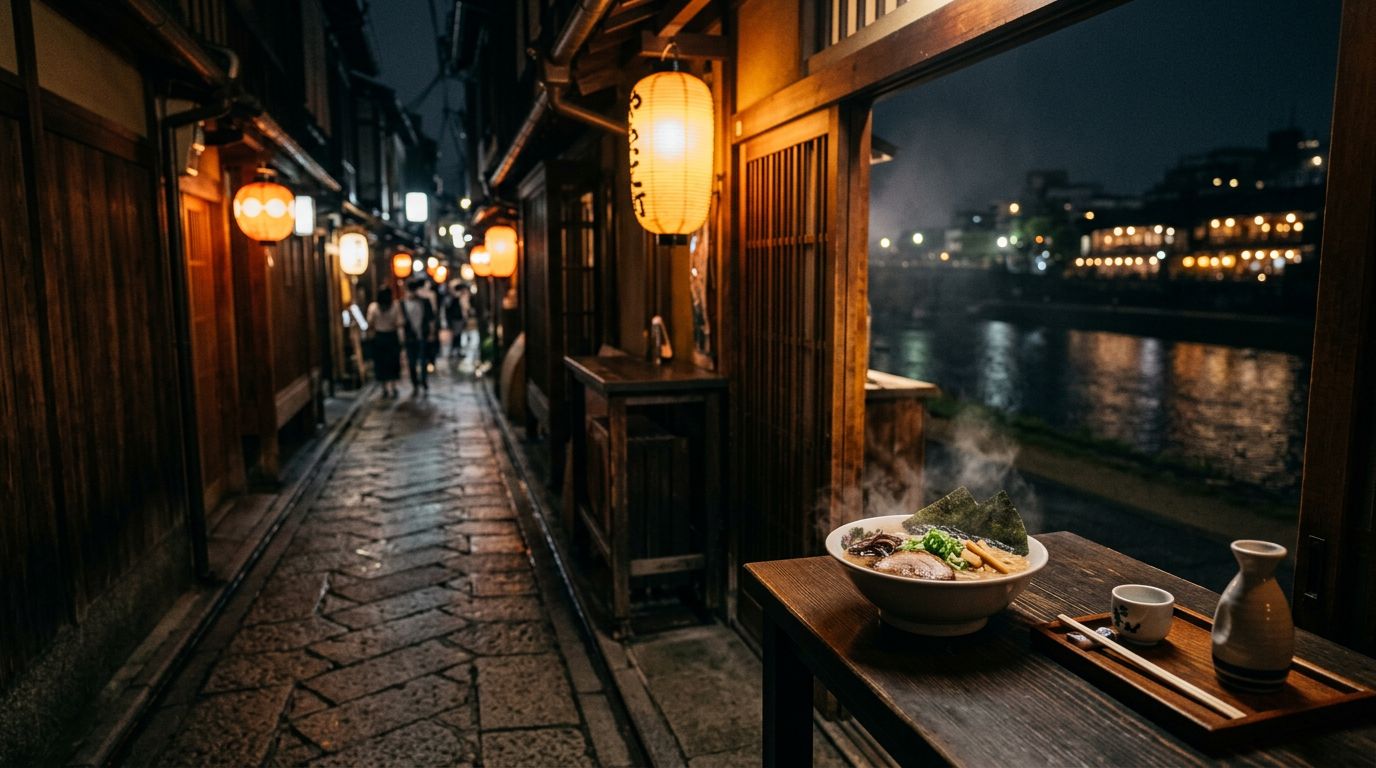
Kyoto gets softer after dark. The temple crowds thin out, lanterns illuminate the narrow alleyways, and the Kamo River stops feeling like a daytime photo stop. This is where you find the true essence of Kyoto nightlife, a place where tradition meets a quiet, nocturnal charm.
A good night here is not about chasing ten bars. It is about finding hidden gems among the architecture, settling into one strong sake counter, enjoying a walk that lets the city breathe, and grabbing ramen when the night needs a final move. Pontocho sake bars give you the right opening, but timing and geography decide whether the whole experience lands.
Key Takeaways
- Pontocho is small, narrow, and best enjoyed with a loose plan rather than a loud Kyoto bar crawl.
- Book a serious establishment if you are looking for a specific producer, style, or intimate counter seat to enjoy high-quality Kyoto sake.
- Start with a measured sake flight, then let the atmosphere of the Kamo River and nearby Kyoto bars shape the rest of your night.
- Late ramen choices change quickly by night and season, so check current hours before committing.
- Keep your final meal close, or take a taxi to Kyoto Station for the classic late-night bowls.
Why Pontocho Works After Dark
Pontocho alley runs north to south between the Kamo River and Kiyamachi-dori, with entrances near Shijo-dori and Sanjo-dori. On a map, it barely looks like a destination. In person, it has the compressed energy that makes Kyoto nights memorable. While it offers a different atmosphere than the nearby Gion district, it remains one of the city’s most vibrant corridors after sunset.
The alley is narrow enough that you feel the room change as you enter. Wooden facades and small noren curtains create an authentic experience that feels miles away from the modern world. A lit stairwell might lead to a six-seat bar or a private dining room, and because these venues are often tucked away in historic buildings, you will find that many modern spots are now strictly non-smoking. You will not find much space for indecision here.
That is part of the point.
Pontocho can feel polished, traditional, crowded, romantic, or slightly impenetrable, sometimes in the same ten-minute walk. It rewards a little intention. Go in knowing whether you want sake, dinner, cocktails, or a fuller night, then keep the rest of the plan close.
The first mistake is treating the lane like a checklist. You do not need to inspect every menu. You also do not need to force a geiko sighting or make a performance of looking for hidden Kyoto. Pontocho is still a working nightlife district. The best nights come from acting like a considerate guest, not a detective with a phone.
If you are visiting between late spring and early autumn, some restaurants along the river open their raised dining platforms, known as kawayuka. Dinner over the water can be beautiful, but it should be the anchor if you book it. Do not try to stack it with a long sake tasting and a far-away reservation.
Kyoto nights work best when dinner, drinks, and the walk home all live in the same orbit.
Build a Pontocho Night Around One Anchor
A clean Kyoto evening has a rhythm. Start early enough to enjoy the alley before it gets busy. Give the first stop room. Then decide whether the night wants to stay intimate or stretch toward Kiyamachi and Kawaramachi.
This is the shape that usually works.
| Time | Move | Why It Works |
|---|---|---|
| 6:00 to 7:30 p.m. | Dinner or a sake-focused first stop | You get seated before peak demand |
| 8:00 to 9:00 p.m. | Walk Pontocho and the Kamo River | The city looks better at an unhurried pace |
| 9:00 to 11:00 p.m. | One second bar in Pontocho or Kiyamachi | You avoid turning the night into transit |
| 11:00 p.m. onward | Late ramen or a final cocktail | You finish with a clear destination |
The takeaway is simple: do not make the subway rescue a bad night plan. Pontocho, Gion-Shijo, Kiyamachi, Kawaramachi, and Shinkyogoku are all workable on foot. That is enough territory for one evening, and planning a Kyoto bar crawl is much more manageable when you stay within this walkable radius.
Start on the river side if you want a calmer opening. The Kamogawa river banks give you a little air before you disappear into the alley. If you are staying near Gion, cross Shijo Ohashi and let Pontocho become the middle of your night rather than the entire thing.
Kiyamachi sits just west of Pontocho and turns the volume up. There are more casual Kyoto bars, more students, more groups, and more late-night options. It can be fun, but it can also get sloppy fast. If your trip is built around great food and real sake or perhaps a glass of Japanese whisky, treat Kiyamachi as the second act rather than the whole show.
For travelers who care about music, check Kyoto venue calendars before dinner. A jazz set, a small DJ night, or an intimate live room can become the anchor. Book dinner nearby, leave margin before doors, and skip the cross-city scramble in nice shoes.
How to Choose a Sake Bar in Pontocho
The best Japanese sake bar for your night depends on what you want from the pour. Some rooms prioritize rare bottles and knowledgeable conversation. Others are lively izakaya spaces where the drinks serve as a companion to dinner rather than a separate ceremony.
A small counter bar is the right call when you want to ask questions. Tell the staff what you usually drink. Crisp white wine, funky natural wine, smoky whisky, dry martinis, or rich reds give them a useful place to start. You do not need a vocabulary test to enjoy a sake tasting; you only need a preference. If you want to explore variety, many places offer English menus or tasting flights that allow you to sample different profiles side by side.
If you like clean, dry pours, ask for a ginjo or a sharp local sake served chilled. If you want depth and warmth, try junmai served kanzake, or warmed sake. Warm sake is not a lesser choice. In the right Japanese sake bar, it is often where the night gets interesting.
A few useful terms can make ordering easier:
- Junmai usually means a rice focused style with no added distilled alcohol.
- Ginjo and daiginjo often lean more aromatic and polished, though the producer matters more than the label tier.
- Nama sake is unpasteurized and lively, usually kept chilled for maximum freshness.
- Nigori sake is cloudy with more texture, often a better fit for richer food than people expect.
Kyoto’s identity is closely tied to the Fushimi district, which is famous for the soft spring water used by its historic local breweries. You may see bottles from producers such as Gekkeikan, Kizakura, and Takara Shuzo around town. A good bartender can also guide you beyond Kyoto toward sake from Niigata, Yamagata, Hiroshima, or Nara.
Order smaller pours if you want range. Two people sharing several glasses will learn more than one person committing to a large carafe too early. Pair the drinks with grilled fish, tofu, seasonal vegetables, pickles, or a few skewers and let the room lead.
Reservations matter in Pontocho because capacity is tight. A bar with eight seats cannot absorb a walk in group of six at 9:30 p.m. If you have a must visit spot, ask your hotel to call ahead or make the reservation before your trip.
The Etiquette That Keeps the Night Good
Kyoto is not precious, but it does notice how visitors move through small spaces. Pontocho is residential in parts, and the lane gets tight when people stop in clusters.
Keep voices down outside. Do not block doorways while comparing menus. Ask before taking photographs inside a bar. If a place feels private, it probably is. Beyond these general rules, practicing proper sake etiquette will help you navigate traditional venues with grace. If you visit a casual izakaya, you can enjoy high-quality Kyoto sake in a more relaxed, social atmosphere. Many of these spots also serve excellent food pairings, so be sure to try local Kyoto obanzai dishes to elevate your drinking experience.
A few practical moves save friction:
- Carry some cash, even though cards are common at higher-end spots.
- Arrive on time for reservations, especially at counter bars.
- Do not assume every small venue can handle luggage, strollers, or a large party.
- Ask the bartender before ordering an expensive bottle you cannot finish.
- Check closing times the same day, because late hours can change by weekday.
The same rule applies to sake service. Let the staff pour if they offer. Do not overthink it if they do not. Polite attention goes further than rehearsed etiquette.
Kyoto can feel formal when you arrive. Then someone sets down a warm cup of sake beside grilled mackerel, the alley goes quiet for a second, and the city feels easy again.
Late Ramen When the Sake Bar Closes
Late ramen is not a side note in Kyoto. It is the closing track to your evening of Kyoto sake, providing the perfect buffer before the walk home starts sounding longer than it is. While some local izakaya serve food late, these dedicated ramen shops are the specialty choice when you crave salt, heat, and a comfortable seat.
Near Pontocho, Gogyo Kyoto is the move when you want something bolder than a standard bowl. Its signature kogashi ramen uses heavily charred aromatic oil, which gives the broth a dark, smoky edge. Go hungry, as this is not delicate post-drink food.
If it is much later and you want reliability over romance, Ichiran Kyoto Kawaramachi is the practical call. The solo booths, customizable tonkotsu broth, and late operating hours make it useful when other kitchens have shut down. It is a chain, and that is fine. At 1 a.m., dependable can be the luxury.
For a more classic Kyoto finish, take a taxi toward Kyoto Station for Shinpuku Saikan or Honke Daiichi Asahi. These neighboring institutions are part of the city’s ramen history. Shinpuku Saikan is known for dark soy sauce broth and a serious pile of sliced pork. Daiichi Asahi leans cleaner, with soy-based soup, pork, and Kyoto-style comfort in a bowl.
Do not leave ramen until you are standing outside a closed door. Check the day’s hours before your second drink. Some of Kyoto’s most respected ramen shops are early-night moves, not after-midnight options.
Also, know your appetite. A full bowl after a tasting menu can turn a perfect night into a long walk with regrets. Split gyoza, order one bowl for two people, or choose a smaller final stop if dinner was heavy.
Getting Back Without Ruining the Finish
Walking remains the best way to soak in the atmosphere of central Kyoto. The route between Pontocho and the Gion district is easy and scenic, as is the stroll toward Kawaramachi Station, Shijo, or other downtown landmarks.
Use taxis when the night runs late, the weather turns, or your hotel is located across town. Kyoto taxis are not the place to prove a point about your endurance. Save your feet for the following morning, especially if Fushimi Inari, Nishiki Market, or an early temple visit is on your itinerary. When managing the logistics of Kyoto nightlife, remember that taxis offer a stress-free way to return to your accommodation after a long evening.
The Keihan Line is useful for reaching parts of eastern Kyoto, while the Hankyu line and the subway make efficient jumps across central areas. Still, trains stop running earlier than many visitors expect. Know the last train time before your night starts, not after.
A well-located hotel buys back time. Staying near Gion-Shijo, Kawaramachi, Shijo, or Sanjo means you can keep the evening loose and remain within walking distance of your favorite Kyoto bars. Choosing a cheaper room far from the center can quickly become expensive once you factor in late-night taxi fares, tired feet, and missed train connections.
Frequently Asked Questions
Do I need to speak Japanese to visit a sake bar in Pontocho?
You do not need to speak Japanese to enjoy the nightlife in Pontocho. While some of the smaller, traditional bars are quite intimate, many bartenders are accustomed to serving international guests and can offer recommendations in English or via descriptive menus. Simply stating your general taste preferences will help them guide you toward a selection you will enjoy.
Is it necessary to make reservations for bars in Pontocho?
Reservations are highly recommended for Pontocho, especially for the smaller, more popular counter bars that seat fewer than ten people. Because space is limited, walk-in groups are often difficult to accommodate, particularly on weekends. If there is a specific venue you are determined to visit, have your hotel call ahead a day or two in advance to secure a spot.
Can I wear casual clothes to a Pontocho bar?
Kyoto nightlife generally leans toward smart-casual, and you will feel most comfortable if you avoid overly athletic or beach-style attire. While you do not need a suit or formal wear, dressing with a bit of intention shows respect for the historic and often upscale atmosphere of the district. Comfortable footwear is also essential, as you will likely be doing quite a bit of walking on uneven stone alleyways.
What is the typical etiquette for tipping in Kyoto?
There is no tipping culture in Japan, and attempting to leave a gratuity at a bar or restaurant can sometimes cause confusion. The price on the bill is all you need to pay, as excellent service is already considered a standard part of the experience. Focusing on being a polite and considerate guest is the best way to show your appreciation for the staff.
The Kyoto Night You Will Remember
Pontocho does not need to be conquered. It needs to be read correctly. Start with a bar that fits your taste, let the river and alley handle the atmosphere, then give late ramen a place in the plan.
The strongest Kyoto nights are never the ones with the most pins on a map. They are the ones where the quality of the Kyoto sake feels right, the walk feels easy, and the final bowl of ramen arrives exactly when it should. By embracing the rhythm of these hidden gems, you ensure that your evening ends with the same magic that defined its start.