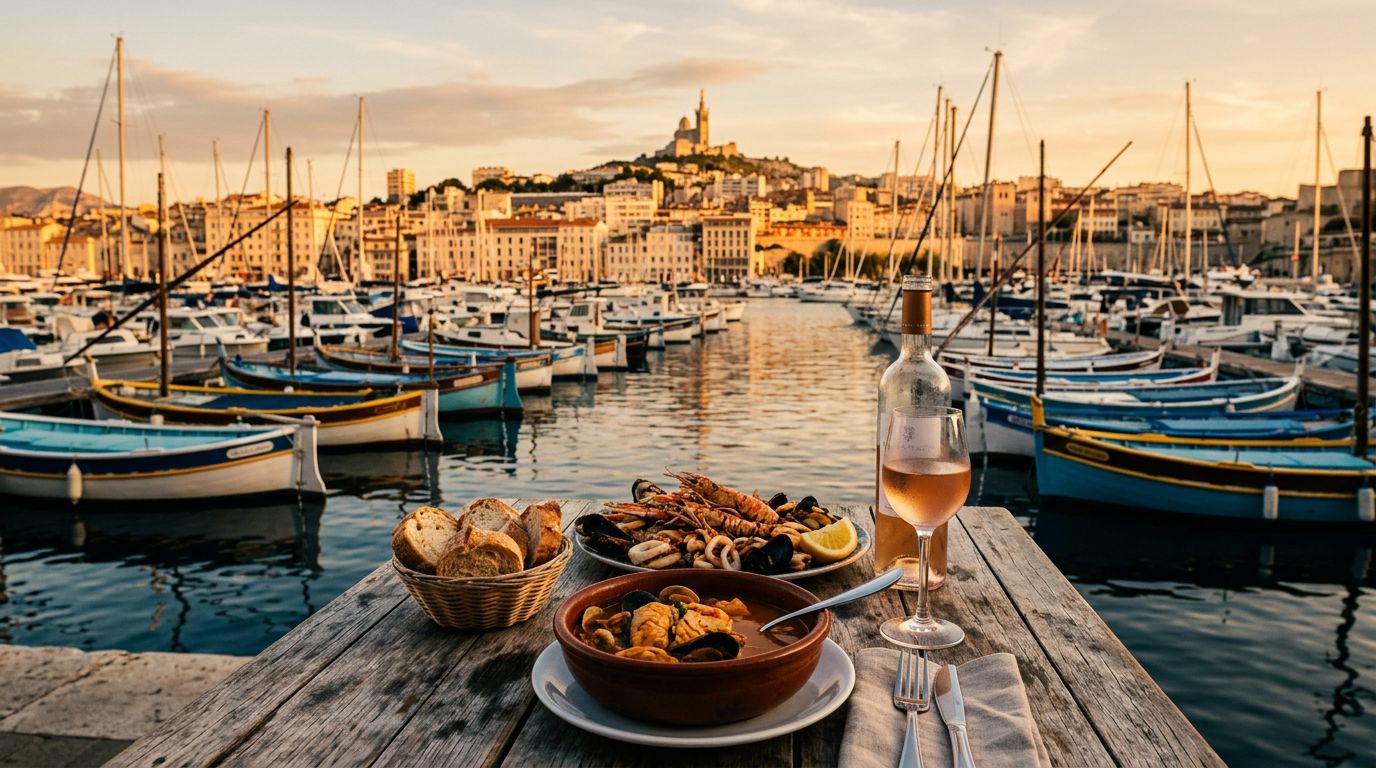
Marseille rewards travelers who stop trying to make it neat. It is a working harbor, a sun-washed food city, a little rough around the edges, and more memorable for it.
The right Marseille itinerary isn’t a sprint between famous buildings. Keep your days tight, link nearby neighborhoods, then give dinner and the night room to breathe.
Three days can cover the harbor, a serious seafood meal, one major cultural stop, and a coastal day without turning the trip into a checklist.
Key Takeaways
- Build your Marseille itinerary around nearby neighborhoods, using the Old Port, Le Panier, Notre-Dame de la Garde, MuCEM, and Cours Julien as natural clusters.
- Make Bouillabaisse a planned dinner with a reservation, and leave room for Navettes, panisses, local seafood, Cassis white wine, Provençal rosé, and pastis.
- Use Day Three for a Calanques walk such as Sugiton, but check fire-risk restrictions and secure the required summer permit before you go.
- Keep the Corniche Kennedy and Vallon des Auffes as a coastal backup if the Calanques close, and use RTM, taxis, and direct walking routes instead of renting a car.
- Leave space in the schedule for long meals, harbor views, a museum chosen with intention, and an easy night in Cours Julien.
Build a Marseille itinerary that flows
Marseille is spread out enough to punish a scattered plan. Tourist attractions are easier to manage in neighborhood clusters. Walk where streets connect, use the metro or bus for clean jumps, and avoid relying on transit to rescue a bad day.
Stay where your evenings work
For a first visit, stay around Vieux-Port, Opéra, or a central neighborhood near the station. Marseille’s Old Port is the easy choice for harbor views, early starts, and a short walk home after dinner. Opéra has more bars, independent shops, and late-night energy.
Read recent hotel reviews before booking. In summer, air conditioning matters. If your room faces a busy square or bar street, sleep can get expensive fast. An interior-facing room five minutes from the action is often the better deal.
If the trip is a birthday weekend, a group escape, or a food-first splurge, personalized food and wine trip planning can put hotel choices, restaurant times, Calanques backups, and transfers into one clear plan.
Sort transit before your first coffee
From Marseille Provence Airport, take the airport shuttle to St Charles station, then Metro Line 1 to Vieux-Port. Cruise port arrivals need extra transfer time into the center.
For August 2026, an RTM single ride costs EUR1.70 when bought through the app, card, or reloadable ticket. The 72-hour pass costs EUR10.80, an easy call if you will use the metro and buses most days.
The Marseille Tourism public transport overview is useful for getting oriented before you land. Save your routes to and from Marseille Provence Airport, load your ticket early, and skip ticket-machine confusion after a flight.
Day One: Vieux-Port, Le Panier, and a seafood dinner
Start with Marseille at its most direct: boats, gulls, salt air, and the city waking up around the harbor.
Walk the Old Port without doubling back
Begin at Quai des Belges on the Vieux-Port. If the fish market is active, linger for a few minutes, then head north toward Place de Lenche and enter Le Panier.
Le Panier is a historic district best explored without a hard route. Follow the steep lanes, murals, laundry lines, tiny galleries, and half-hidden courtyards on a self-guided walking tour until you reach La Vieille Charite. From there, walk downhill to La Major Cathedral, then continue toward Fort Saint-Jean.
This route gives you the Old Port, Marseille’s oldest neighborhood, and the waterfront architecture in one clean line. Save your museum time for tomorrow. Today is about getting your bearings at street level.
If Chateau d’If matters more to you than another cultural stop, make it a deliberate swap, not an add-on. Choose a boat trip instead, and review the Old Port ferry and Chateau d’If options before committing to sailing times.
Make dinner the anchor
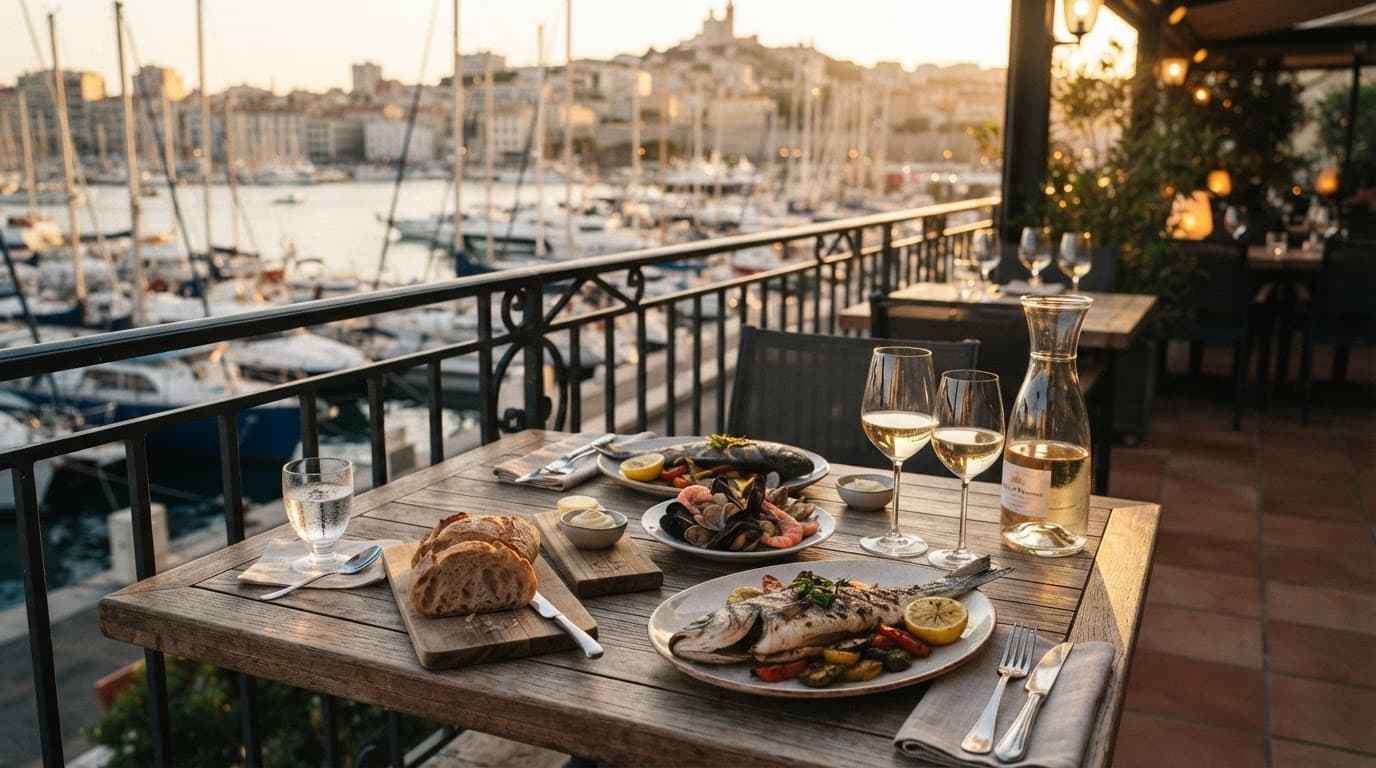
Don’t eat Bouillabaisse as a rushed lunch between attractions. This seafood specialty deserves a reservation, time, appetite, and a proper table.
Le Miramar near the harbor, Chez Fonfon in Vallon des Auffes, Chez Michel, and Le Rhul are all long-standing names worth calling directly. Ask whether it needs to be ordered when you reserve. In August, book before you arrive.
Start with oysters, grilled sardines, or sea urchin if it is in season. Then let the Bouillabaisse arrive in its full form: fish, saffron-rich broth, rouille, bread, and no pressure to rush the bottle of wine.
After dinner, take the long way around the Vieux-Port. The lights across the water are enough for a first night.
Day Two: Notre-Dame de la Garde, J4, and Cours Julien
This is your big-city Marseille day. One hilltop view, one serious cultural stop, then a night with some personality.
Get to Notre-Dame de la Garde the smart way
The basilica sits high above the city, and the view is worth it. The metro does not reach the top, so take Metro Line 1 to Vieux-Port, then use a bus or taxi for the final climb. Check live RTM departures that morning.
Go early if you want clearer light and fewer people. From the terrace, Panoramic views reveal the harbor’s geometry, the islands, pale city blocks, and the Mediterranean beyond.
Walk downhill through Vauban afterward. It is easier on the legs, and the streets have more character than a round-trip taxi. Stop for a late coffee, then return toward the water for your afternoon plan.
Pick MuCEM or Cosquer Méditerranée
Do not cram both museums into one afternoon unless museums are the point of your trip. Choose one with intention, then leave room for the waterfront.
MuCEM is the better choice for Mediterranean history and architecture. MuCEM’s dramatic sea-facing footbridge leads toward Fort Saint-Jean, creating a memorable transition by the water.
Cosquer Méditerranée is the move if prehistoric art interests you. The experience recreates the Cosquer Cave, discovered by diver Henri Cosquer in 1985. Its underwater entrance protected images of animals and human markings that date back thousands of years.
Book timed entry ahead for August. Then walk to Joliette and take one Metro Line 2 ride to Notre-Dame-du-Mont for an evening in the creative neighborhood.
Day Three: Coastal walks in the Calanques
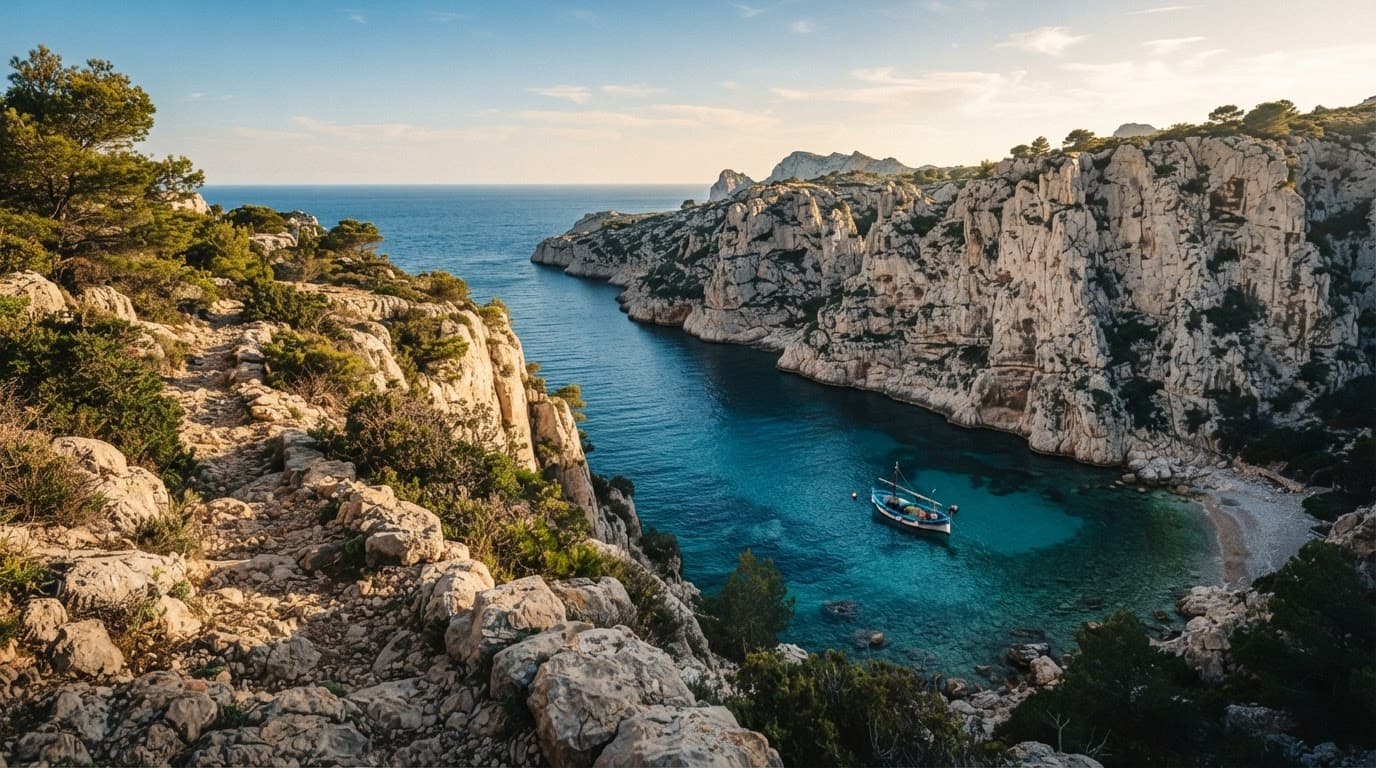
Day trip planning in Calanques National Park gives your Marseille escape a wide-open finish. White limestone, blue water, pine, heat, and a landscape that makes the city feel suddenly far away.
Choose a Calanques walk that matches your energy
Sugiton is the strongest choice for a first-time visitor who wants a real coastal walk. It offers panoramic views without turning the day into a mountain mission. The usual public transit approach heads toward Luminy, followed by a walk down to the calanque. This central Marseille to Calanques route outline is a useful starting point, but confirm current departures with RTM.
For summer 2026, Sugiton requires a free permit daily from June 27 through August 30. Reservations open three days ahead at 9 a.m. and close at 6 p.m. the day before. Each booking allows up to five people.
Bring more water than you think you need, proper shoes with grip, sun protection, and food. En-Vau is beautiful, but it is longer and more demanding. It is not the right choice if you want energy left for a good dinner.
In summer, a Calanques day is conditional. A red fire-risk day means no land access, even if the forecast looks perfect.
Check the daily fire-risk status before leaving the hotel, then start with the official Calanques access guidance. Boat trip options don’t automatically bypass closures; they depend on current marine conditions, fire rules, and operator schedules.
Use the Corniche as your weather-proof backup
Day trip plans can shift to the coast if the massif closes, so do not force a bad substitute. Start near Plage des Catalans, walk past Vallon des Auffes, and continue along the Corniche Kennedy toward Malmousque.
You still get sea air, rocky inlets, swimmers, and the soft gold light Marseille does so well. Vallon des Auffes is also a great place to book a final seafood dinner if you have not had your fill.
Eat Marseille properly: Bouillabaisse, Navettes, and wine
Marseille isn’t a city for forgettable meals wedged between plans. Let lunch run long. Order the second glass if the room feels right. Keep dinner close enough that nobody’s checking maps halfway through it.
Know what to order beyond Bouillabaisse
For breakfast, find a bakery with a line and order Navettes. These crunchy, boat-shaped biscuits are scented with orange blossom water. Le Four des Navettes, near Abbaye Saint-Victor, remains the classic stop.
Local cuisine shines at lunch with panisses, fried chickpea cakes with a crisp edge and soft center. They work with a cold beer or a glass of rosé, while the Fish market points you toward fresh seafood. Foodies can follow their noses in Noailles, past spice shops, North African groceries, and lived-in casual counters.
Dinner should be seafood, but you don’t need the signature seafood dish twice. Order whole grilled fish, mussels, clams, or a plate of raw shellfish. Marseille is best when the table stays simple and the ingredients carry it.
Drink with the coast, not against it
A chilled white from Cassis is a natural match for fish and shellfish. Provence rosé works for an afternoon by the harbor. If you want more structure, ask for a Bandol.
Pastis is the classic aperitif, but it’s strong. Have it when you have time, water, and no plan to climb another hill.
Give Cours Julien the night it deserves
Cours Julien is where Marseille feels more creative, less formal, and ready to stay out. Spend an hour here before dinner. Browse the vintage shops, admire Street art, then choose a bar based on the room instead of a saved social post.
Build a music night backward from doors
If live music is part of the trip, check the current calendars for Espace Julien, Le Molotov, and Makeda before you lock dinner. Book a table nearby, finish early, and leave a margin for the walk and entry line.
My rule is simple: one neighborhood, one good meal, one show or bar, one easy route home. A concert night should feel like part of the trip, not another logistics problem.
The area also works for a loose final drink. Keep it close to your hotel if possible. The second glass of wine can turn an extra transfer into a bad idea quickly.
Stay sharp without making Marseille feel scary
Marseille has edge. That is part of its appeal. Treat it like any major European city and you will be fine.
Keep your late-night plan simple
At the main train station, on crowded transport, and around busy central streets, keep your phone and wallet secure. Use well-lit, direct routes after dark. Skip unfamiliar shortcuts, especially when you are tired.
Do not rent a car for this three-day plan. Parking, narrow streets, and summer Calanques restrictions create more hassle than freedom. Walk nearby, use RTM for cross-city jumps, and take a taxi or ride-share home when the night runs long.
The best trips remove small friction before it gets loud. A good hotel location, water in your bag, a dinner reservation, and a backup for the Calanques do most of the work.
Frequently Asked Questions
How many days do you need in Marseille?
Three days is enough to experience the Old Port, Le Panier, a major cultural stop, a seafood meal, and the Calanques. Keep the itinerary focused rather than trying to see every attraction.
Where should you stay in Marseille?
Vieux-Port, Opéra, and central areas near Saint-Charles work well for a first visit. Vieux-Port is convenient for harbor views and early starts, while Opéra offers more bars, independent shops, and late-night energy.
Do you need to book Bouillabaisse in advance?
Yes, especially in August or if you have a specific restaurant in mind. Ask when reserving whether the Bouillabaisse must be ordered ahead, then allow plenty of time for the meal.
Can you visit the Calanques without a car?
Yes, public transport can take you toward areas such as Luminy, followed by a walk to the calanque. Check current RTM departures, fire-risk restrictions, and any permit requirements before leaving.
What should you do if the Calanques are closed?
Use the Corniche as a coastal alternative, starting near Plage des Catalans and continuing past Vallon des Auffes toward Malmousque. You will still get rocky inlets, sea air, and Mediterranean views without forcing an unsafe hike.
The Marseille You Will Remember
Three days in Marseille should leave you with salt on your skin, Navettes to remember, a long seafood meal, and time to notice the city beyond its landmarks.
Keep the plan focused. Give the hilltop view and MuCEM their own space, then let the coast shape the final day trip.
The strongest Marseille itinerary is not the busiest one. It is the one that leaves room for harbor light, a long lunch, a thoughtful museum visit, and one more glass when the night is going well.