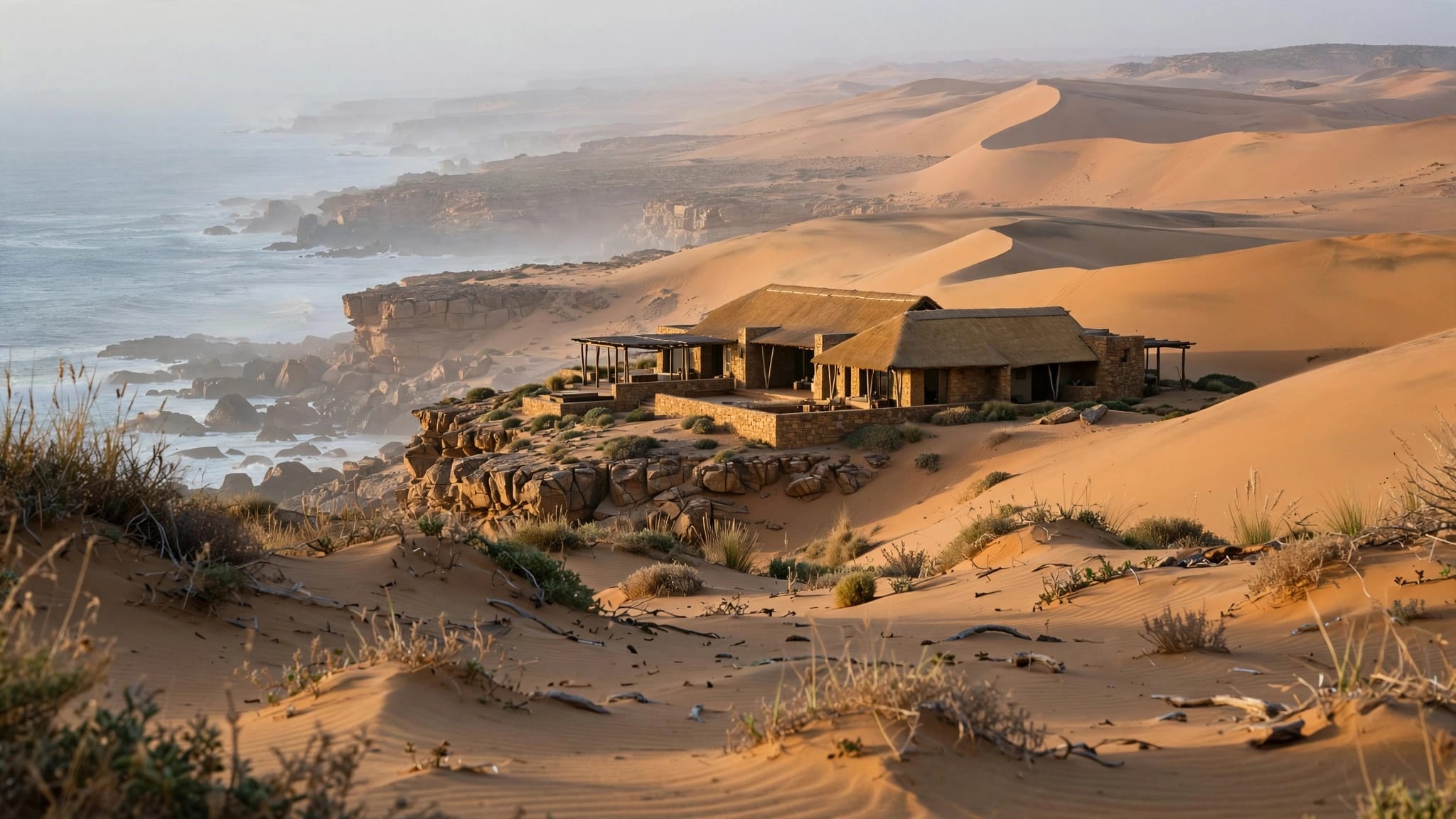
A luxury Namibia itinerary works best with two weeks, contrasting lodges, and flights reserved for the stretches that consume your day. I’d pair Etosha’s wildlife with Damaraland, the remote Skeleton Coast, and three nights near Sossusvlei.
The priority is time on the ground: an unrushed wildlife sighting, lunch overlooking the desert, and enough energy for sunrise. Start with the route, then choose the rooms.
Key Takeaways
- Give Namibia fourteen days, including an arrival night and a final overnight before your international departure.
- Use light aircraft for the remote northern Skeleton Coast. A coastal road trip through Swakopmund offers a different experience.
- Spend first on lodge location, guiding, and sensible transfers. Compare the complete journey price before choosing suite upgrades.
How I’d Structure a Luxury Namibia Itinerary
Namibia covers about 824,000 square kilometres, roughly 3.4 times the UK’s area. Its 2023 census counted just over three million people. Distance and isolation are part of the appeal, but they need proper planning.
This fourteen-day route combines road transfers with selected flights.
| Days | Base | Main Experience |
|---|---|---|
| 1 | Windhoek | Arrival, rest, dinner |
| 2 to 3 | Etosha area | Wildlife drives |
| 4 to 5 | Damaraland | Desert-adapted wildlife and scenery |
| 6 to 7 | Northern Skeleton Coast | Remote coastline and guided exploration |
| 8 to 9 | Swakopmund | Seafood and a coastal excursion |
| 10 to 12 | Sossusvlei area | Dunes, Deadvlei, lodge time |
| 13 | Windhoek | Return and departure buffer |
| 14 | Departure | International flight |
That’s thirteen nights. Fly into the northern coastal chapter and onward to Swakopmund; retain worthwhile road journeys elsewhere.
If wildlife matters more than dunes and isolation, my luxury Tanzania safari itinerary offers a more wildlife-focused alternative. I’d choose the trip’s central purpose before combining countries.
Days 1 to 5: Windhoek, Etosha, and Damaraland
Day 1: Arrive Without an Agenda
Keep Windhoek practical and comfortable: a private airport transfer, room access timed around your flight, and an easy first evening. I wouldn’t collect a rental vehicle and begin a long drive after an overnight international flight.
For dinner, Leo’s at the Castle pairs a hilltop setting with views across the city. It suits an arrival night when you’d like somewhere atmospheric without building an entire evening around logistics. Keep the reservation comfortably after your expected hotel arrival.
Days 2 and 3: Give Etosha Your Attention
Namibia’s Etosha National Park has lion, leopard, elephant, and rhino, with buffalo absent. Two nights offer an introductory safari, although wildlife-focused travelers should take an additional night elsewhere on this route.
I’d shortlist Ongava Lodge for a western approach to Etosha. Build the stay around guiding quality, access, and the difference between reserve activities and national-park drives. A private room doesn’t establish private vehicle use. For photographers or families, I’d put vehicle exclusivity ahead of a larger suite.
Days 4 and 5: Change the Setting in Damaraland
Damaraland brings rocky expanses, dry riverbeds, and the possibility of desert-adapted elephants. The landscape gives this stop its own purpose.
Damaraland Camp belongs on the shortlist. Allow one full day for a guided outing, with wildlife sightings treated as possibilities rather than appointments. Keep the transfer afternoon lighter: lunch, time to settle in, then whatever the conditions support. Arriving late and leaving early would miss much of the reason to stay.
Days 6 to 9: Skeleton Coast and Swakopmund
Days 6 and 7: Stay on the Remote Coast
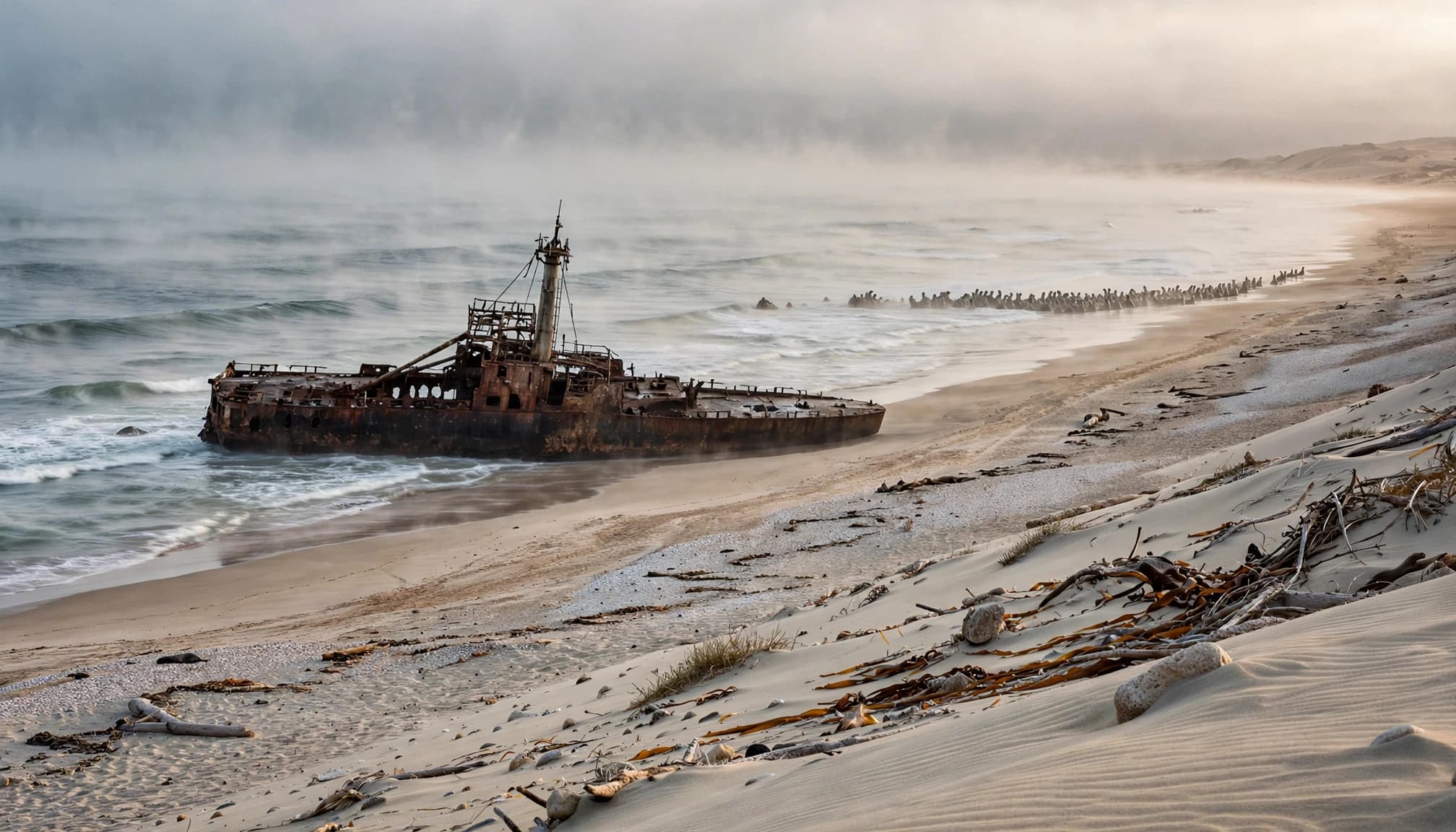
Namibia’s remote northern Skeleton Coast deserves its own lodge stay. Swakopmund is a useful coastal base, but it doesn’t deliver the same isolation.
I’d consider Shipwreck Lodge for these two nights, with coordinated flights and lodge transfers. Let the lodge’s guided program shape your exploration rather than treating the surrounding coast as an independent driving excursion.
Give the arrival afternoon breathing room. Aircraft transfers include packing, airstrip journeys, and arrival arrangements, even when the flight itself looks short. Two nights leave one full day to experience the setting.
Days 8 and 9: Seafood, Dunes, and an Evening Out
Fly onward to Swakopmund for two nights. This is the place to add restaurant choice and a more social evening between remote lodge stays.
I’d reserve oceanfront dining at The Tug for seafood and Atlantic views. For a live-music option, Soundgarden in Swakopmund fits a relaxed evening better than another formal dinner.
Use the full day for a guided Sandwich Harbour 4WD excursion. Leave the surrounding hours open rather than stacking several excursions into the same day.
Days 10 to 14: Sossusvlei and an Unhurried Departure
Days 10 to 12: Give the Desert Three Nights
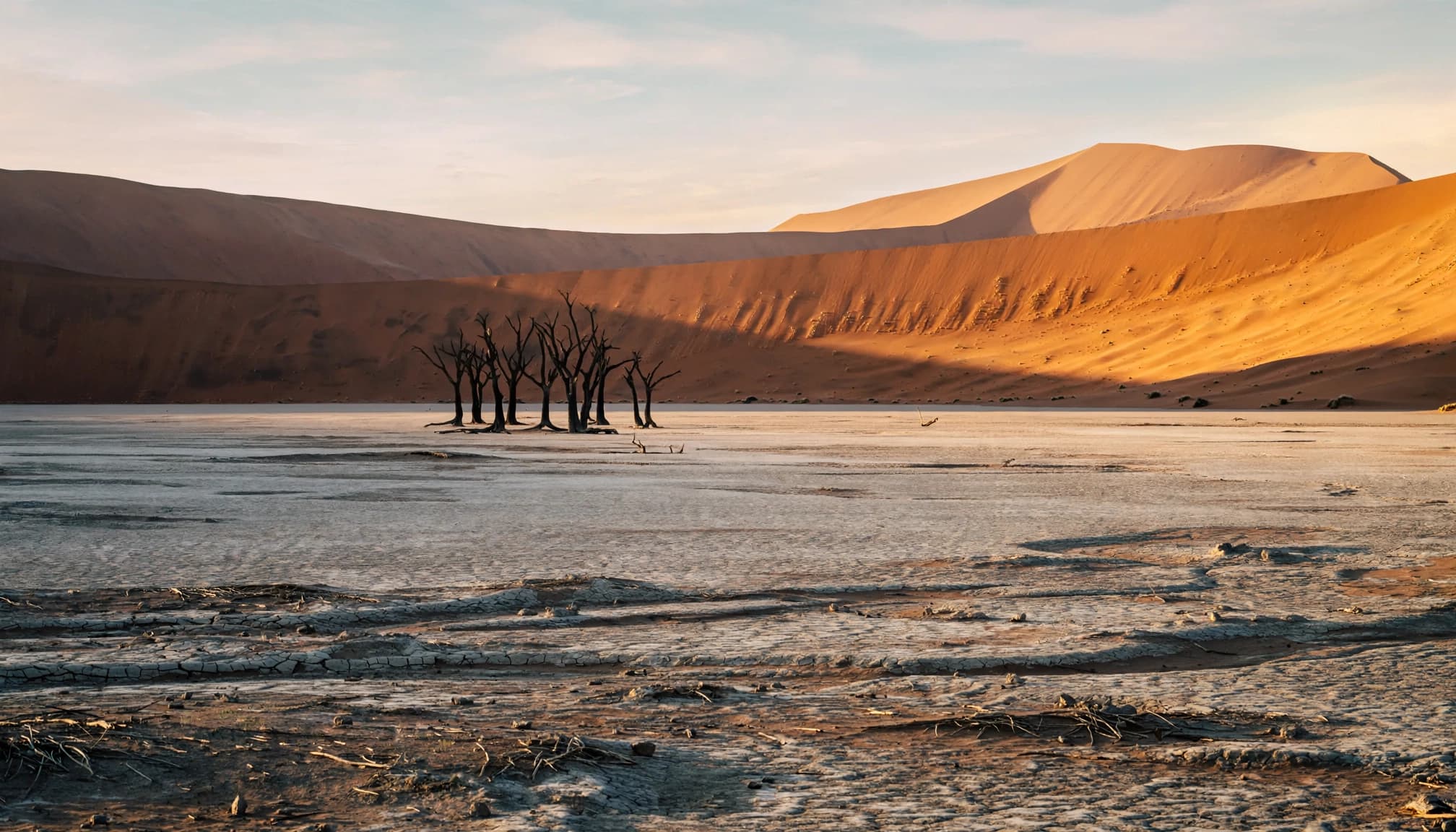
Sossusvlei is Namibia’s signature desert stop, known for its striking dunes. Three nights provide two full days, which matters when sunrise outings require early starts.
I’d shortlist &Beyond Sossusvlei Desert Lodge for travelers who want the property itself to be part of the experience. Its setting and the drive to the dune attractions belong in the same decision.
The final sandy approach to both Sossusvlei and Deadvlei requires a suitable 4×4 or an arranged transfer. Guided access removes that driving task. Keep one afternoon for lunch, downtime, and the desert beyond your terrace.
Days 13 and 14: Protect the Journey Home
Return to Windhoek on day thirteen and fly internationally on day fourteen. I favor that overnight separation after a remote lodge stay.
Sesriem to Windhoek is roughly 350 kilometres on one common route, with approximately five to seven hours allocated for driving. Your lodge’s exact position changes the total.
A flight can replace the road journey, but the full transfer chain still matters. Airstrip access, intermediate stops, and the airport transfer belong in the schedule. Keep the final evening simple and leave the next morning comfortably paced.
Self-Drive or Fly-In: Choose Where Your Time Goes
For this luxury itinerary, I’d use flights selectively. They earn their place on the remote coastal section; road travel remains rewarding when it connects genuinely different scenery.
For a Namibia road trip, remove the northern coastal lodge and give those two nights to Etosha and Damaraland. Retain Swakopmund as the coastal chapter.
These regional estimates show the scale of the road journeys.
| Regional Transfer | Approximate Distance | Driving Allowance |
|---|---|---|
| Windhoek to Etosha | 434 to 480 km | 5 to 5.5 hours |
| Okaukuejo to Twyfelfontein | 300 km | 4 to 4.5 hours |
| Twyfelfontein to Swakopmund | 323 to 360 km | 4 to 5 hours |
| Swakopmund to Sesriem | 350 to 410 km | 5 to 7 hours |
| Sesriem to Windhoek | About 350 km | 5 to 7 hours |
These are gateway-to-gateway estimates, not lodge-door timings. Stops and access roads add time.
Aim for around four driving hours where possible. Several legs exceed that, which is why two-night stays and occasional flights matter.
With ten days, I’d fly between fewer bases: one night in Windhoek, three near Sossusvlei, two in Damaraland, two on the northern Skeleton Coast, then one final Windhoek night. That preserves the desert-and-coast focus while removing Etosha and Swakopmund.
What the Luxury Journey Costs
Published Scott Dunn examples provide useful market references: £5,600 per person for nine nights and £13,800 per person for ten nights. A separate thirteen-night family itinerary also starts at £5,600 per person.
Those are different products, not equivalent quotes for this route. Duration alone doesn’t explain the price.
Remote lodges in Namibia require substantial transport and operating support. Aircraft routing, season, occupancy, private guiding, and room category all affect the final amount.
I’d compare accommodation, internal flights, road transfers, park or concession fees, and activities as separate components. International flights, insurance, and gratuities belong in the overall financial plan.
Then distinguish shared activities from exclusive vehicle use. Full board generally covers meals; it doesn’t establish whether drinks, laundry, transfers, or outings are included.
A premium suite and a private safari vehicle are separate purchases. The vehicle often changes more of your waking day.
For couples, I’d prioritize privacy and thoughtful dining arrangements. For families, room configuration and flexible activity timing come first.
When to Go and How to Travel Comfortably
Choose Dates Around Wildlife and Pace
May through October is the strongest general window for wildlife viewing, when animals gather around permanent water sources. June through August can bring cold mornings, even when afternoons feel warm.
Pack layers for early drives and coastal evenings. Fog and cool air can make the coast feel entirely different from the interior.
Tell the lodges about dietary needs, favorite cuisines, and wine preferences before arrival. Meals deserve a place in the plan, rather than becoming whatever fits between excursions.
Handle Roads and Health Before Departure
Gravel dominates many touring routes. A suitable vehicle, conservative speed, and daylight driving matter more than maintaining the map’s estimated arrival time.
Treat 80 km/h as an upper planning ceiling on good gravel, not a target. Around 60 km/h can be more comfortable on rough sections. Avoid driving after dark.
Malaria risk varies by region and season; it isn’t accurately described by a single line north of Windhoek. A travel-medicine clinician can advise whether malaria prevention is appropriate for your route and season. Namibia travel-health guidance provides background, alongside medical advice tailored to you. Include appropriate medical evacuation coverage.
Frequently Asked Questions
How many days do you need for a luxury Namibia itinerary?
Allow fourteen days, including an arrival night in Windhoek and a final overnight before your international flight. That gives you thirteen nights for Etosha, Damaraland, the Skeleton Coast, Swakopmund, and Sossusvlei.
Should I drive or fly between lodges in Namibia?
Use flights selectively for the remote northern Skeleton Coast, where road travel takes substantial time. Road journeys work well between other regions when you allow for long driving days and stops.
When is the best time to visit Namibia for wildlife?
May through October is the strongest general period for wildlife viewing, when animals gather around permanent water sources. June through August can bring cold mornings, so pack warm layers for early drives.
What affects the cost of a luxury Namibia trip?
Aircraft routing, season, occupancy, private guiding, and room category all affect the price. Compare the full cost of accommodation, transfers, flights, activities, and fees, and check which meals and outings are included.
Build the Trip Around the Days You Want
The strongest version of this route gives each setting a clear purpose: wildlife, desert, remote coastline, and a well-placed evening out. Guiding and transfer choices determine how much you enjoy the lodges.
I’d shorten the route before taking another night from every stay. Time at the property is part of what you’re paying for.
I build custom journeys around those priorities, with the moving parts handled before you arrive.