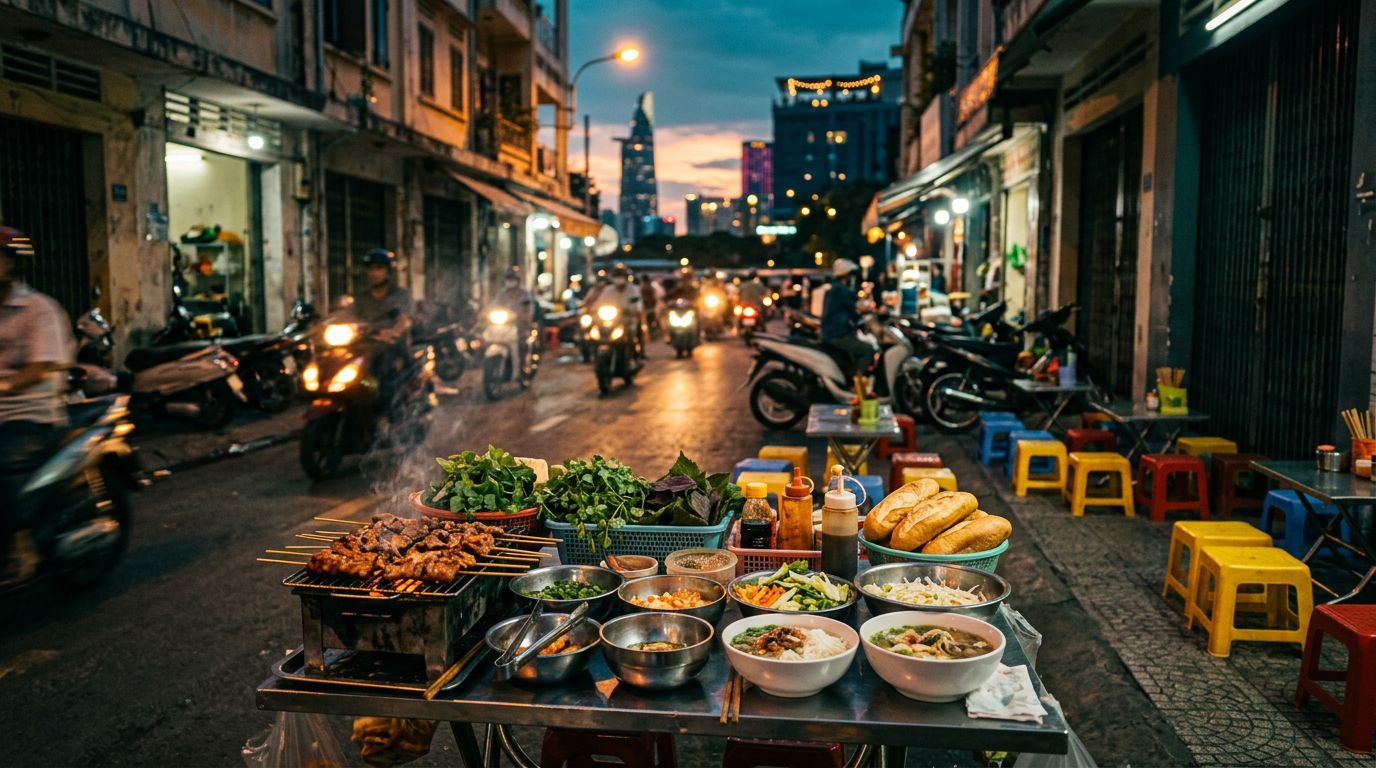
Saigon hits you all at once: scooter noise, charcoal smoke carrying grilled pork, tropical heat, plastic stools, and a city that doesn’t think dinner should end early.
Three days is enough to get a real taste of Saigon without turning the trip into a race between map pins. Keep each day tight, eat where the neighborhood is already hungry, and let a rooftop bar be the final note instead of the whole night.
The move is simple. Pick one area, give it room, then stay close enough to your evening plans that the city doesn’t turn dinner into a commute.
Key Takeaways
- Build each day around one food-heavy neighborhood: District 1 and 3, Cholon, then Ho Thi Ky and District 4.
- Order Saigon essentials such as banh mi, com tam, pho, bánh bột chiên, hủ tiếu, grilled seafood, and garlic noodles, while leaving room to share.
- Stay central, carry smaller VND notes, and follow turnover: busy stalls, hot food, and ingredients that move quickly are the safest choices.
- Reserve rooftop bars first, then keep dinner nearby so sunset cocktails and skyline views don’t turn into a cross-city commute.
- Expect simple street-food meals to remain affordable, with seafood and famous stalls costing more than everyday market dishes.
How to build a smart three-day Saigon plan
District 1 is the easy base for first-time visitors. You have walkable landmarks, strong hotel choices, rooftop bars, and quick rides to most food-heavy districts. District 3 is a better pick if you want more local rhythm, serious coffee, and a slightly softer return home.
Don’t book the cheapest hotel across town if rooftop drinks and late dinners matter. A central room buys back time. Ask whether it faces a busy street, an interior courtyard, or an alley. Saigon scooters start early, and a great location can still be the wrong room.
Treat each night as an anchor, reserving the rooftop bar you care about first. Keep dinner in the same orbit, with a street food market as a practical fallback when appetites split. The city is better when you can walk to lunch, take one clean ride to the next neighborhood, then settle into the evening without checking your phone every eight minutes.
Use these local street food prices as a realistic baseline. Add a Vietnamese iced milk coffee to your daytime budget before cocktails and transport:
| Street-food stop | Typical price range |
|---|---|
| Banh mi | 20,000 to 40,000 VND |
| Com tam, or broken rice, with grilled pork and pickled vegetables | 35,000 to 60,000 VND |
| Pho | 45,000 to 70,000 VND |
| Seafood on Vinh Khanh Street | 60,000 to 150,000 VND |
A basic meal can still be a great value, as this street-food price snapshot shows what simple meals cost across the city. The pho range covers beef pho and chicken pho, both served with rice noodles. Famous stalls and seafood can push up the bill, especially with one shareable serving of garlic noodles at Vinh Khanh.
Carry smaller VND notes, especially 20,000, 50,000, and 100,000 bills, to help busy street food stalls make quick change. Cards and QR payments are common at cafes and polished venues, but cash keeps a crowded stall moving.
Day 1: Ben Thanh, District 3, and a skyline finish
Start near Ben Thanh, but don’t make the market your main meal. The surrounding streets are more useful, with quick daytime options for banh mi and com tam on Le Thi Hong Gam and Thu Khoa Huan. Com tam is the southern classic of broken rice, grilled pork, pickled vegetables, spring onion oil, and a fried egg if you’re hungry enough.
For a famous, overstuffed version, try Banh Mi Huynh Hoa, a Saigon institution with a crispy baguette and generous fillings. It is not the cheap local lunch play, and that’s fine. Go once if the massive filling appeals. Then balance it with a smaller neighborhood banh mi later.
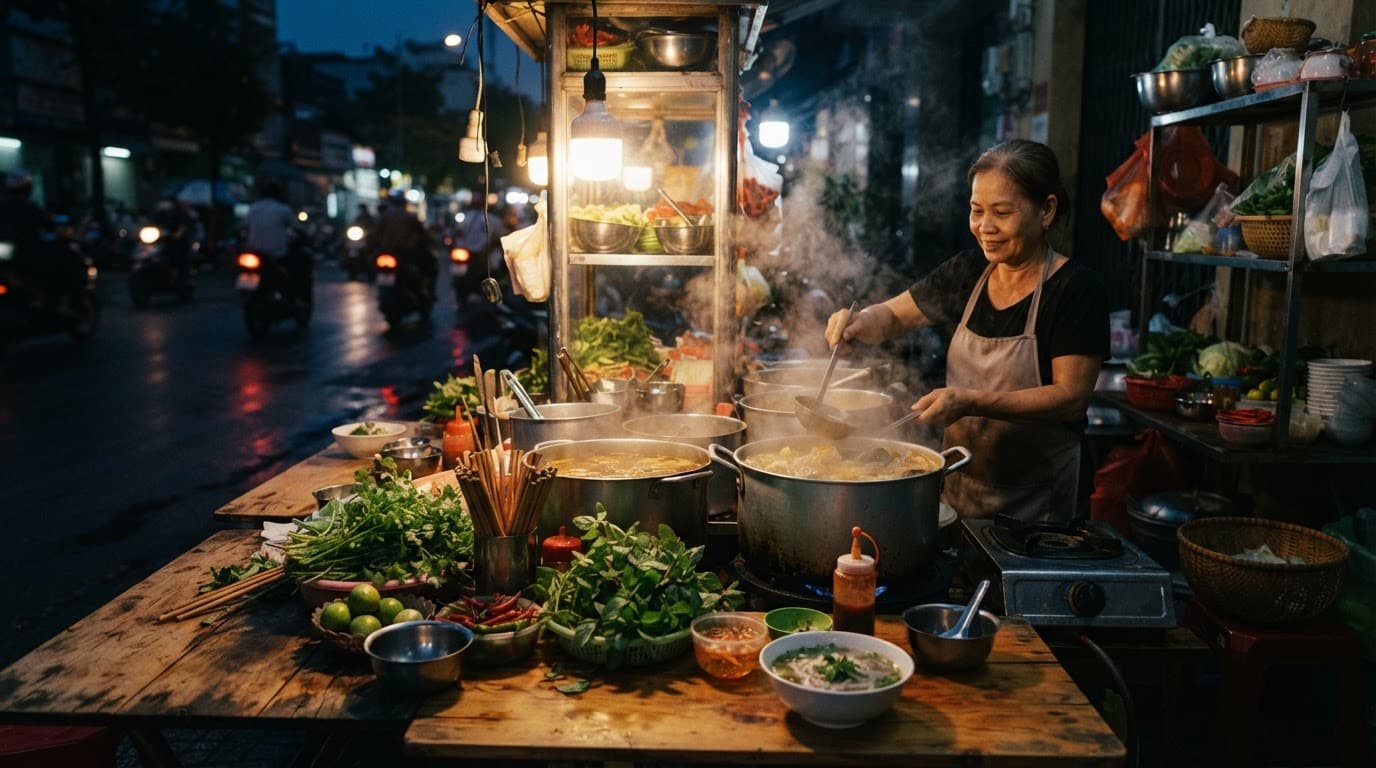
Lunch is the right time for pho. Choose beef pho for a richer bowl, or chicken pho for something lighter. Southern pho usually arrives with more fresh herbs, bean sprouts, lime, chili, and sauces on the side than you may find in Hanoi. The broth often leans a little sweeter, too, so taste it before adding fish sauce, hoisin, or chili. A good bowl deserves that much respect.
Take a coffee break before sliding into District 3. Vietnamese iced milk coffee is dark robusta brewed through a metal phin filter, then poured over sweet condensed milk and ice. It is strong, sweet, and built for the heat. Don’t drink it at 6 p.m. unless you want your rooftop night to run long.
Bàn Cờ Market is a smart late-afternoon food stop. Look for bánh bột chiên, crisp-edged fried rice-flour cakes with egg, and bánh tráng nướng, grilled rice paper topped with savory ingredients. Bò lá lốt comes wrapped in betel leaves. Order one or two things and share, leaving room for more delicious food later.
For drinks, book Social Club Rooftop Bar at Hotel des Arts around sunset. It works because you’re already in District 3. Have one proper cocktail, take in the skyline, then keep dinner close rather than chasing another view across town.
Day 2: Cholon for lunch, then classic Saigon rooftop drinks
Cholon, the city’s historic Chinese-Vietnamese quarter in Districts 5 and 6, deserves a full food-focused afternoon. This is not the place to stack a museum, a market, and three formal meals. Come for the alleyways, temples if they interest you, and the food that gives the district its pull.
Binh Tay Market is a good anchor. Around it, look for hủ tiếu made with rice noodles, dumplings, wonton noodles, roast meats including grilled pork, and small Chinese-Vietnamese snacks such as spring rolls. The flavors often run richer here, with deeper broths and more texture than a quick District 1 lunch.
If you don’t read Vietnamese, save a few dish photos before you arrive. You may also spot bò lá lốt wrapped in betel leaves, though it is an optional find rather than a must-order. These Saigon food notes can help you recognize dishes before you step up to the counter.
Give yourself a reset after Cholon. Return to your hotel, shower, change, and let the afternoon heat go down. This isn’t wasted time. It protects the night.
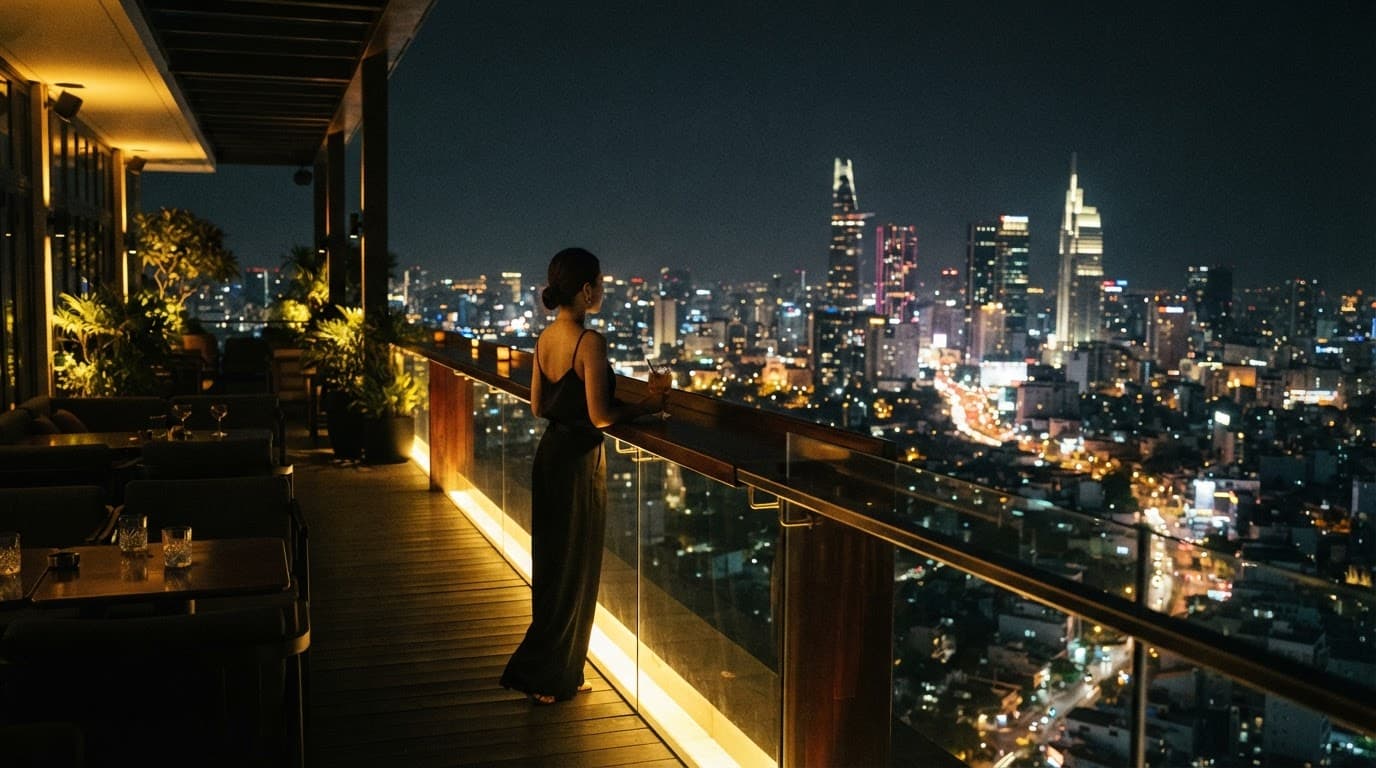
For a classic District 1 rooftop, Saigon Saigon Bar at the Rex Hotel has the right old-school feel. The views are part of it, but so is the sense that the city has been meeting here for a long time. Keep the first drink simple, then head to dinner nearby.
This is a good night for a market if your group has different appetites. Ben Nghe Street Food Market is more polished than a sidewalk stall, but it is easy, central, and useful for mixed appetites, with garlic noodles to share where available. Don’t confuse convenient with inauthentic. A well-built trip has room for both.
Day 3: Ho Thi Ky Market, District 4 seafood, and one last bar
Make your final food day a little rougher around the edges. Start later, take your time over breakfast, then head to Ho Thi Ky, a street food market in District 10. Its lanes are packed with snacks, grilled pork, bò lá lốt in betel leaves, rice noodles, and sweet desserts, while constant movement makes the afternoon feel like an event.

Photo by Trần Phan Phạm Lê
Don’t over-order early. District 4 is waiting.
Vinh Khanh Street, Saigon’s food street, comes alive after 5 p.m. with grilled seafood, snails, shellfish, fried dishes, and cold beer on low plastic tables. This is the kind of street where smoke hangs in the air and every table looks like it knows something you don’t. Choose a busy street food vendor, ask the price before cooking, and keep your first order tight.
Grilled scallops with scallion oil, clams, prawns, and snails are strong calls. Add garlic noodles as a shareable accompaniment, then choose carefully because seafood costs more than most market dishes.
If live music is part of your trip, book the performance first and build dinner around it. Don’t force a District 4 seafood feast before a show on the other side of town. A late ride, a rushed meal, and a missed opening set is a bad trade.
For a final skyline drink, Chill Skybar in District 1 gives you a more dressed-up finish. It is a different mood than a plastic stool on Vinh Khanh, which is exactly why it works. Saigon has range.
Eat Well Without Getting Sick or Stuck
The best rule for Saigon’s street food is simple: follow turnover. Choose stalls with a steady local crowd, hot food coming straight from the grill or pot, and ingredients that haven’t been sitting in the sun.
If your stomach is sensitive, make your first day cooked-food heavy. Grilled pork, broken rice, beef pho, and made-to-order garlic noodles are easier calls than raw herbs and pre-cut fruit. Bottled water is easy to find. Be cautious with ice if you’re unsure where it came from.
At a seafood stall, confirm the total before the food hits the grill. The price can depend on weight, and a quick question avoids an awkward surprise.
Dietary restrictions need more than a hopeful gesture. Save a Vietnamese translation on your phone and show it before ordering. “Không thịt” means no meat, “không đậu phộng” means no peanuts, and “không nước mắm” means no fish sauce. If you eat vegetarian, ask for “chay,” then confirm the broth too.
A self-guided street-food route is useful for planning a longer food tour, including a street food market, but leave room for instinct. Sometimes the best meal is the stall with no English menu, ten plastic stools, and a line that doesn’t need an explanation.
When you’re ready for a second Southeast Asian city built around late-night street food, the Bangkok street food neighborhoods guide maps where the same busy-stall logic applies after midnight.
Frequently Asked Questions
Where should I stay for a Ho Chi Minh City street food trip?
District 1 is the easiest base for first-time visitors, with walkable landmarks, rooftop bars, and quick rides to food-heavy neighborhoods. District 3 offers a more local rhythm and excellent coffee while remaining convenient.
What street foods should I try in Ho Chi Minh City?
Start with banh mi, com tam, southern-style pho, and Vietnamese iced milk coffee. Make time for bánh bột chiên, hủ tiếu, bò lá lốt, grilled seafood, snails, and shareable garlic noodles.
How much does street food cost in Ho Chi Minh City?
A banh mi usually costs around 20,000 to 40,000 VND, while com tam is roughly 35,000 to 60,000 VND and pho 45,000 to 70,000 VND. Seafood on Vinh Khanh Street generally costs more, around 60,000 to 150,000 VND depending on the dish and portion.
How can I avoid getting sick while eating street food?
Follow turnover by choosing busy stalls where food is cooked hot and served quickly. If your stomach is sensitive, begin with cooked dishes, use bottled water, and ask about seafood prices before it reaches the grill.
Do I need to book rooftop bars in advance?
Reserve the rooftop bars you care about first, especially for sunset and live performances. Then choose a nearby dinner spot so the evening stays relaxed instead of becoming a race across the city.
The Saigon Trip You’ll Remember
A strong Saigon itinerary isn’t about chasing every famous bowl of noodles. It is about getting the rhythm right: one food-heavy neighborhood, one strong evening plan, and room to linger over delicious food.
Take the stool and order the extra herbs. Save room for seafood or garlic noodles, then let the rooftop drink come after the smoke clears.