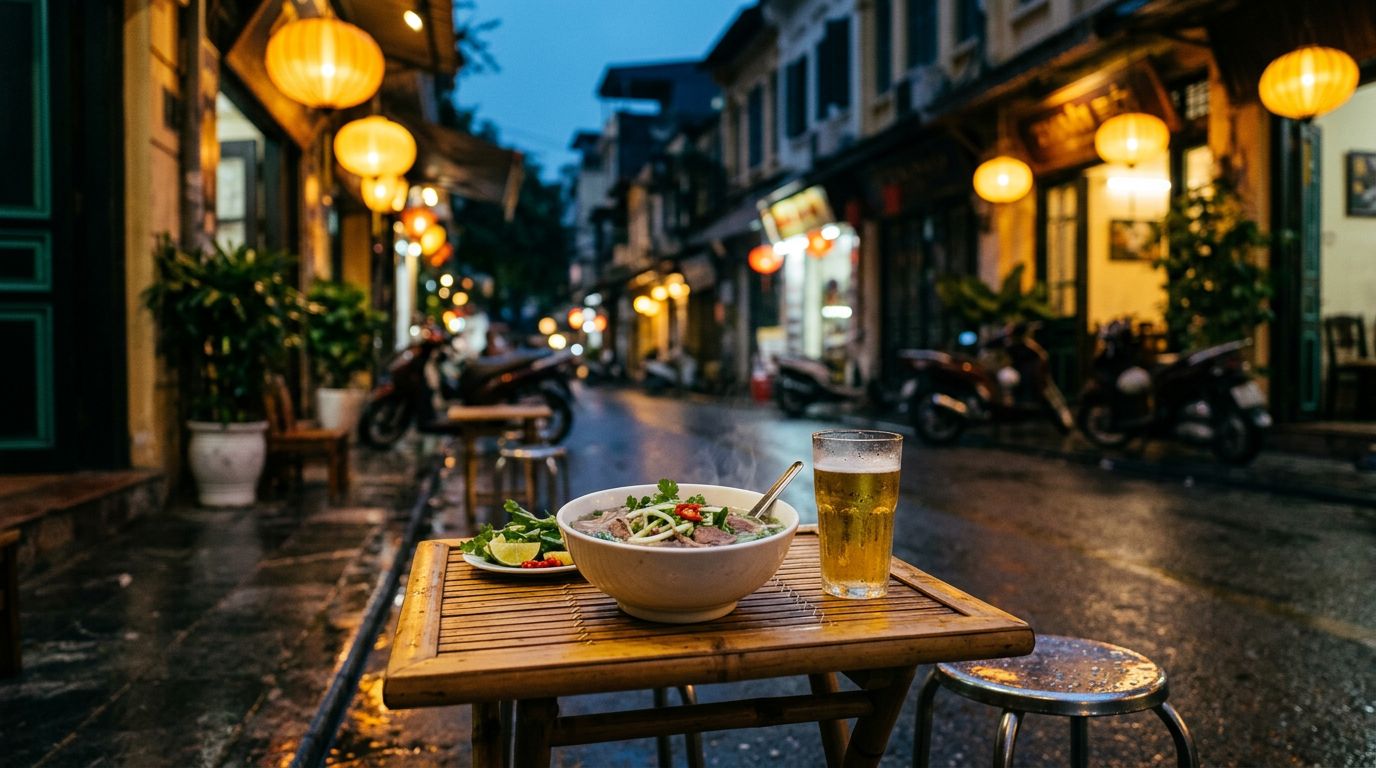
Hanoi can hand you a perfect bowl of pho before 8 a.m., a street-side Bia Hoi at sunset, and a late-night snack you never saw coming. It can also chew up an afternoon with one bad cross-city plan.
This Hanoi food itinerary keeps the days tight, the meals intentional, and the nights close to where they should land. Come hungry, wear shoes you can walk in, and don’t treat every meal like a quick stop between landmarks.
Key Takeaways
- Base yourself in or near the Hanoi Old Quarter so you can walk between major food stops and keep transport simple.
- Build each day around one anchor: Old Quarter pho and Bia Hoi on Day 1, the Temple of Literature and Bun Cha on Day 2, and eel noodles and Truc Bach on Day 3.
- Try Hanoi classics in different moods, from broth pho and pho tron to egg coffee, Bia Hoi, Bun Cha, mien luon, and pho cuon.
- Keep the itinerary flexible, choose busy street-food stalls, carry small Vietnamese dong notes, and leave room for an unplanned snack or coffee.
A 3-day Hanoi food itinerary that keeps its rhythm
The best Hanoi trips have a little structure and plenty of air around the edges, leaving room for traditional dishes such as Banh Xeo. Set one anchor each day, perhaps the Temple of Literature on day two or glass noodles on day three. Then let the neighborhood carry the local food, coffee, wandering, and night plan.
For most first-time visitors, the Hanoi Old Quarter is the smartest hotel base. You can walk to Hoan Kiem Lake, countless food stalls, and the core Bia Hoi streets. The quieter French Quarter is a calmer alternative, while noise is the trade-off near Ta Hien. A room directly above Ta Hien might sound fun at booking, then feel less fun at 1 a.m. Ask for a courtyard-facing room or good window insulation.
Keep the first evening close to the hotel. Hanoi traffic is part of the experience, but it doesn’t need to become the whole night. Use taxis or Grab for clean jumps across town, then walk once you have arrived.
Think of each day like a setlist. A good travel itinerary starts strong, keeps the transitions tight, and saves something good for the finish.
Day 1: Old Quarter pho, egg coffee, and Bia Hoi
Start early at Pho Gia Truyen Bat Dan, 49 Bat Dan Street. This is classic Hanoi beef pho, with clear, aromatic broth, soft rice noodles, and beef sliced to order. Expect a queue. It moves, but this isn’t a place for a long, sleepy breakfast conversation.
Order tai nam if you want a mix of rare and cooked beef. Add a little lime or chili only after you’ve tried the broth on its own. Good pho doesn’t need much help.
Walk the bowl off through the Hanoi Old Quarter. Hang Dao, Hang Bac, and the lanes around Dong Xuan Market are better when you aren’t rushing. Swing by Hoan Kiem Lake, then reset before the next food stop; save the French Quarter for another evening instead of crossing town on Day 1.
By mid-afternoon, head to Cafe Giang for egg coffee. Nguyen Van Giang created the drink in 1946 when fresh milk was hard to find. The result is a small cup of intense Vietnamese coffee under a whipped, sweet egg-yolk foam.
Eat the foam with a spoon first, then sip. Don’t stir it into submission right away.
For optional swaps such as Banh Cuon or Banh Xeo, this Hanoi street food tour guide is useful when you want to adjust the route.
At night, make Ta Hien your main event. Bia Hoi is Hanoi’s fresh draught beer, light, cold, inexpensive, and best enjoyed on a low plastic stool with snacks arriving in waves. Order fried nem chua, grilled pork skewers, or roasted peanuts. Keep the first beer simple and see where the street takes you.
A Bia Hoi stop works best as the night itself, not as a bridge to dinner across town.
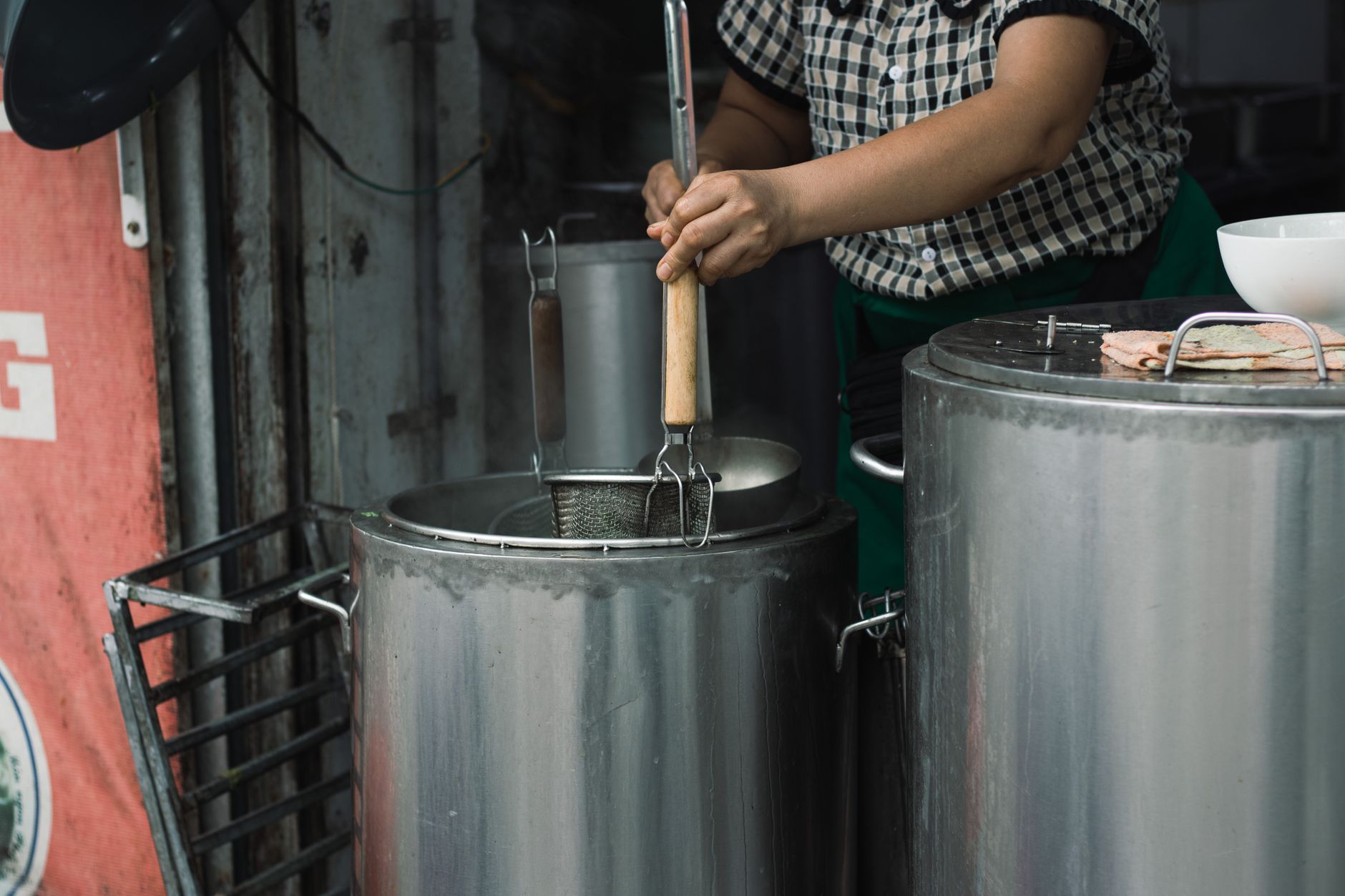
Photo by Nimit N
Day 2: Temple of Literature, Bun Cha, and a proper music night
Make the Temple of Literature your anchor today. Go in the morning, before the heat and group tours build. It is one of Hanoi’s most important historic stops, but it doesn’t need to eat your entire day. Give it an hour or two, then move on.
For lunch, head to Huong Lien at 24 Le Van Huu for Bun Cha. This is where Anthony Bourdain and President Obama shared the meal in 2016. It is still worth having without the photo-op energy.
You will get grilled pork patties and pork belly in a sweet-salty dipping broth, with rice noodles and herbs on the side. Add crispy spring rolls if you are hungry. Dip, build, repeat.
After lunch, take a taxi toward Lo Duc for Pho Thin, one of Hanoi’s most famous beef pho institutions. The style is richer and more assertive than the delicate Old Quarter bowls. Stir-fried beef and plenty of scallions give it a different edge.
This is also a good day to understand the difference between traditional broth pho and pho tron. Standard pho arrives as a hot noodle soup, meant to be eaten fast. Pho tron is a dry mixed version, with noodles tossed in sauce, herbs, meat, and crunchy toppings. Broth often comes separately. Both count. They are completely different moods.
Use this broader guide to food in Hanoi to swap a second pho stop for Banh Cuon or Banh Xeo. It also covers glass noodles and other regional dishes.
If music is part of how you travel, check the current program at Binh Minh Jazz Club near the Opera House in the French Quarter. A live set here gives the night a little shape after a day of street-side eating. Book dinner nearby, arrive with margin, and don’t make a late-night cross-city transfer your grand finale.
Day 3: Eel noodles, Truc Bach, and a calmer final night
On the last day, go a little deeper. Start on the northern edge of the Old Quarter with mien luon, glass noodles with eel. At Mien Luon Dong Thinh, 87 Hang Dieu, you can order the dish dry or in broth.
The dry version has crisp fried eel, herbs, peanuts, and glass noodles dressed with a savory sauce. The soup version is gentler, with a warm, clear broth and softer glass noodles. It is not a cautious breakfast, but it is Hanoi at its most distinct.
Spend the late morning around Dong Xuan Market and the smaller streets behind it. This compact food market is where you should leave room for a second coffee, sticky rice, Banh Cuon, or a snack that wasn’t on your plan. If you want something more substantial before heading to Truc Bach, have Banh Xeo. The best food days aren’t built around twenty pins on a map.
Take one clean taxi west to Truc Bach and the edge of West Lake. This area has more breathing room than the Old Quarter and a slower pace around the water. For dinner, try pho cuon at Pho Cuon Huong Mai, 25 Ngu Xa. Wide sheets of fresh rice noodle wrap around beef and herbs, then get dipped in a sharp, garlicky sauce.
It is light enough that you can keep going afterward. Walk by Truc Bach Lake, choose a quieter evening in the French Quarter, grab a final drink nearby, or head back toward the Old Quarter for one last Bia Hoi if you want more noise.
For extra food stops and a route map, this Old Quarter street food tour guide is a good reference. Just don’t turn it into a scavenger hunt. One great meal beats five average ones eaten while watching the clock.
Street food rules that keep the trip easy
Hanoi street food is central to the trip. Eat with confidence, but use common sense.
- Choose stalls with fast turnover, especially for Banh Mi, Banh Cuon, Banh Xeo, soups, grilled meat, and fried snacks. This rule also matters when ordering Bia Hoi, since busy places keep everything moving.
- Carry small Vietnamese dong notes. Cash keeps orders quick when the stools are full and the grill is smoking.
- Cross streets with a steady pace. Don’t sprint, don’t freeze, and don’t make sudden changes. Motorbikes are reading your movement.
- If you are vegetarian, ask for “chay.” For no meat and no fish sauce, say “khong thit, khong nuoc mam.” Vegan meals need extra care because fish sauce and egg appear everywhere. If a menu, ingredient, or preparation method is unclear, ask a local guide before ordering.
- Drink sealed bottled water if your stomach is sensitive. Start with cooked dishes, then work your way toward raw herbs, iced drinks, and more adventurous bites.
Train Street is not worth building your evening around. Access and enforcement can change, and it is not a food neighborhood. A weekend night market can be a better evening option when operating. Keep the day focused on meals that matter and streets where you can settle in.
Frequently Asked Questions
Where should I stay for a Hanoi food itinerary?
The Hanoi Old Quarter is the most practical base for first-time visitors, with walkable access to Hoan Kiem Lake, food stalls, and Bia Hoi streets. The French Quarter is quieter, while rooms near Ta Hien can be noisy late into the night.
How many meals should I plan each day?
Plan around one strong breakfast, a proper lunch, and dinner, with coffee and smaller snacks between them. Hanoi is best enjoyed with some space in the schedule rather than by chasing every dish on a map.
What should I eat in Hanoi besides pho?
Try Bun Cha, egg coffee, mien luon, pho cuon, Banh Cuon, and Banh Xeo. Pho tron is also worth ordering if you want a dry noodle dish instead of another bowl of broth.
Is Hanoi street food safe for visitors?
Choose busy stalls with high turnover, especially for cooked dishes, soups, grilled meat, and fried snacks. Drink sealed bottled water if you have a sensitive stomach, and take extra care with raw herbs, ice, fish sauce, and egg-based dishes.
Do I need to visit Train Street?
No. Access and enforcement can change, and Train Street is not essential to a Hanoi food trip. A relaxed evening around the Old Quarter, Truc Bach, or a weekend night market is usually a better use of your time.
Let Hanoi feed the whole trip
Hanoi is better when you stop trying to complete it. The best Hanoi food itinerary gives each day one landmark, one neighborhood, one bowl you will remember, and one night that doesn’t require checking your phone every ten minutes.
Leave room for the unexpected. A fresh pho at breakfast, egg coffee in a tiny room, cold Bia Hoi on a packed corner, and one more plate because the night is still going. If your Vietnam trip heads south, the Ho Chi Minh City street food guide covers a very different night out, from southern pho to Vinh Khanh seafood.