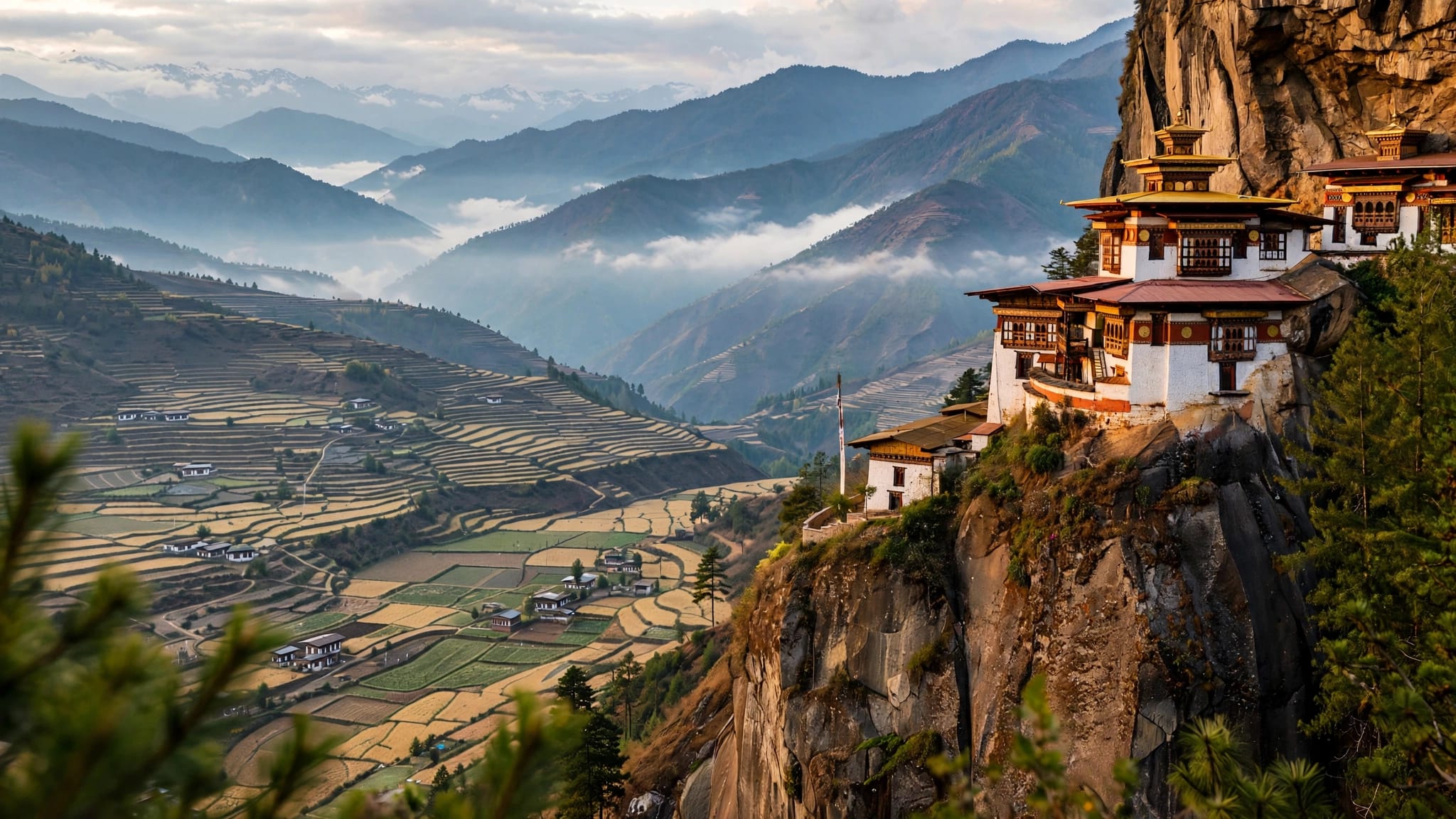
The best Bhutan trips leave enough space to enjoy the Himalayan kingdom you’ve come so far to see. A monastery above the clouds. A long lunch overlooking rice terraces. An evening with nowhere else to be.
My Bhutan luxury itinerary gives Paro and Punakha seven days, with private guiding, thoughtful dining, and breathing room between the highlights. This Bhutan travel itinerary is a starting point for a luxury holiday to Bhutan: choose lodges that fit how you want to travel.
Key Takeaways
- Plan six nights: three in Paro, two in Punakha, and a final night in Paro before departure.
- Prioritize guiding, comfortable transfers, and the right lodge location before upgrading your suite.
- Keep Tiger’s Nest flexible around fitness and weather, and compare complete trip quotes rather than headline room rates.
How I’d Pace Your Bhutan Luxury Itinerary
For a first visit focused on these two valleys, seven days is my starting point for a Bhutan travel itinerary. You get cultural depth without changing hotels every morning.
Here’s how I’d divide the overnight stays.
| Days | Base | Nights | Focus |
|---|---|---|---|
| 1 to 3 | Paro | 3 | Acclimatization, temples, Tiger’s Nest |
| 4 to 5 | Punakha | 2 | Dochula Pass, dzong, valley time |
| 6 | Paro | 1 | Return transfer, final dinner |
| 7 | Departure | 0 | Airport transfer |
That final Paro night protects departure day. I’d avoid pairing a winding mountain transfer with an international flight.
Thimphu can be a selective stop along the route. If you’d like more time in Thimphu and Paro, or want to explore the capital’s museums, textile traditions, or evening scene, add a night. Gangtey and the Phobjikha Valley deserve an extension, not a rushed detour on this seven-day route. Seasonal black-necked crane viewing is another reason to allow extra time.
Choose Lodges Around Your Travel Style
When comparing luxury lodges in Bhutan, match each property to the pace and priorities of your trip.
COMO for a Focused Two-Valley Stay
COMO Uma Paro and COMO Uma Punakha are a natural pairing for this route.
I’d consider them for travelers planning luxury travel in Bhutan. They suit guests who want intimate properties, wellness time, and dining that belongs in the plan.
Punakha’s Bukhari restaurant uses produce from the valley. That gives a relaxed lodge lunch a stronger sense of place than another hurried sightseeing stop.
Confirm the room category, view, and meal plan before booking. Ask whether spa services or a hot stone bath are available on your dates.
Aman and Six Senses for a Broader Circuit
Amankora’s five Bhutan lodges cover Paro, Thimphu, Punakha, Gangtey, and Bumthang valley. I’d shortlist Amankora Bhutan for travelers drawn to restrained design and a coordinated lodge circuit.
Six Senses Bhutan also spans five valleys. It belongs on the shortlist when wellness facilities and distinctive lodge settings are priorities.
For either brand, request a date-specific proposal. Confirm operating dates, maintenance closures, minimum stays, and transfer arrangements. Mixing brands can work, but one coordinator should own the handoffs between properties.
Days 1 and 2: Settle Into Paro
Day 1: Arrival Without an Agenda
Meet your guide and driver, settle into the lodge, and keep the afternoon light. Paro sits at roughly 2,200 meters, so arrival day deserves restraint.
A short walk, lunch, and time outside are enough. Save the ambitious hike and long spa appointment for later.
For your first dinner, I’d reserve Bukhari at COMO Uma Paro. If you’re staying elsewhere, confirm outside-guest access and transport before building the evening around it. Ask about Bhutanese dishes and explain your chili tolerance clearly.
Day 2: Architecture, Ritual, and a Proper Lunch
Start with Paro Rinpung Dzong, a fortress-monastery that remains both a religious and administrative center. Give your guide time to explain how the building functions today.
Then visit Kyichu Lhakhang, one of Bhutan’s oldest and holiest temples. Let your guide manage appropriate visiting times and explain photography restrictions.
Keep lunch unhurried. I’d ask for ema datshi, the chili-and-cheese dish, alongside red rice and gentler options.
Finish with a light walk and an early evening. Tomorrow should begin rested, with your hiking gear ready and breakfast timing confirmed.
Day 3: Give Tiger’s Nest the Whole Day
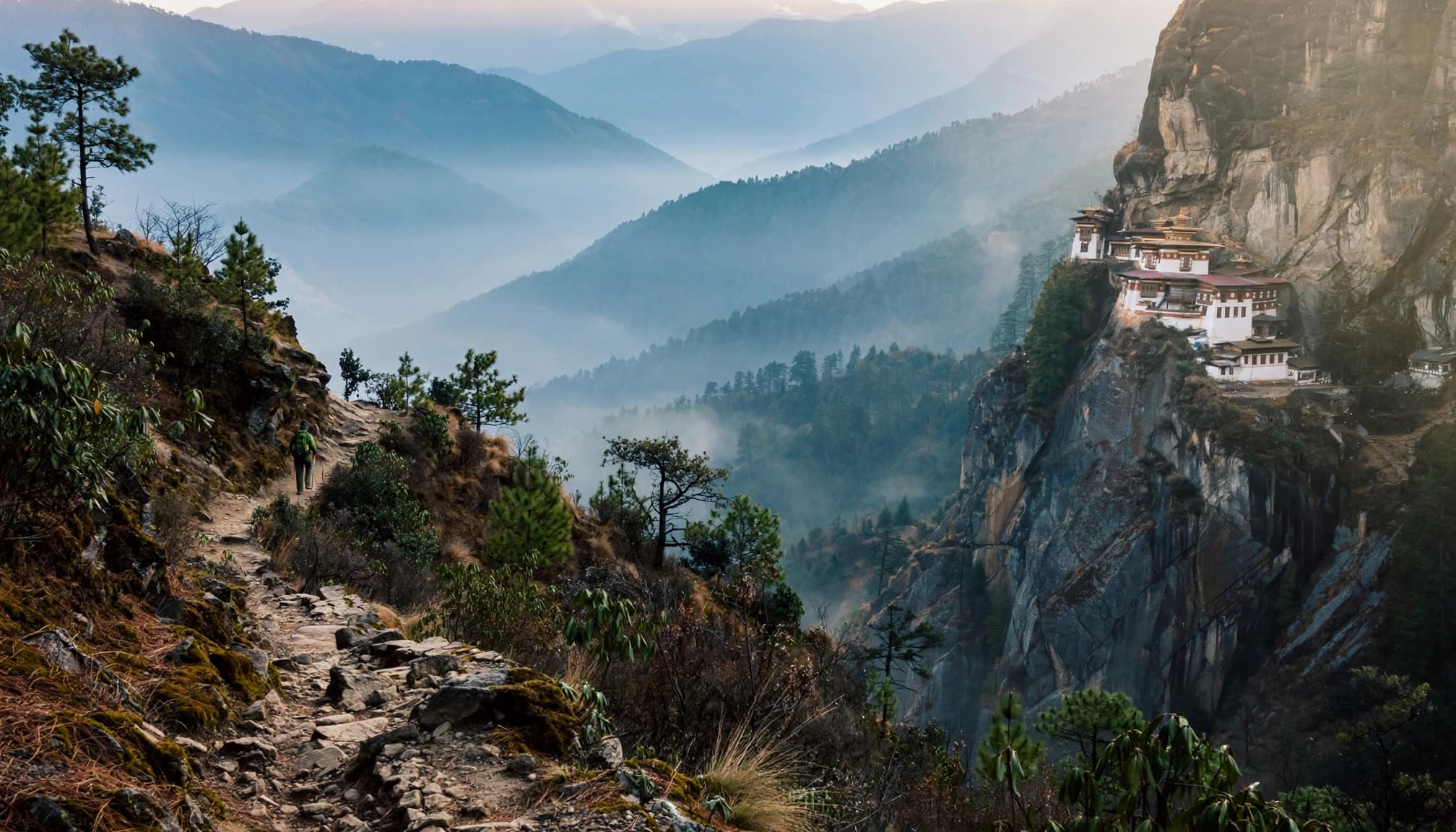
Tiger’s Nest Monastery, or Paro Taktsang, sits at approximately 3,120 meters. The approach combines sustained uphill walking, uneven ground, and stairs near the monastery.
Reserve the whole day. Many visitors take roughly four to seven hours, depending on pace, stops, and conditions. This is an outing to enjoy, not a time trial.
Before confirming the hike, I’d ask about your recent walking experience, knee stability, and comfort descending stairs. Regular stair climbing and longer walks are useful preparation. Shoes should already be broken in.
The final stairs matter as much as the uphill trail. Assess your comfort with repeated descents before committing to the monastery visit.
Start early, carry water and layers, and let your guide set a comfortable pace. Anyone with relevant heart, lung, or mobility concerns should seek medical advice before travel.
Persistent headache, nausea, or unusual breathlessness deserves attention. Don’t push through symptoms to preserve the schedule.
For travelers who skip the hike, I’d arrange a lower-elevation cultural morning and lodge time instead. Protect that choice without treating it as a lesser day.
Days 4 and 5: Cross Into Punakha, Then Slow Down
Day 4: Dochula and a Well-Timed Arrival
Leave Paro after breakfast and travel toward Punakha through the Thimphu corridor. Allow about 4 to 5 hours for the road transfer before sightseeing stops. Confirm timing with your driver, since stops and road conditions affect the journey.
Dochula Pass, approximately 3,050 meters high, is the natural scenic pause.
Its 108 chortens are worth seeing even when clouds obscure the mountains. Clear views are a bonus, never a guarantee.
If Thimphu is a priority, choose one substantial stop, such as Buddha Dordenma. I’d avoid adding several city visits to a transfer day.
Agree on lunch and stops before departure. The aim is to reach Punakha with time to check in, shower, and enjoy the view before dinner.
Day 5: Punakha Dzong and Valley Time
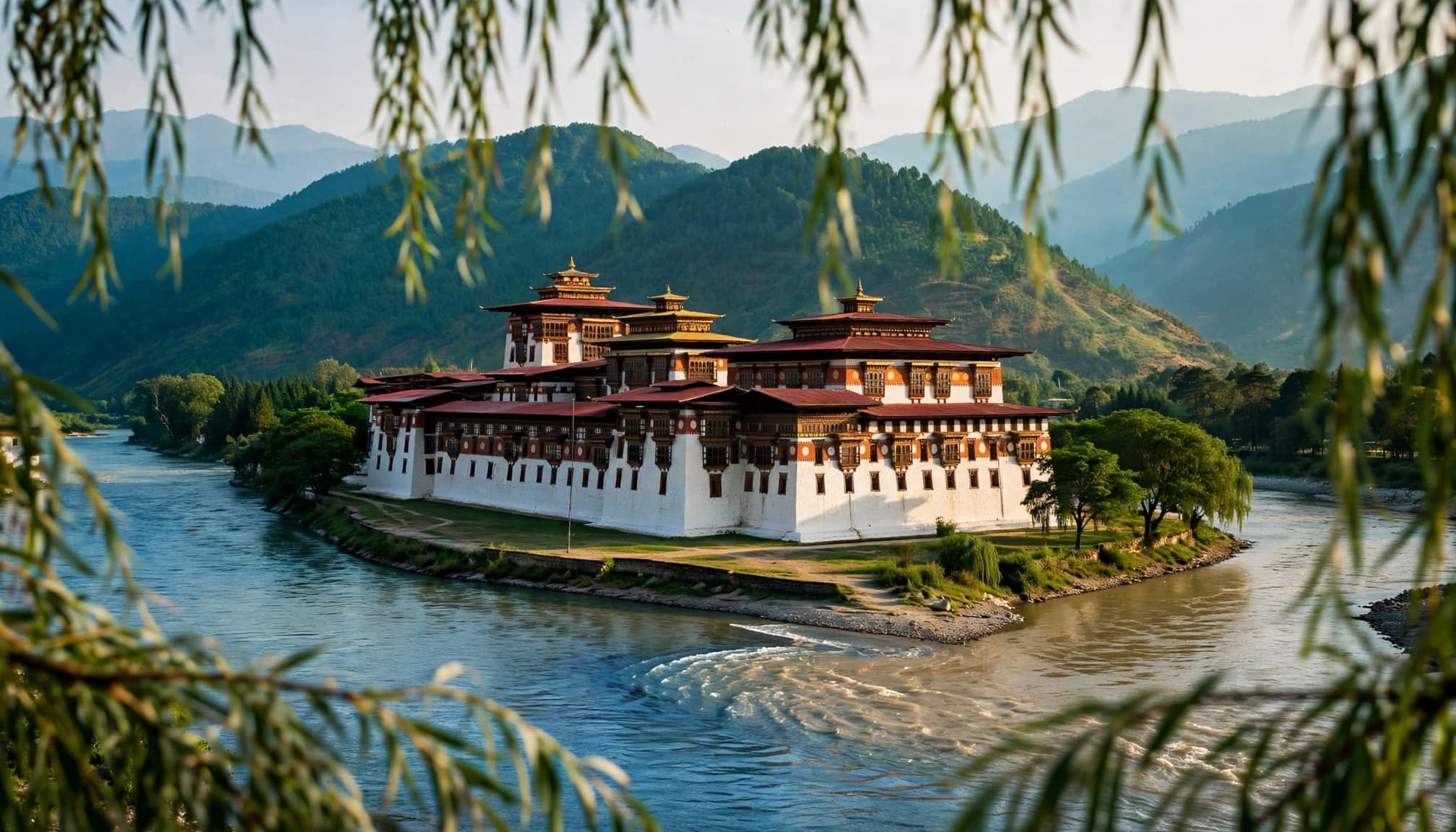
Visit Punakha Dzong in the morning. Its setting between the Pho Chhu and Mo Chhu rivers gives the architecture an extraordinary backdrop.
Let your guide explain the courtyards, religious history, and current access restrictions. Then choose one additional outing: the suspension bridge or Chimi Lhakhang, depending on mobility and interests.
For dinner, Ari at Six Senses Punakha is a specific option to investigate. Confirm reservations, outside-guest access, and any included dining before paying for a separate meal.
Keep the afternoon open for a treatment, reading, or a longer lunch. Punakha should feel different from Paro.
Days 6 and 7: Return With Your Departure Protected
Day 6: Make the Transfer Work for You
Return to Paro with one meaningful stop rather than a full second sightseeing agenda. If you skipped Thimphu earlier, this is your opportunity for a focused visit.
The drive from Punakha to Paro usually takes about four to five hours. Stops and road conditions can add time, making a final night in Paro prudent.
For a food-first trip, I’d request a cooking session or a hosted meal through the lodge or local operator. Confirm the actual host, menu, duration, and setting. “Cultural experience” is too vague to book against.
Keep your final dinner close to the hotel. After a mountain-road transfer, another long drive rarely improves the evening.
Day 7: Leave Without Rushing
Have breakfast and transfer to Paro Airport with the buffer advised by your airline and ground team.
I also build onward connections with room for disruption. A short flight on paper doesn’t justify a tight international connection.
For a high-value trip, check insurance coverage for delays, cancellation, and medical evacuation before departure.
Entry Requirements and the Full Trip Cost
The official Bhutan visa guidance outlines Bhutan visa requirements, including a $40 visa fee and the $100 adult Sustainable Development Fee rate. Nationality and age concessions can change what applies, so recheck current official fees before booking.
At the cited rates, two adults requiring visas on this six-night itinerary would pay $1,280 in government charges: $1,200 in SDF and $80 in visa fees. Hotels, flights, guiding, meals, and transfers are separate.
Independent booking is permitted. Bhutan no longer requires every trip to be booked through an accredited tour operator. For a luxury tour of Bhutan, I’d still arrange a certified private guide and driver for continuity and control over the pace.
Luxury lodge prices depend on dates, room category, and package terms. I’d request an itemized quote showing accommodation, taxes, meals, drinks, transport, guiding, entrance charges, spa treatments, and optional experiences.
Confirm vehicle exclusivity in writing. Also ask whether road transfers are included when comparing lodge packages.
My bespoke trip planning services bring those bookings into one coordinated plan, including dining and activity reservations that a hotel confirmation doesn’t secure.
The strongest upgrade is often a better guide or better timing. An additional room category won’t fix a poorly paced day.
Choose Dates for Weather and Access
I’d first consider spring or autumn. March through May brings spring conditions, while September through November is the autumn window.
October and November are strong starting points for clearer mountain views, although weather remains variable. Bhutan’s year-round travel guidance also highlights the appeal of other seasons.
Winter can bring crisp views and fewer visitors, alongside cold Paro mornings. Punakha’s lower elevation offers a useful contrast. Summer requires more flexibility around rain and trail conditions.
If a Tshechu festival matters, confirm that year’s dates before choosing flights. Then check lodge availability and visiting arrangements. Festival timing should anchor the itinerary, not be added after everything else is booked.
Frequently Asked Questions
How many nights should I plan for a Bhutan luxury itinerary?
Six nights is a practical starting point: three in Paro, two in Punakha, and one final night in Paro. That last night protects your departure from delays on the mountain roads.
How difficult is the Tiger’s Nest hike?
The hike involves sustained uphill walking, uneven ground, and stairs, and many visitors take roughly four to seven hours. Set aside the whole day, choose a comfortable pace, and discuss any mobility or health concerns with your guide before committing.
What government fees should I budget for?
At the rates cited in this itinerary, two adults who require visas would pay $1,280 in government charges for six nights: $1,200 in Sustainable Development Fees and $80 in visa fees. Check current official rates and any applicable age or nationality concessions before booking.
When is a good time to visit Paro and Punakha?
Spring and autumn are strong starting points, with October and November often appealing for clearer mountain views. Weather is variable, so confirm festival dates and lodge availability before choosing flights.
A Bhutan Trip That Feels Personal
A well-paced luxury holiday to Bhutan gives you a memorable hike, meaningful cultural visits, and time to enjoy your lodges. Good pacing holds it together.
I’d start with your walking comfort, dining preferences, and appetite for movement. Those answers shape a better journey than adding another valley.
When you’re ready to plan your Bhutan trip, bring those priorities. I’ll build the route around them.