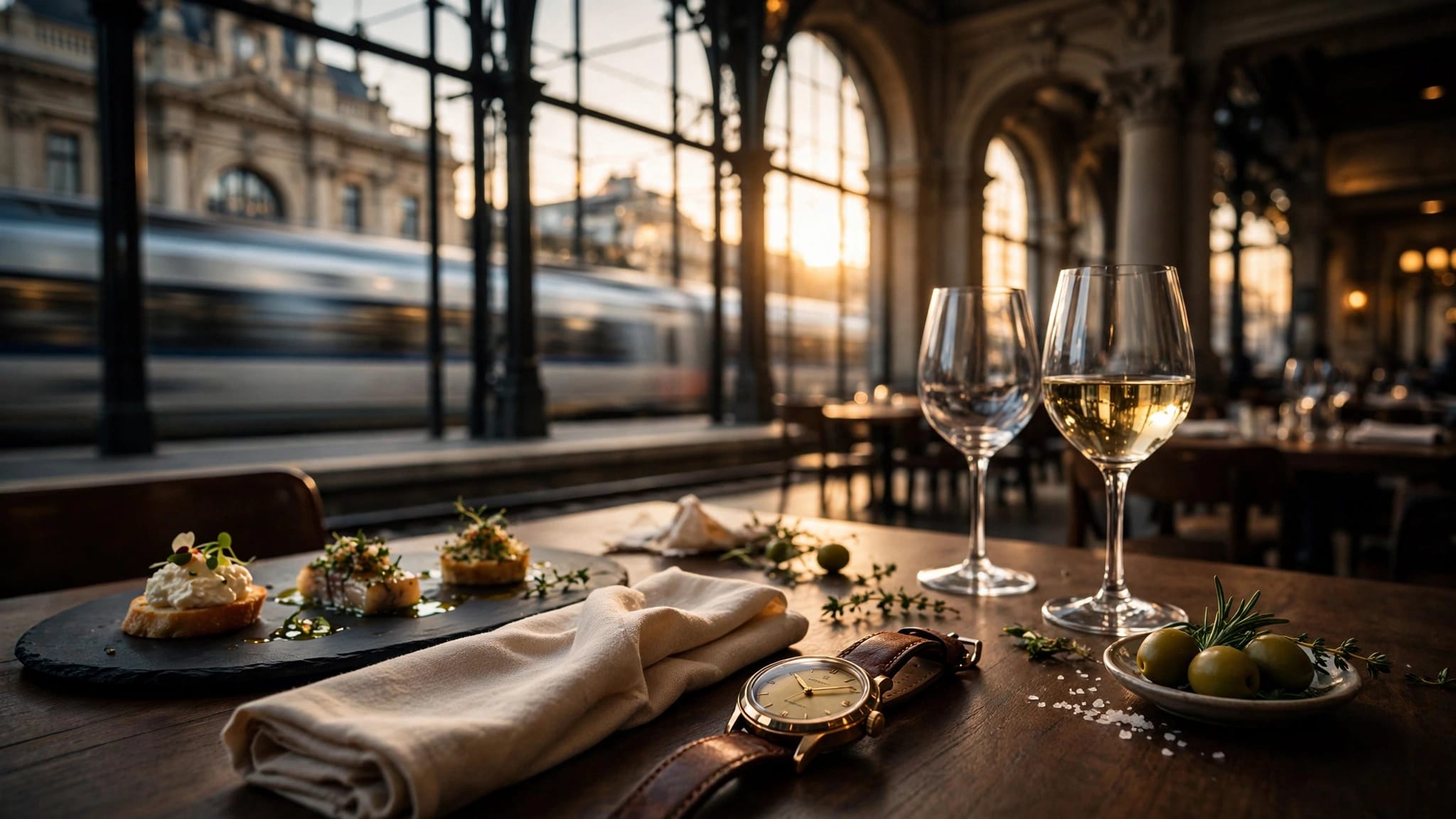
European rail trip food reservations work best when the restaurant anchors the itinerary and realistic railway timing supports it. A fixed table shouldn’t depend on a risky arrival or a frantic dash from the station. Before booking, check the restaurant’s official website for reservation-release dates, deposits, cancellation rules, closures, and dietary-accommodation details.
A great rail itinerary has a pulse: coffee worth waking up for, a long lunch, one dinner that sets the tone for the city, then a bar or live set nearby. The logistics should sit in the background, where they belong.
European Rail Trip Food Reservations Start With What Can’t Move
Book the moments with the least flexibility before you lock in every train. A two-hour tasting menu, chef’s-counter seating, sold-out wine pairing, or Michelin-level experience should anchor the day.
Put the hard-to-replace table on the calendar
Start with the restaurant that would genuinely disappoint you to miss. Reserve it as soon as your travel dates are firm, especially for weekends, holidays, and summer high season.
Then note the reservation time, expected meal length, dress code, neighborhood, and latest realistic arrival time. Booking windows, deposits, cancellation policies, and service days vary by restaurant, country, and season.
Check how the restaurant handles dietary accommodations before you book. Some require advance notice, while others can only accommodate certain requests on specific menus.
A 7:30 p.m. table in Paris is not compatible with a 5:45 p.m. arrival at Gare du Nord. Even if the train runs on time, you still have luggage, a hotel check-in, and the ride across town.
Leave at least 60 to 90 minutes between a scheduled rail arrival and an important dinner reservation. Allow 90 to 120 minutes if you have luggage, need to change stations, cross an international border, or arrive in an unfamiliar city.
Verify the restaurant’s official website shortly before travel. Booking rules, closures, service days, and reservation requirements can change.
For a food-first trip, I prefer one major reservation per city. You can build a whole evening around it without turning every meal into a deadline.
Protect the hours around dinner
Give yourself a soft landing on transfer days. Check in, take a shower, walk the neighborhood, have an aperitivo, then go to dinner.
The best reservation of the trip deserves an afternoon with room in it, not a train connection that has to work perfectly.
Keep the after-dinner plan close. One excellent wine bar, listening bar, or jazz room near the restaurant is better than a cross-city sprint for a second reservation.
Choose a Route That Moves in One Direction
Europe looks compact on a map. It feels much larger when every move includes hotel checkout, luggage storage, platform changes, and finding your new neighborhood.
European train travel works best when your route moves in one direction. The rail network then creates less backtracking, fewer transfers, and less luggage handling.
Paris, Brussels, Amsterdam is a clean northbound sequence. Rome, Florence, and Venice works just as well. Prague, Vienna, and Budapest gives you cafés, grand architecture, baths, and nights that can stay loose.
Test the full travel day, not train time alone
For city pairs under about five hours by rail, high-speed trains often protect more of your day than flying. Stations are central, you avoid airport transfers, and you can arrive with more energy for the evening.
Published travel time is only part of the calculation. Measure the rail network journey door to door, including hotel-to-station travel, platform time, boarding, arrival, the new station exit, and your route to the hotel.
Compare train tickets using realistic departure and arrival options, not only the fastest listing. A train connection involves more than its published rail journey, while regional trains may follow different timetable and reservation rules.
Use Deutsche Bahn train schedules as a planning tool for international train routes, even when Germany isn’t part of your route. It isn’t the final authority. Confirm current timetables, engineering works, strikes, closures, platform information, and ticket conditions on the operating railway’s official website or with the relevant national rail operator.
Keep the arrival city light
A travel day can hold one flexible plan. Think coffee, a neighborhood walk, a gallery you can skip, or an early drink at the hotel bar.
It should not hold a museum timed entry, a shopping appointment, a major dinner, and tickets to a late show. After a demanding move, schedule a fixed dinner for the following night when possible.
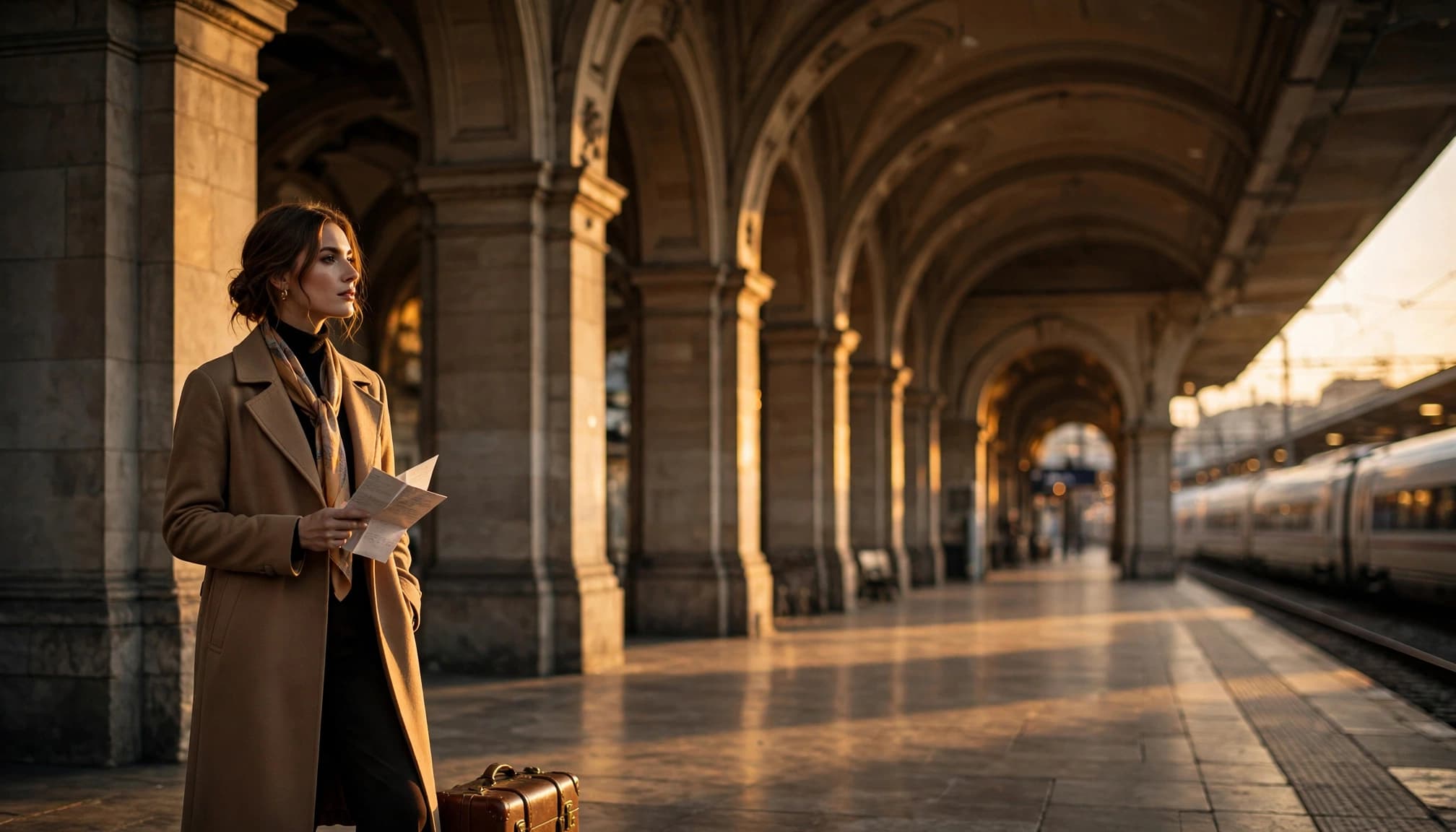
Book Train Tickets After You Know the Dining Dates
Once the route and core food reservations are firm, start watching train tickets. A fixed dining date determines the departure you need. This is where a little operational discipline saves unnecessary stress.
Booking windows are not universal
European rail operators do not release every route on the same schedule. Depending on the service, tickets may go on sale one, two, three, four, six, or 12 months before departure. The rail network can also involve different calendars for international legs, while overnight trains may have separate sales windows and limited sleeper inventory.
Check European train booking horizons before you panic over a route that is not yet available. A missing service may simply not be on sale yet, even if current train schedules show it operating.
Check the national rail operator’s official release calendar and fare rules. Then confirm the actual sales date and restrictions on train operator websites. Booking and reservation policies vary by country, operator, route, and season, so rely on official railway websites for current information rather than an aggregator alone.
If you have a fixed Friday dinner in Barcelona or a special Saturday lunch in Emilia-Romagna, set a reminder for the relevant release date. An early advance purchase can protect both price and availability, but check whether the fare includes required seat reservations on that service.
The dinner can be your anchor. The ticket is the moving part.
Buy flexibility where it protects a real experience
A cheaper fare is not always the smart fare. Compare change, refund, and missed-connection rules before booking anything nonrefundable around a high-value meal or event.
A direct train may cost more than fragile train connections, but it can protect the rest of the day. Paying more for a direct train or a changeable ticket can make sense if it protects a Michelin-starred restaurants reservation, a private tasting, or a night built around live music. That is not wasted money. It is buying back usable time.
Decide Between Point-to-Point Tickets and a Rail Pass
A rail pass sounds flexible, but it isn’t automatically the best fit for a tightly planned culinary route. For a fixed three-city trip, an Interrail pass is often less practical than point-to-point train tickets.
Price the real total
Compare the pass with individual train tickets, then add required reservations, local transport, airport or station transfers, luggage needs, and change restrictions.
An advance purchase fare can cost less than pass flexibility on a fixed itinerary. An Interrail pass works better when you expect several side trips across the rail network or want to keep days open.
The Rail Europe app can be useful for searching and purchasing across many European routes, as can other ticket booking websites. I still cross-check train operator websites for the final fare, reservation, and refund rules.
A pass does not guarantee a seat
This matters most on high-speed trains. A pass can cover the route without including seat reservations.
Reservation requirements vary by country, train type, operator, and season. Popular departures can sell out even when pass coverage exists, while overnight trains may involve separate supplements or booking procedures.
Use Interrail’s tool for seat reservation requirements to check rail pass reservations before finalizing the pass. A beautiful lunch in Lyon is not worth gambling on a sold-out evening train to Paris.
Treat Major Stations Like Part of the Itinerary
A connection at a large station is an active junction in the rail network, not a blank square between two cities. It needs time, especially when you’re arriving with luggage and heading to an important reservation.
Give yourself a real station buffer
Your train tickets show the departure time, not when you’ll feel comfortable arriving at the station. For a familiar, straightforward departure, allow 20 to 30 minutes to find the train platforms, pick up water, and board without making the morning miserable.
At a large or unfamiliar station, allow 45 to 60 minutes. Build in 90 to 120 minutes for a station change, an international transfer with luggage, or a connection tied to a high-value dinner. Count the full travel time from your arrival to the point when you’re ready to leave the station.
Check the official railway website for the current station, platform, boarding cutoff, service disruptions, and luggage rules. Paris Gare du Nord and Brussels Midi can be simple on a good day, but they’re not the place to test a 10-minute connection.
Keep your charger, medication, water, headphones, and a light layer in a small train-day bag. The rest can stay packed.
Separate risky transfers from big nights
Don’t place your hardest reservation after your most complicated rail day. If you have an international connection, a station change, or an arrival on overnight trains, move the important dinner to the next evening.
Overnight trains can leave you tired, and delayed access to your luggage may affect the next day. Sleeping cars offer more privacy, while couchette compartments use shared berths, but neither setup is standard across Europe. Comfort, privacy, and included service vary by train, so check the exact operator and carriage before booking.
Let Food Create the Shape of Each City
The point is not to collect reservations. It’s to give each destination a distinct feeling through its local cuisine, with room for a culinary adventure.
Paris might mean pastries, a long lunch, and a wine bar within walking distance. San Sebastian can be pintxos and a late night in the old town. Rome calls for an unhurried aperitivo before dinner, not another attraction squeezed into the afternoon.
Use flexible meals to absorb the day
Keep breakfast, coffee, market stops, and casual lunches open. These dining options can shift if you linger at a museum, find a record shop, or join a food tour.
Reserve dinner when the restaurant, neighborhood, or occasion makes it worthwhile. That’s when local cuisine deserves a deliberate choice, not a last-minute table. Check the restaurant’s official website for dietary details and current service times.
A loose daytime plan gives you room to follow the city instead of racing through it.
Keep every night in one orbit
Stay near the version of the city you want after dark. A well-located hotel saves more than taxi money and travel time. It gives you the freedom to return for a jacket, reset before dinner, or stay out for one more drink.
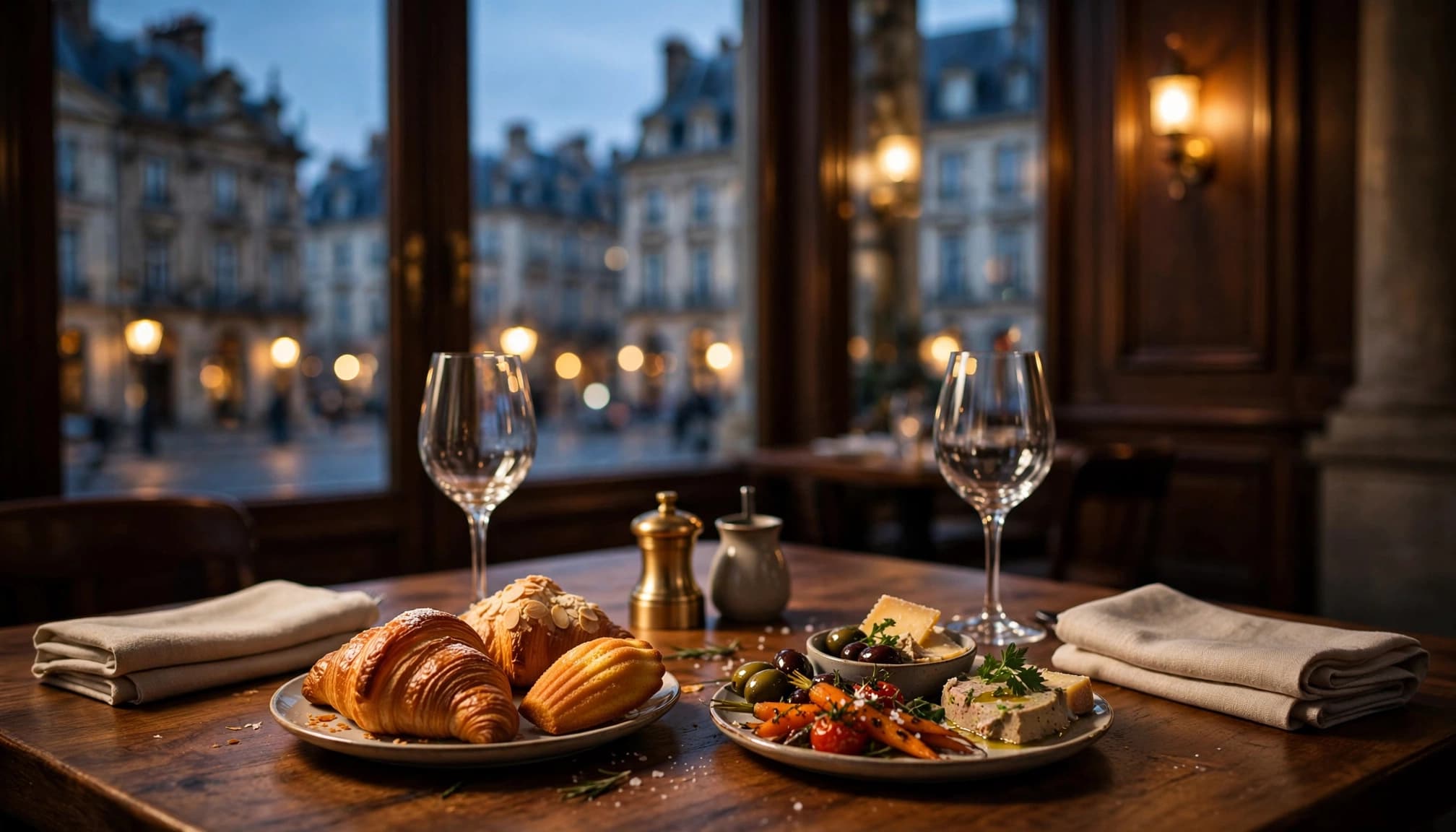
A good night should flow from dinner to drinks to the walk home. No one should be staring at a transit map between courses.
Key Takeaways for a Food-First Rail Itinerary
- Book the restaurant, event, or experience that can’t move before buying a nonrefundable train fare.
- Build the route in one direction and keep transfer days intentionally light.
- Compare point-to-point fares with an Interrail pass, including reservations and flexibility.
- Allow extra time at stations, especially for international connections and city-to-city transfers.
- Put your best dinners on stable nights, not after the trip’s most fragile connection.
Frequently Asked Questions
How do you book trains across multiple European borders?
Start with one timetable search for international train routes, then confirm the details with the national rail operator. Check current schedules, disruptions, and conditions before paying.
An international journey may involve several operators across one rail network. Verify the departure station, connection details, and seat reservations before purchasing. Save your train tickets, confirmations, and hotel addresses somewhere accessible offline.
For overnight trains, check whether sleeping cars require separate reservations or specific ticket types. Policies can vary even when the journey crosses only one border.
Are bikes allowed on international trains?
Bicycle rules vary by operator, train type, country, and season. Regional trains may have different requirements from international high-speed trains, and some services require a bicycle reservation.
Check the exact train before purchasing a ticket, especially during busy summer periods. Don’t assume the policy on a local service will match another train on the same route.
Is first-class catering worth planning around?
First class travel can make a long travel day more comfortable, but catering facilities vary widely by train and route. Treat onboard food as a convenience, not your main meal plan.
Bring water and a snack if you have a timed lunch or dinner ahead. You don’t want an unpredictable onboard menu deciding how hungry you are at a great restaurant.
How far ahead should restaurant reservations come first?
Reserve the restaurant as soon as your travel dates are firm if it’s a small room, a special occasion, or one reason you chose the city. In some countries, sought-after tables open months ahead, especially during peak season. Other restaurants may release bookings only a few weeks ahead.
Then work backward to the train that gives you enough arrival time. Check both the official restaurant website and the official railway website for current booking rules, closures, schedules, connection changes, dietary-accommodation details, and reservation requirements.
Overnight, high-speed, and regional services can all have different ticket and seat rules. Confirm those details before finalizing your plans.
For a trip with multiple moving parts, luxury itinerary planning and reservations can put the route, tables, hotels, and backup options into one coherent plan.
Make the Train Support the Night
The strongest European rail trip food reservations strategy is simple: protect the meals and evenings you care about, then build realistic rail days around them.
Book train tickets after the meal plan is clear, leaving realistic connections across the rail network. A great European train travel itinerary has room for the coffee that turns into a second coffee, the bar you find after dinner, and the walk home when the city still feels awake. The same buffer matters on overnight trains, too. Flow beats volume.