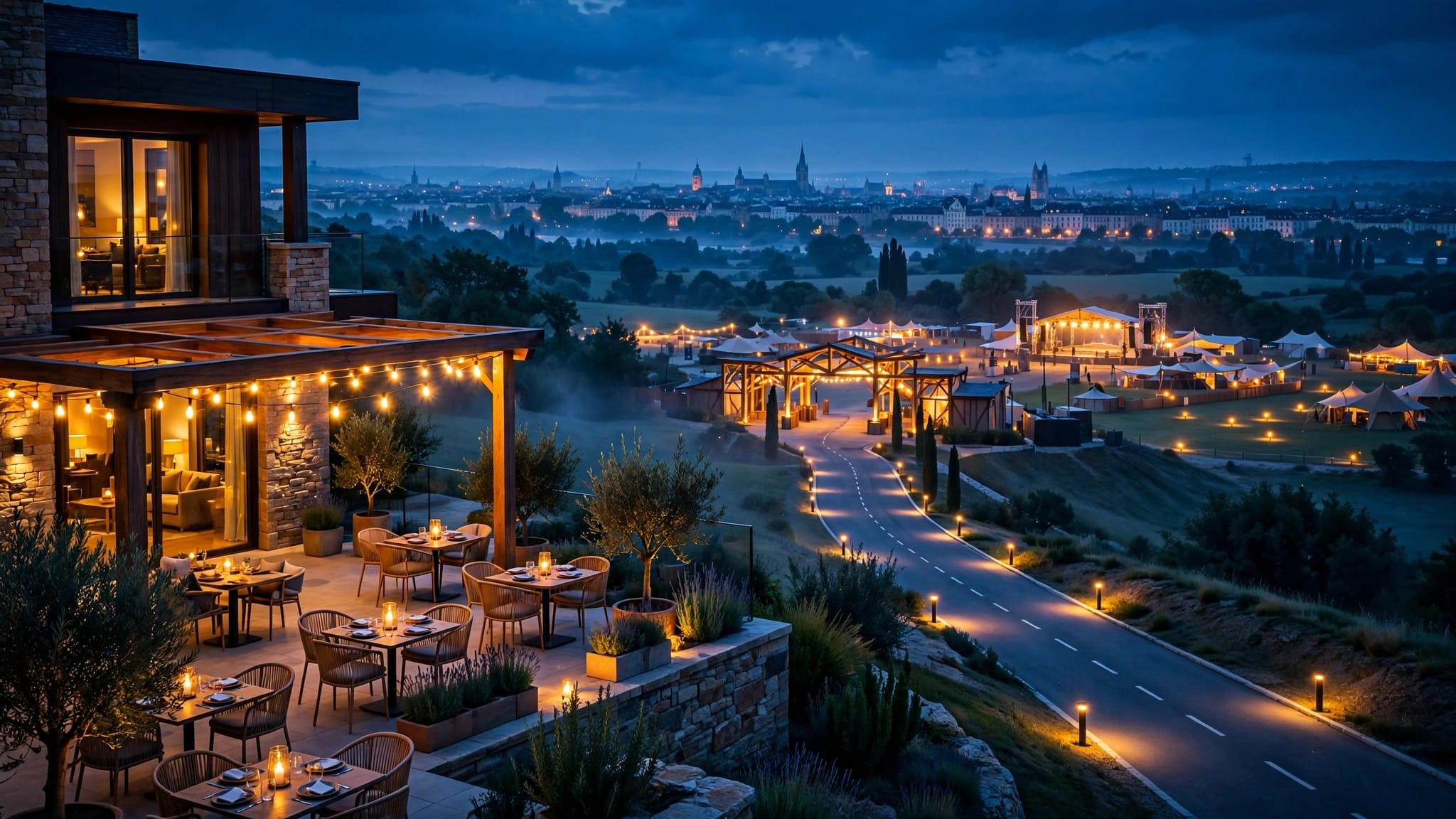
A music festival trip can go sideways before the first set. Check access to the festival entrance, public transport or shuttle coverage, travel time, price, safety after dark, and a reliable late-night return.
The best festival hotel areas keep festivalgoers near the music, a proper meal, and a reliable route home. That matters even more on festival weekends outside European city centers, where festival grounds often sit beyond the neighborhoods travelers know best.
Book the room that protects your energy, not the one that simply looks closest on a map.
Key Takeaways
- Pick a hotel based on its connection to the festival entrance, shuttle stop, dinner plans, and late-night fallback. If it’s within walking distance, verify that the route is safe, lit, and usable after the final set.
- For multi-day festival weekends, choose one area that supports breakfast, recovery time, and at least one good evening option.
- Festival hotel blocks can be useful, but confirm what they include. Hotel rooms may be separate from a shuttle pass, which could require pickup at a designated hotel.
- Compare only the amenities you’ll actually use, such as free Wi-Fi, free breakfast, pet-friendly policies, and onsite parking. Check the current listing before booking.
- For remote festivals, compare hotel options with an official shuttle, camping, glamping, or an RV setup. A downtown base may reduce parking stress, while venue-adjacent lodging can shorten the ride.
The right hotel gives you a clean exit after the encore. It should not create a second event after the event.
How to Choose Festival Hotel Areas That Actually Work
Not every festival needs a room beside the gates. The smarter choice depends on the event format, local transport, and your ideal weekend pace.
Before comparing amenities, rank venue access, public transport, total price, safety, and late-night return options. Then judge which hotel accommodations deliver the best overall value.
Stay in a walkable venue district for short, intense weekends
A compact festival district is ideal when you have one or two nights, little interest in driving, and plans that begin before doors open. Hotel rooms give you a place for a midday reset before the evening gets busy.
Look beyond the venue pin. Find the pedestrian gate, then check whether it is within walking distance. Also locate the rideshare zone, the last public transit stop, and the route back after dark.
A hotel that is 15 minutes away on a well-lit route can be better than one that is technically closer. Highways, fences, or a river may make the shorter route impractical.
For city-based shows, the same logic applies in this concert trip planning guide. Build the day backward from doors, then choose the neighborhood that gives you the fewest moving parts.
Use a connected resort corridor when comfort matters
A resort corridor makes sense when you want dependable restaurants, indoor access, late check-in, and a comfortable reset between festival days. It is the move for groups, unpredictable weather, or a weekend where music is only part of the plan.
When comparing local hotels, filter for value rather than assuming amenities. Free Wi-Fi, free breakfast, an indoor pool, pet-friendly policies, and onsite parking can all affect the total price.
Downtown Reno is a clear example. The ROW links Eldorado Reno, Circus Circus Reno, and Silver Legacy across six city blocks with indoor walkways, restaurants, lodging, and entertainment. During Reno festival weekends, that connection lets a group split up, recharge, and meet again without turning every movement into a car decision.
A connected property only helps if the official shuttle serves it. Check whether your shuttle pass covers the return journey, too.
A resort corridor is not about staying indoors all weekend. It is about having options during summer events, bad weather, or when your feet are done. It can also support travelers adding outdoor activities before or after the festival.
Verify the ROW’s indoor connections, participating properties, and event-specific access before publication or booking.
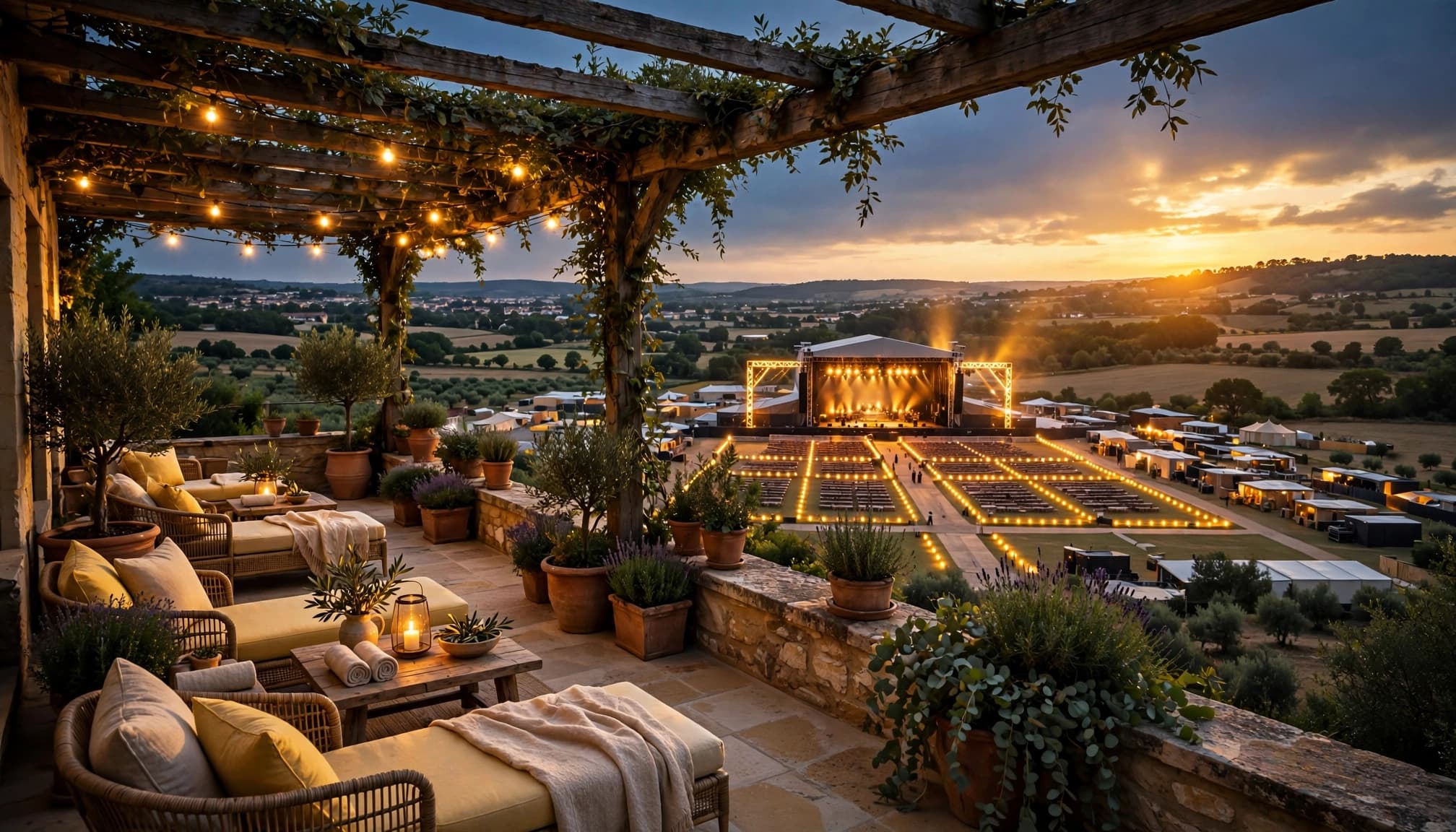
Start With the Festival Map, Not the Hotel Search
The festival is the fixed spine of the trip. Hotel search comes after you understand how the site operates.
Find the real arrival and exit points
The festival grounds may have separate points for pedestrians, shuttles, rideshares, VIP guests, and accessible access. The venue map pin may not match the pedestrian entrance, official shuttle stop, rideshare zone, or nearest public-transit stop. That distinction can change the best hotel area by several blocks or miles.
Before booking, check the festival’s current official transportation page for schedules, road closures, parking exit times, pedestrian restrictions, and bag rules. Check whether a shuttle pass is included with your ticket or must be purchased separately. Verify every city-specific transit detail close to your trip, since stops, service hours, and closures can change.
Also check safety, lighting, terrain, and the time required to return after the final set. Onsite parking may look convenient, but parking stress can make driving slower than a direct shuttle or train. Save your pickup point offline, since cellular service gets unreliable when thousands of people leave at once.
Look at the route in both directions. A 20-minute walk at 4 p.m. can feel completely different after ten hours on your feet. The same walking distance may feel longer after dark, especially in heat, rain, mud, or unfamiliar surroundings.
Keep the non-festival hours close
A great festival hotel area has a life outside the gates. You want coffee nearby, a relaxed lunch, a reliable dinner, and somewhere for one drink if the night still has legs.
Choose outdoor activities only when they genuinely fit the destination and your energy. Don’t build a festival day around a reservation 45 minutes from the venue. That kind of plan looks ambitious at checkout and feels exhausting in real life.
For a European weekend, I usually want one manageable daytime move, a slow breakfast, a market, a record store, or a neighborhood walk. The rest stays close. The city should add texture to the trip, not pull you away from it.
Downtown Reno Festival Weekends: Two Strong Hotel Plays
Reno is useful because it shows the difference between a downtown base and direct festival-ground proximity.
The ROW is built for downtown festival access
As a central base in downtown Reno, The ROW works well for events spread across city streets. Its indoor connections make it easy to move between rooms, meals, gaming floors, and entertainment.
That matters during hot summer afternoons and late nights. You can return to the hotel, enjoy downtown food, then head back out without driving again.
Silver Legacy may also offer event-specific room blocks. For events such as Reno Latin Dance Fest, coordinated rooms can keep attendees together. Confirm availability for your dates, since room blocks aren’t a standing feature.
J Resort works when the grounds are the priority
J Resort is another practical choice when the festival grounds are your main priority. Compared with a central downtown Reno base, its proximity can make the fastest hotel reset possible.
The tradeoff is simple. Choose The ROW for indoor connectivity and downtown food. Choose a grounds-adjacent property when you want less nightlife and a quicker return after the final performance.
Before booking, compare price, room orientation, late-night noise, onsite parking, and transport. A downtown room doesn’t automatically include a shuttle pass, and repeated car trips can create parking stress during busy event days.
Also check the current property listing for free Wi-Fi, free breakfast, an indoor pool, and pet-friendly policies. Ask about late check-in, luggage storage, elevator access, air conditioning, quiet-room requests, and where the room faces. A balcony above a busy bar street is a different experience at 2 a.m. A downtown Reno base may suit one group, while direct grounds access works better for another.
Venue Adjacency vs. Afterparties and Nightlife
You don’t need to choose the closest room every time. Decide which part of the weekend offers the most value.
That choice can change between short festival weekends and multi-day events. Venue adjacency suits packed schedules, while a downtown base works better when nightlife matters.
Stay near the venue when the lineup is packed
Choose venue adjacency when the festival opens early, runs late, or has multiple days of music you don’t want to miss. It’s also the cleanest option for travelers who want a real reset between sets.
A nearby room lets you shower, change, cool down, or take 45 minutes off your feet. That is a luxury on a long festival day.
It also keeps the final exit simple. You aren’t gambling on surge pricing, a delayed shuttle, or one exhausted friend being willing to drive.
Stay near nightlife when the festival ends early
A downtown hotel can be stronger when the festival ends by evening and the city has restaurants, small venues, wine bars, and afterparties worth exploring. This kind of downtown base can make the destination part of the trip.
The catch is the return route. Check it in this order: official shuttle, rail or bus with a confirmed final departure, taxi pickup zone, then rideshare backup.
A nearby shuttle stop isn’t useful if your shuttle pass doesn’t cover the return or the service window ends too early. If you’re considering driving, confirm onsite parking first, since leaving a busy venue can create serious parking stress.
Lost Lands offers a useful model, with hotel options positioned near a designated Dino Express shuttle pickup. Before booking, verify the current pickup locations, operating hours, and pass requirements on its hotel and shuttle information page. The example is useful, but rural festivals don’t all offer the same transport setup.
When Camping, Glamping, or an RV Is the Better Base
Hotels are not always the premium choice. Compare camping options with the full room price, transport costs, and equipment rentals. At a rural music festival, staying onsite can also save hours reaching the festival grounds.
Onsite camping keeps the festival close
Camping works when you want the social side of a festival and don’t want to wait for transport each night. Staying onsite also makes daytime outdoor activities easier, from swimming and hiking to relaxing between sets.
Add showers, food access, weather exposure, quiet hours, and cleanup effort to the comparison. Think about how difficult it will be to leave the site after the final set. A hotel may cost more, but a shuttle pass and a quiet room can be worth it.
Northlands Music & Arts Festival at Cheshire Fairground in Swanzey, New Hampshire, offers hotel options, tent sites, tent cottages, and RV camping. Its official lodging options have included event-specific hotel savings, plus campground choices for people who want to stay close to the action.
Compare ordinary tent sites with tent cottages or glamping before booking. Hotel accommodations may offer better access to showers, food, and air conditioning, while an onsite setup removes the daily drive. Nearby private campgrounds can provide another middle ground, but they may have different transport and quiet-hour rules.
For 2026, Northlands required a three-day festival pass for campers. VIP camping and glamping also required a three-day VIP festival pass. These details are subject to change, so recheck current pass rules, camping inclusions, and availability before paying.
RV plans need more than a pretty vehicle
An RV can be fantastic for a friend group, but it isn’t a casual hotel substitute. Check vehicle length limits, power requirements, onsite parking, companion-vehicle rules, water access, arrival windows, and departure deadlines.
At Northlands, vehicles 20 feet or longer, or any vehicle with something in tow, need an RV camping pass. The site also allows only one vehicle per camping space. These 2026 details are subject to change, and they affect who can travel together and what gear fits.
High Sierra Music Festival is another example of a festival that combines camping, RV passes, nearby rentals, and hotel packages. Its accommodation options make it easier to compare hotel accommodations with a more immersive onsite setup.
Rural stays also require planning around outdoor activities, changing weather, and limited nearby services. Heat can make summer events uncomfortable, so pack shade, water, sun protection, and a backup plan for storms. Recheck current vehicle limits, camping inclusions, and accommodation availability before booking.
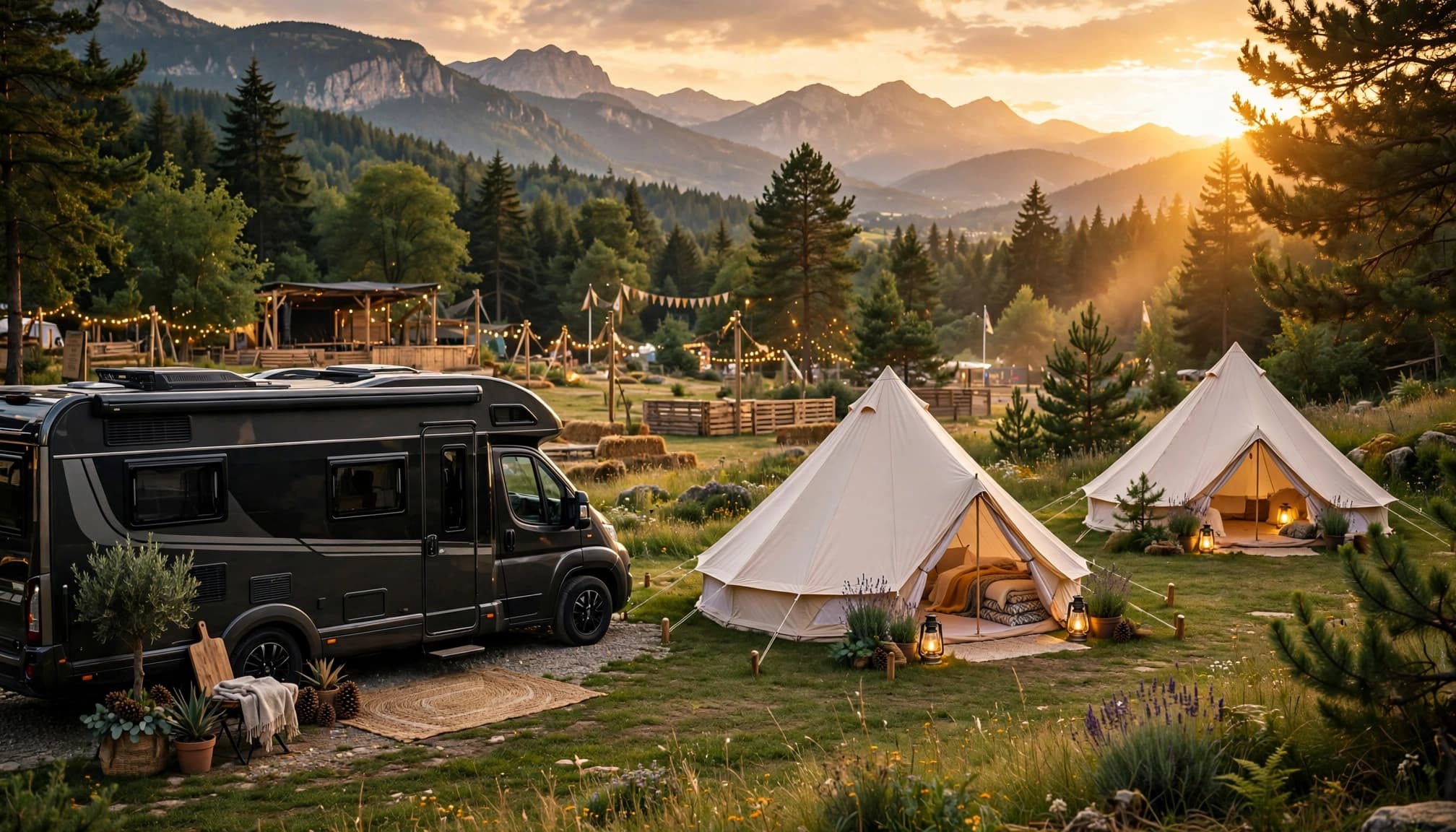
Book Festival Accommodation Before the Weekend Gets Expensive
Festival demand compresses fast, especially during festival weekends. Hotel rooms disappear, rates jump, and good dinner reservations vanish right behind them.
Reserve the hotel once dates are confirmed
Once the dates, venue, and ticket policy are official, book a cancellable room in your preferred area. You can refine flights and daytime plans later. The hotel is usually the piece that gets expensive first.
Compare the nightly rate with shuttle fees, onsite parking, meals, rideshares, and travel time. A cheaper airport hotel can lose its appeal after four rideshares and added parking stress. Compare that total with a downtown Reno property before choosing the remote option.
Check high-value amenities before paying a premium. Depending on your needs, useful filters may include free Wi-Fi, free breakfast, an indoor pool, or a pet-friendly policy.
For destination festivals, compare the official room block, local hotels, and a shuttle-served property. Past Reno River Festival lodging materials have included date-specific blocks, a 10% discount code, and separate group-code deadlines. Treat those details as historical examples, then verify current rates, cancellation rules, and hotel accommodations directly.
Buy transportation separately when required
Don’t assume a hotel reservation includes transport. Many festival shuttles require a separate shuttle pass, advance booking, or a designated hotel pickup.
Historical Northlands materials have listed shuttle service between Friday and Sunday, with selected pickup properties among local hotels. If current service is offered, match your shuttle pass to the published operating window. Don’t assume coverage on arrival or departure days.
Pack light, confirm luggage storage, and check onsite parking before arrival. Bring a portable charger and save your backup route home. One dependable transfer beats a complicated plan with five hopeful options.
Frequently Asked Questions
Is it better to stay near the festival or the city center?
Stay near the festival when the schedule is packed, the site is remote, or you want an easy reset between sets. Choose a downtown base when it offers direct transport, better food, nightlife, and safer late-night options.
As a city-specific example, downtown Reno can work well for festivalgoers who value central dining and post-show options. Check the return service for that specific event and year.
Hotel accommodations, an official shuttle property, a campground, or an RV setup can each suit a different festival schedule.
How far from a festival venue should my hotel be?
There is no perfect number. Walking distance works when the route is lit, safe, and open after the event ends.
A direct ride can be just as practical, especially when late-night service is reliable. For a rural festival, use the official entrance or shuttle stop serving the festival grounds, not the venue’s map pin.
Should I rent a car for a festival outside a city center?
A rental car makes sense for remote venues, limited shuttle service, mobility needs, or countryside stops beyond the festival. Confirm onsite parking, fees, and exit rules before booking, since parking stress can add time after the headliner.
An official shuttle pass can make a car unnecessary when service runs late enough. Check the shuttle schedule, parking policy, and final departure time for that specific festival and year.
Build the Weekend Around the Way You Want to Feel
The strongest hotel locations protect the hours around the headline set. You have time for breakfast, a good meal, a hotel reset, and a ride home that does not depend on luck. For festival weekends, choose the area that balances breakfast, recovery, festival access, price, and the late-night route home.
For festivalgoers who want the music, food, nightlife, and outdoor activities built into one thoughtful plan, custom concert and festival travel planning keeps every moving part in the same orbit. The room matters, but the rhythm of the whole weekend matters more.