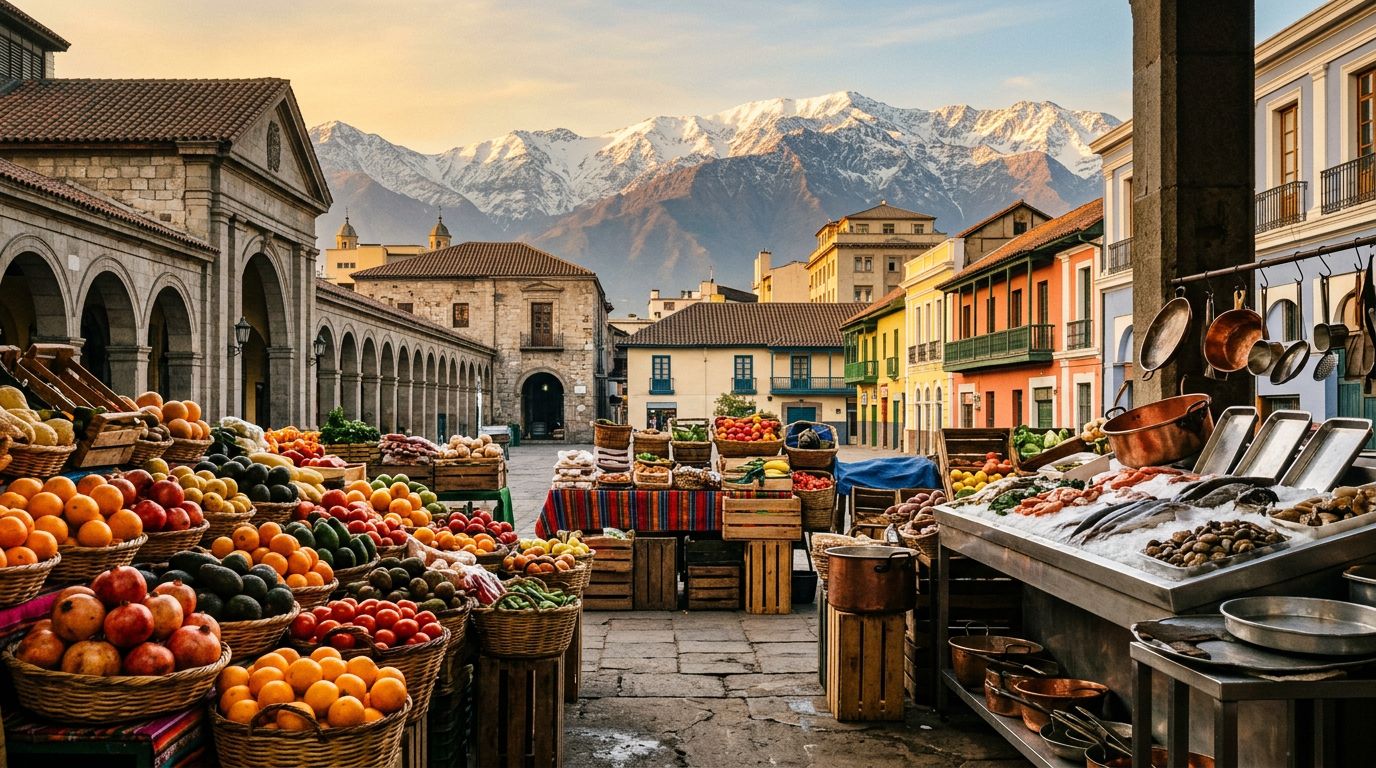
Santiago can feel like two cities in one day: a fish market at lunch, a sharp dinner scene after dark, and the Andes framing the horizon when the sky clears. The trick is giving each side room, instead of spending your trip trapped in traffic.
A strong Santiago Chile itinerary is not a sprint through every landmark. It is a market morning, a serious wine day, a mountain-view moment, and nights built close to where you sleep. This plan brings food, neighborhoods, and logistics together without rushing the city.
Give it three full days, four if you want the pace to breathe. Here is the version I’d build.
Key Takeaways
- Give Santiago three full days: use the first for markets and the historical center, the second for views and neighborhoods, and the third for Maipo Valley wine.
- Stay in Barrio Lastarria for walkable culture and wine bars, or choose Providencia for calmer evenings, strong restaurants, and easy transport.
- Visit Mercado Central and La Vega in the morning, then leave room for Plaza de Armas, La Moneda Palace, and a booked dinner in Lastarria or Barrio Italia.
- Keep Cerro San Cristobal flexible for the clearest weather, with Sky Costanera as a backup when haze blocks the Andes.
- Use Metro and rideshares for the city, hire a driver for wine country, and save Valparaiso, Cajon del Maipo, and Colchagua Valley for extra days.
How to Structure a Santiago Chile Itinerary in Three Days
Three full days are the right baseline for a first visit, and a few travel tips keep the pace relaxed. You can see the historical center, eat well, and get into wine country without turning every meal into a late arrival. Use a fourth day for the Museum of Memory and Human Rights.
Treat San Pedro de Atacama and Torres del Paine as separate trips, since neither belongs in a three-day Santiago visit. Save a Valparaiso day trip for a fifth day or separate overnight. Choose Colchagua Valley when extending the trip around wine.
Start Downtown, Then Protect the First Night
Begin downtown with Mercado Central and the blocks around Plaza de Armas. Let the afternoon move south toward La Moneda Palace and Barrio Lastarria.
Keep the first dinner within walking distance of your hotel. A long cross-town ride before your first glass of Carménère is a bad opener.
Pick one restaurant with a reservation, settle in, and leave the second drink for a bar you can walk to.
Day Two and Three: Views, Then Wine
Start the second morning with a hilltop viewpoint, then give Providencia and nearby neighborhoods the rest of the day. Reserve day three for Maipo Valley.
Don’t add a winery onto a city day. Wine country needs a long lunch and a driver ready when you are. On this three-day plan, this is where the capital stops feeling like a stopover.
Choose a Base That Protects Your Evenings
A hotel decides whether dinner leads to one more drink or a tired debate about taxis. Pick your base for the nights you actually want, not only the landmarks you want to photograph.
Barrio Lastarria for Walkable Culture and Wine Bars
Barrio Lastarria works for a first visit because you can walk to museums, cafes, wine bars, and downtown sights. The Singular Santiago and Hotel Cumbres Lastarria fit travelers who want polished rooms near the action.
Ask for a courtyard-facing room if sleep matters. Weekend noise is part of the neighborhood, but it doesn’t need to be outside your window.
Providencia for Better Hotel Returns
Providencia is stronger for a calmer return, good restaurants, and easy rides into the center. Barrio Italia adds independent shops, dinner, and wine bars without requiring a late night downtown.
Stay near Manuel Montt or Pedro de Valdivia for energy without the late edge of Barrio Bellavista.
El Golf and Las Condes fit travelers who want bigger luxury hotels, but spontaneous nights take more effort. For groups with concerts, winery bookings, or big dinners, custom travel itinerary planning keeps transfers, timed entries, and late rides in one place.
Market Mornings, History, and a Dinner Worth Booking
Markets work best early, before the city gets hot and the tables fill. Use the morning for local food and a short walking tour through Santiago’s historical center. Don’t race through them with a camera and coffee. Make room to taste something, talk to a vendor, and reset the day.
Central Market Has More Than Seafood
Mercado Central is the move for seafood and pure old-Santiago theater. Its official market hours run Sunday through Thursday from 7:30 a.m. to 5 p.m., Friday until 8 p.m., and Saturday until 7 p.m.
Go at lunch, not at the last minute. Walk the hall once before sitting down, then order paila marina or machas a la parmesana. A calm lap makes the choice yours.
La Vega, Plaza de Armas, and Lastarria
Across the Mapocho, La Vega Central feels less polished and more like a working food market. Go in the morning for produce, spices, juice stands, and local movement.
Then cross back for the cathedral and surrounding historic blocks, including La Moneda Palace. If you want more context, make an optional detour to the Museum of Memory and Human Rights. Save Barrio Lastarria for dinner. Bocanariz is a smart wine-bar booking when you want a broad Chilean list without treating the night like homework.
Cerro San Cristobal and a Good Night Out
Santiago’s mountain views don’t arrive on command. Smog and weather can flatten the horizon, so keep the clearest morning flexible. When the Andes show up, move quickly. They change the scale of the whole city.
Go Up Early for the Andes
Cerro San Cristobal works as both an urban park and summit, putting the city, mountains, and neighborhoods in one frame. Take the funicular or cable car when services are running, and check the day’s status before you go. If haze blocks the mountains, choose Sky Costanera’s observation deck instead.
Bring water and sun protection. The climb is not the place to discover that your planned lunch is across town.
Afterward, take the return route toward Barrio Bellavista for murals, street art, and a visit to the Pablo Neruda house (La Chascona).
Make Your Night Match Your Hotel
The area has color and late energy. It also gets loud and busy, so I prefer it for a planned night rather than an aimless one.
Barrio Italia is the softer choice for independent shops, dinner, and wine bars. If live music is part of the trip, check Teatro Nescafe de las Artes and Sala Metronomo before you book dinner. A show is the evening’s main event, not something to squeeze between reservations.
A Maipo Valley Wine Day With Room for the Mountains
Maipo Valley is the cleanest wine-country choice when the trip is built around Santiago. It’s close enough for a relaxed full day, but it shouldn’t feel like a quick tasting before a city dinner.
Plan two appointments and a proper lunch. Each Chilean wine tasting should feel unhurried, not like a quick stop, with afternoon margin for the return journey.
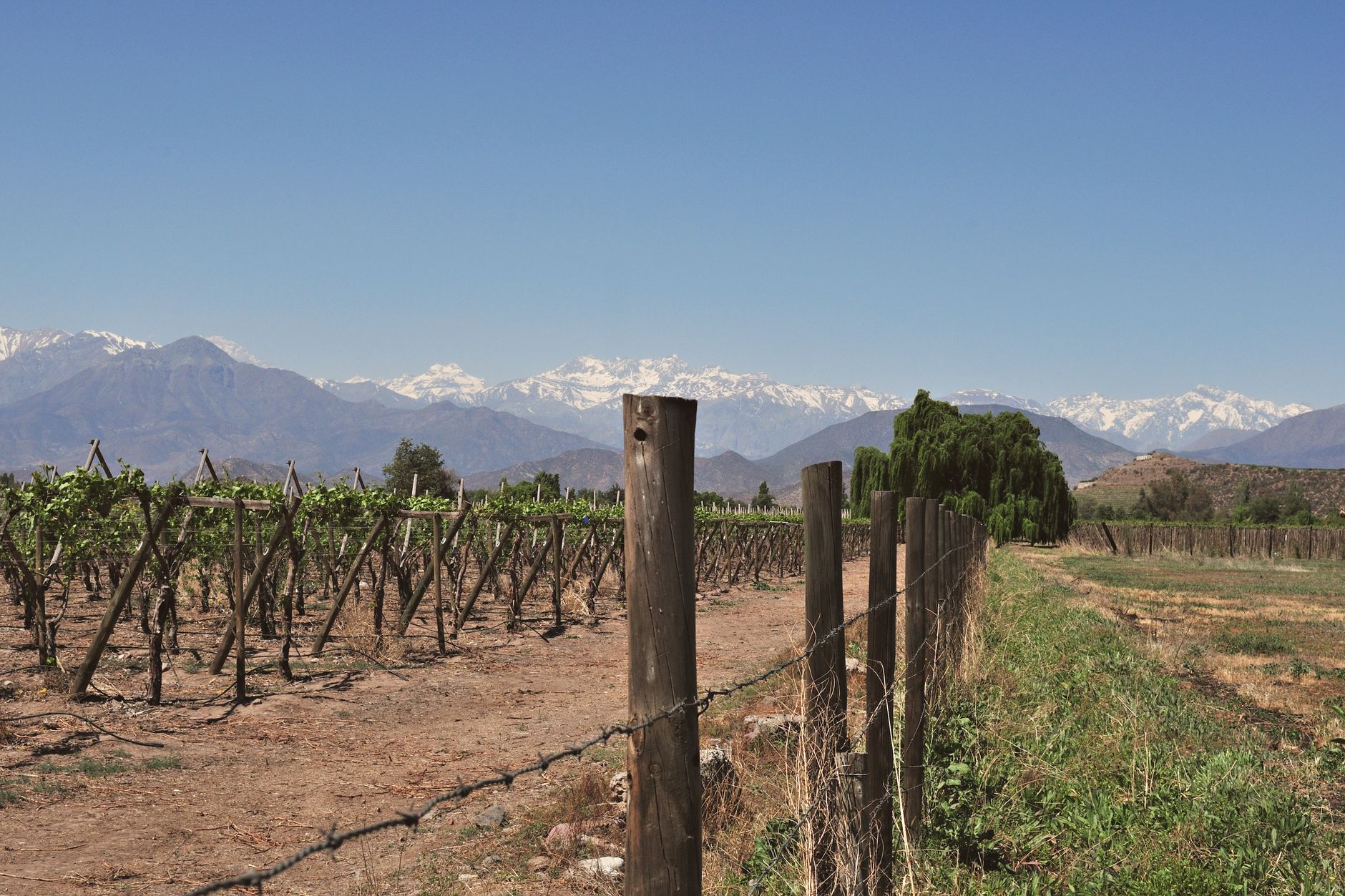
Photo by DΛVΞ GΛRCIΛ
Pick the Valley That Fits Your Palate
Concha y Toro in Pirque, Santa Rita in Alto Jahuel, and Haras de Pirque are useful starting points. Colchagua Valley is a longer, estate-focused alternative.
Maipo is most natural for Cabernet Sauvignon and mountain presence, while a wine region should be chosen by palate, setting, and logistics. If fresh whites and a coastal feel are the priority, Casablanca Valley is the better fit. This overview of Santiago wine valleys is useful before you choose.
| Valley | Choose It For | Travel Mood |
|---|---|---|
| Maipo | Cabernet, estate lunches, Andes views | A polished full day from Santiago |
| Casablanca | Sauvignon Blanc, Pinot Noir, cooler air | A coastal extension or longer stay |
| Colchagua Valley | Structured reds, estate lunches | A longer, estate-focused extension |
For a three-day trip, Maipo is the cleaner fit. Colchagua Valley deserves extra time beyond a three-day Santiago plan. Casablanca works better with extra time, and it shouldn’t be combined with a rushed Valparaiso day trip.
Give Cajon del Maipo Its Own Day
Cajon del Maipo is a separate mountain day, not the third stop after two wineries. Roads, weather, and return timing need more margin.
Rent a car only if you’re comfortable driving outside the city and have a plan that uses it all day. Otherwise, hire a driver for Maipo or the mountain day, and leave central Santiago to walking, Metro, and rideshares.
Use Transit for Clean Jumps, Not Every Block
Santiago is easier than it looks once you stop asking transit to fix a scattered schedule. These travel tips are simple: group walkable neighborhoods, use public transportation and the Santiago Metro for longer jumps, then book a rideshare for late returns.
Sort Payment on Day One
Buy a bip! card at a Metro ticket office if buses are part of your plan. The card costs CLP 1,550, loads at stations and authorized shops, and is the payment method for buses.
The Santiago Metro gates and MetroTren Nos now accept contactless Visa and Mastercard payments, including phone wallets, but that doesn’t cover a bus ride. This bip! card payment primer is a helpful reminder that buses don’t take cash.
Sort this on day one, not at a machine with a line behind you.
Leave the Car for the Right Day
Don’t rent a car for a city-first plan. Parking, traffic, and keeping track of a vehicle after wine make it more burden than freedom.
A car makes sense for a multi-stop winery route or a self-directed Cajon del Maipo day. For central nights, keep your phone out of sight around crowded platforms, carry only what you need, and book Uber or Cabify when your feet are done. One extra Metro transfer after drinks rarely feels clever.
Frequently Asked Questions
How many days do you need in Santiago?
Three full days are a strong baseline for a first visit. Add a fourth day for the Museum of Memory and Human Rights, Cajon del Maipo, or a slower city schedule.
Where should you stay in Santiago?
Barrio Lastarria is best for walkable museums, cafes, wine bars, and downtown sights. Providencia offers calmer evenings, good restaurants, and easier returns after a full day out.
Which wine valley is best for a short Santiago trip?
Maipo Valley is the cleanest choice because it is close to Santiago and works well for a full day of tastings and lunch. Choose Casablanca for cooler-climate whites or Colchagua for a longer, estate-focused extension.
Is Cerro San Cristobal worth visiting?
Yes, especially when the weather is clear and the Andes are visible. Check conditions before you go, and use Sky Costanera as an alternative if smog or haze flattens the mountain view.
Do you need a car in Santiago?
You do not need a car for central Santiago, where walking, the Metro, and rideshares cover most plans. A driver is more useful for winery visits or a separate Cajon del Maipo day, especially when wine is involved.
Final Thoughts
Santiago doesn’t need to be crammed into a checklist. Give markets their mornings, put wine country on its own day, and let the clearest weather decide your mountain view.
The strongest version of the trip keeps the moving pieces light and the good parts close together. One great meal, one long pour, and one clear look at the Andes can carry more weight than ten rushed pins on a map.
With a longer stay, give a Valparaiso day trip its own day rather than forcing it into the wine schedule. For another South American capital built around markets, food, and mountain views, the Quito itinerary covers its markets, cable car, and equator line in three days.
For a longer wine extension, consider Colchagua Valley. History-focused travelers can make the Museum of Memory and Human Rights a fourth-day alternative.