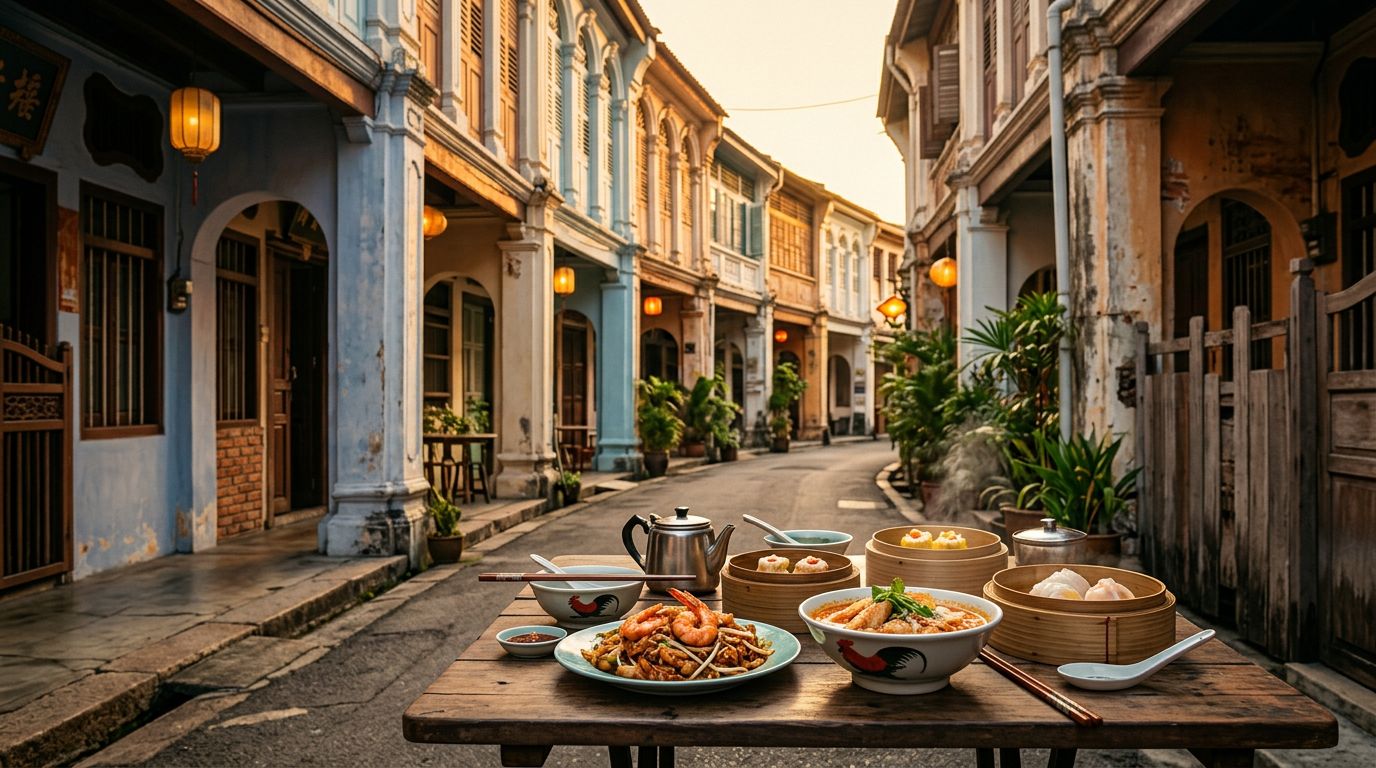
Penang rewards travelers who keep their eyes up, their afternoons loose, and their meals close to the next great walk. A strong route isn’t about racing between murals or ticking off every famous stall. It’s about letting George Town unfold at street level.
Three full days gives you the right balance of heritage, hawker food, hill views, and a flexible beach reset at Batu Ferringhi. Keep the days tight by neighborhood, then leave room for a lunch that runs long or a bar that feels worth one more round.
Here is the three-day plan I’d build for a food-first trip that still has real structure.
Build Your Penang Itinerary Around Three Tight Zones
Two days is enough to see George Town’s headliners. Three days is better if you want the city to feel like more than a photo stop between meals.
Use your first day within the historic core’s heritage zone. Give Air Itam, Kek Lok Si Temple, and Penang Hill their own day, including the Funicular railway. Save the third for the food neighborhoods you missed, a slower morning, or a beach-side reset at Batu Ferringhi if that sounds better than another museum.
Treat Each Day Like a Good Setlist
A strong day has one anchor, a few supporting moments, then a finish close to where you want to spend the night. Don’t ask one afternoon to handle a mansion tour, three murals, Chew Jetty, and a dinner reservation across the island.
George Town is compact, hot, and best explored on foot in short bursts. Air Itam is different. Use Grab for that clean jump rather than turning your day into a public-transit project.
Stay Where Your Evenings Make Sense
For a street-food-and-heritage trip, stay in or close to the George Town core, around Love Lane, Chulia Street, Campbell Street, or the quieter blocks nearby. You’ll buy back time after dinner, when a final drink or live set sounds better than a 30-minute ride home.
Batu Ferringhi can suit travelers prioritizing beach evenings, but staying there creates longer transfers for a food-and-heritage route.
Historic rooms come with trade-offs. Before booking, check recent reviews for street noise, air conditioning, lift access, and whether the room faces a busy lane or an interior courtyard. A beautiful balcony above scooters at 2 a.m. is a different product.
George Town Heritage Walks Without the Checklist Energy
Start early, before the pavement starts throwing heat back at you. In the heritage zone, cooler mornings make long walks easier. George Town is a UNESCO World Heritage Site because its streets hold layers of Malay, Chinese, Indian, and European history, not because every corner needs a photo queue. The UNESCO listing for George Town is a good reminder of how much lived-in architecture sits behind the famous facades.
Begin With Streets, Not the Mural Map
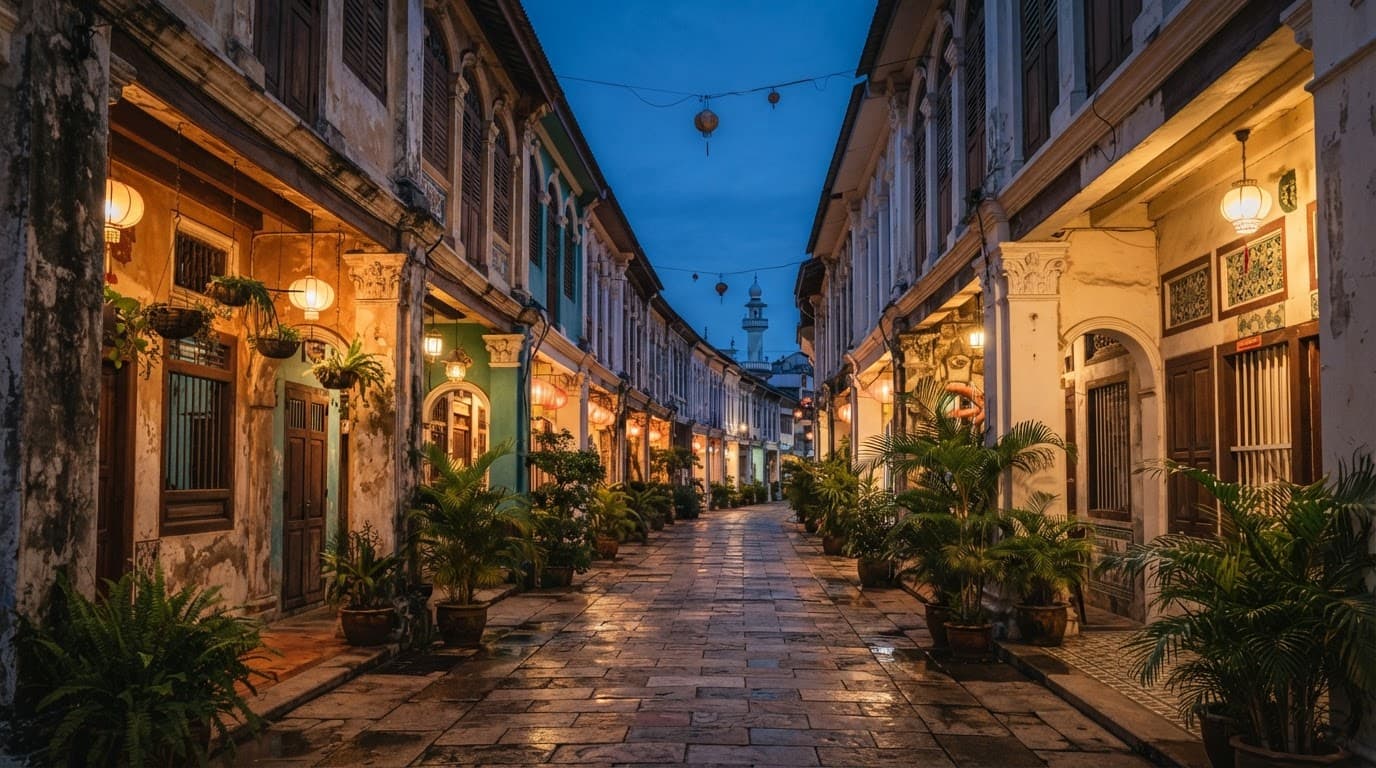
Walk Armenian Street, Ah Quee Street, Cannon Street, and the lanes around Lebuh Acheh. Pause at Kapitan Keling Mosque, then notice the shophouses, temples, workshops, coffee counters, and doorways that make you slow down.
Street art is part of the broader visual culture here. The well-known mural route offers a compact look at street art, with “Little Children on a Bicycle” and “Boy on Motorbike.” See it, but don’t build your morning around it; treat street art as part of the walk, not the reason for it.
Stop for coffee, then keep moving through the side streets. The best details in George Town are often the small ones: tiled floors, faded signage, incense drifting out of a shrine, and a cook setting up for lunch. If restored shophouses start to blur together, Hin Bus Depot offers a contemporary arts detour, especially when weekend programming is on.
Choose One Mansion and One Clan House
Don’t stack every heritage interior into one afternoon. Pick a mansion, then pair it with a clan house.
Cheong Fatt Tze Mansion, better known as the Blue Mansion, is the right call if you want a guided look at a carefully restored home. Pinang Peranakan Mansion gives you a richer sense of Straits Chinese design, from carved furniture to porcelain and family objects. Khoo Kongsi offers the stronger contrast, with its ornate clan-house courtyard and temple details.
Chew Jetty fits as a brief final stop, not a half-day destination. It’s one residential example among the Clan jetties, which remain lived-in waterfront communities. Walk respectfully, take in the view, then move on before it feels like you’re treating someone’s front porch as a theme park.
Eat Penang Street Food at the Right Time
Penang’s food scene doesn’t need a single blowout dinner to impress. The city is better when you eat across the day: noodles for breakfast, something smoky at lunch, a sour bowl of laksa when the weather turns, then a night market crawl after dark.
Let the Clock Choose the Dish
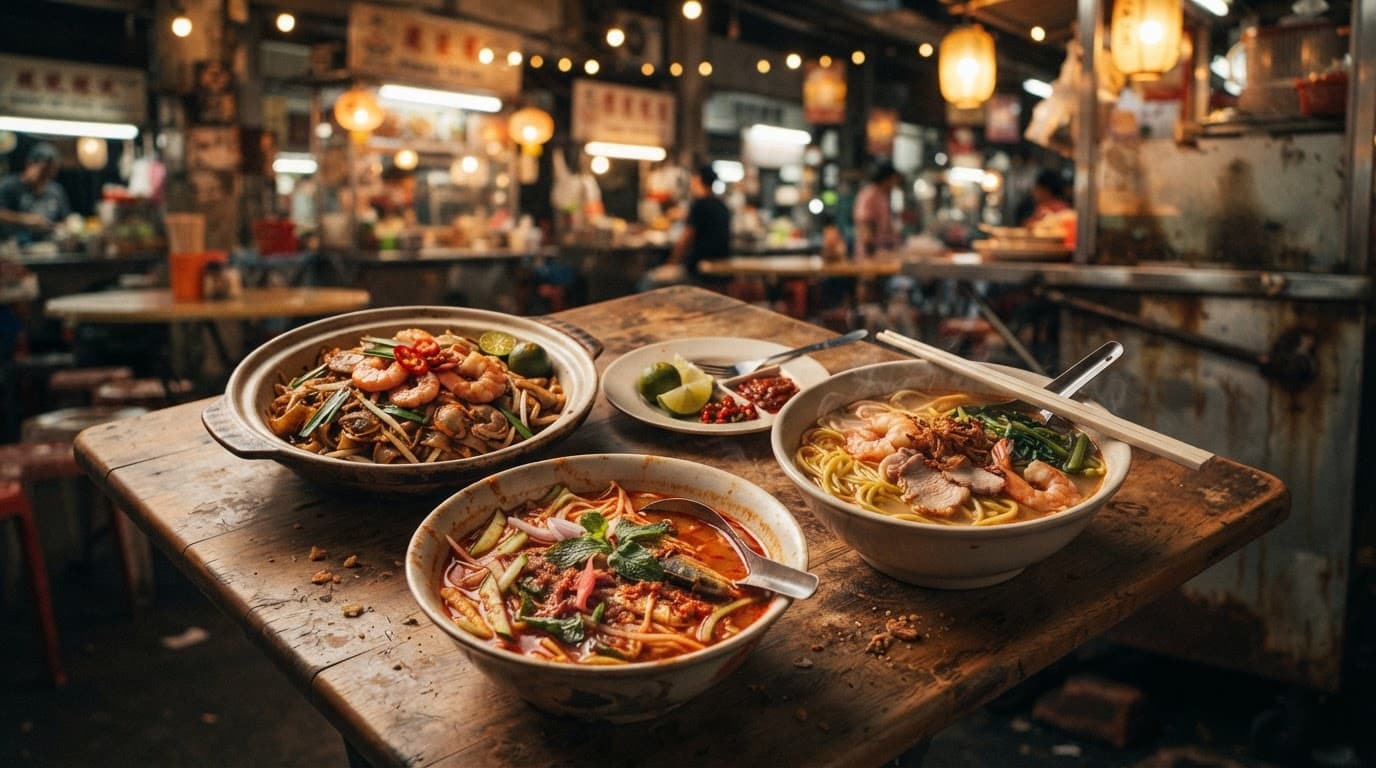
Start with Hokkien Mee, Penang’s prawn-noodle soup, when you want a breakfast with real weight behind it. Char Kway Teow is the move for lunch, especially when you catch a stall turning out plates fast over a hot wok.
Assam Laksa is the dish that divides people, in the best way. It is fishy, tamarind-heavy, herbal, and sharp. If you’re trying it for the first time, order Assam Laksa expecting a bold, sour bowl, not a gentle noodle soup. Tourism Malaysia’s guide to Penang’s culinary classics is useful if you want a deeper read on the staples before you arrive.
Make room for Nasi Kandar at least once. Point to the curries that look good, add rice, and accept the improvised Nasi Kandar plate that follows. Finish with cendol when the afternoon heat gets aggressive.
Don’t Spend an Hour Chasing One Viral Plate
Chulia Street, Kimberley Street, Cecil Street Market, and New Lane all work better when you arrive hungry and flexible. At a busy hawker center, do one lap before ordering. Red Garden Food Paradise is an easy choice if you’d rather stay at one venue. Look for turnover, listen for the sound of woks, and see what locals are taking to nearby tables.
A long line can mean something. It can also mean a social-media post caught fire three months ago. Penang has too much good food to spend your best eating hours orbiting one famous stall.
For a more polished evening, shift toward Love Lane or Muntri Street for cocktails and a slower dinner. If live music matters, check the week’s program before booking your table. Keep dinner, the venue, and your after-drinks option in the same orbit.
If your third day ends in Batu Ferringhi, shift from the beach to its evening food stalls. Treat it as its own stop.
The best Penang meals often happen because you left enough room to order the second thing that looked good.
Give Air Itam and Penang Hill Their Own Day
Air Itam is where many Penang itineraries get sloppy. It looks close on a map, then traffic, heat, and scattered timing eat the day. Start early, use Grab from George Town, and pair Kek Lok Si Temple with Penang Hill in that order.
Arrive Early at Kek Lok Si Temple
Kek Lok Si is Malaysia’s largest Buddhist temple complex, set into the hills above Air Itam. Go in the morning, while the stairs are manageable and the light is still soft.
The main grounds are free to enter. Some areas, including the pagoda and the inclined lift toward the Guanyin statue, carry small on-site fees that can change. Dress with shoulders and knees covered, bring water, and give the site time. This isn’t a quick box to tick between breakfasts.
Aim to finish before late afternoon, and verify current closing times before you go. The wider temple grounds typically close around 5:30 p.m., with some sections closing earlier.
Take the Funicular railway Up Penang Hill
From Kek Lok Si, take a short ride to Penang Hill’s lower station. The Funicular railway runs daily from 6:30 a.m. to 11 p.m., and the final uphill departure is at 10 p.m. Check current Penang Hill ticket details before you go, especially since scheduled maintenance can temporarily stop service.
Sunset is beautiful, but it’s also the busiest moment. Go earlier if you want cooler air, a slower walk, and less time in line. With extra time, The Habitat is a worthwhile summit add-on. If you take the late train, have your dinner plan sorted before heading downhill.
Getting There, Timing the Weather, and Keeping Friction Low
The logistics are simple when you make the big decisions early.
Choose the Kuala Lumpur Connection That Fits
Flying from Kuala Lumpur takes roughly 50 minutes in the air, though airport transfers add time at both ends. The ETS train to Butterworth takes around 3.5 to 4 hours, then you’ll need a ferry or road transfer to George Town.
I like the train when the journey itself sounds appealing and the schedule lands cleanly. Fly when you have limited time or a late dinner reservation waiting in Penang. Before confirming the Air Itam day, check the Funicular railway’s maintenance notices.
Plan for Heat, Rain, and the Night You Want
January through March is often the easier window for long outdoor walks. Late August through November can bring heavier rain, so keep indoor heritage stops and food markets ready as backups. Batu Ferringhi is a weather-sensitive beach reset, so check the forecast before committing.
Penang doesn’t need overplanning. It needs good sequencing, reservations where they matter, and a real rain plan. Keep Batu Ferringhi flexible during wetter months, and verify conditions and operating schedules before heading out. For groups, milestone trips, or a food-first route with every transfer and dinner handled, bespoke travel planning services can take the moving parts off your plate.
Frequently Asked Questions
How many days do you need for Penang?
Three full days gives you enough time for George Town’s heritage streets, Penang Hill and Kek Lok Si, plus a flexible food or beach day. Two days works for the headliners, but the route will feel tighter.
Where should you stay in Penang?
Stay in or close to George Town if food, heritage walks, and evening drinks are the priority. Love Lane, Chulia Street, Campbell Street, and the quieter blocks nearby keep most nights within an easy walk.
What food should you try in Penang?
Start with Hokkien Mee, Char Kway Teow, Assam Laksa, and Nasi Kandar, then make room for cendol. Order across the day instead of spending all your time chasing one famous stall.
Is Penang Hill worth visiting?
Yes, especially when you pair it with Kek Lok Si Temple in Air Itam and start early. The Funicular railway makes the climb straightforward, while an earlier visit usually means cooler air and shorter lines.
Should you include Batu Ferringhi in a Penang itinerary?
Batu Ferringhi works well as a flexible third-day reset if you want beach time and evening food stalls. Keep it weather-dependent, since staying there adds longer transfers to a food-and-heritage route.
Final Thoughts
The right Penang itinerary gives the city room to breathe. Walk George Town before the heat, eat by instinct, use rides for jumps that don’t deserve your energy, and let one great meal lead into the next part of the night. Balance it with a slower finish in Batu Ferringhi.
Penang isn’t a city to complete. It is a city to arrange well, then enjoy at street level.