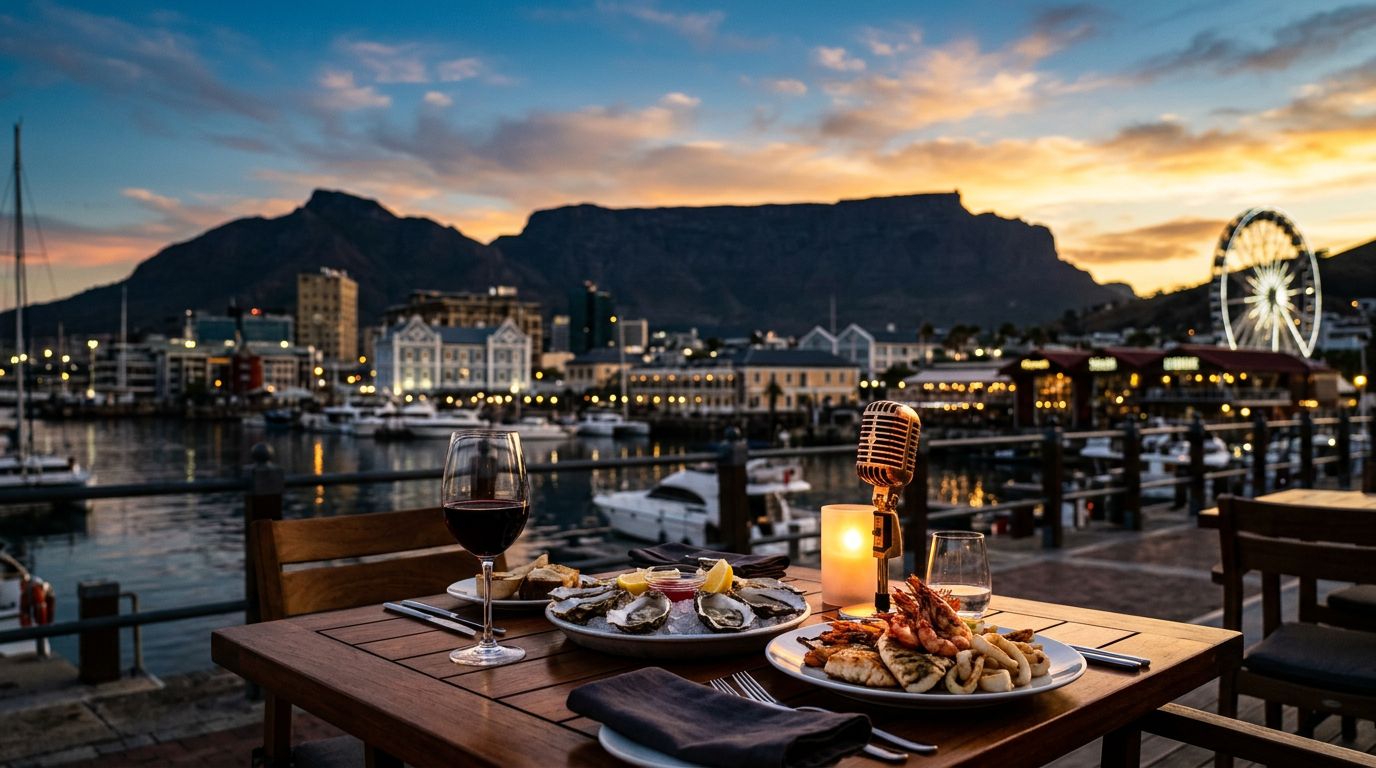
Cape Town can give you a mountain sunrise, a proper seafood dinner, and a live set that runs late, all in the same day. The trick is not trying to do all of it at once.
A great Cape Town itinerary is built around pace. Keep one major sight as the daytime anchor, stay close to the neighborhood where you plan to eat and drink, then leave enough room for the night to get good.
This five-day route keeps the major moments intact without turning every dinner into a long ride home.
Key Takeaways
- Five days gives you enough time to balance Cape Town’s city center, Table Mountain, the Cape Peninsula, the Winelands, and several strong evenings.
- Build each day around one major daytime anchor, then stay near your dinner and music plans to avoid wasting the night in traffic.
- Keep weather-sensitive plans flexible, especially Table Mountain and Robben Island, and use Kirstenbosch or another city outing as a backup when conditions change.
- Choose one Winelands valley, book two thoughtful tastings and lunch, and use a private driver if the day is built around wine.
- Book major attractions, popular restaurants, and live music ahead, while leaving enough room for long lunches, good bottles, and an unhurried final drink.
A Cape Town Itinerary Built Around the Night
Five full days is the right amount of time for a first trip that includes the city, the Cape Peninsula, the Winelands, and a few nights worth dressing up for. You can see Cape Town in three days, but something has to give. Usually that means rushing the peninsula, cutting short the city, or treating wine country like a quick errand.
With five days, the city has room to breathe. You get Table Mountain when the weather cooperates. You can take your time at the District Six Museum and in Bo-Kaap. You can give the penguins and the peninsula their own full day. Then you can come back to a good bottle and a better dinner.
Here is the shape I would use:
| Day | Daytime Anchor | Evening Plan |
|---|---|---|
| 1 | City center, District Six, Bo-Kaap | Bree Street wine and seafood |
| 2 | Table Mountain or Kirstenbosch | Camps Bay dinner |
| 3 | Cape Peninsula, Boulders Beach, Cape Point | Kalk Bay seafood or a relaxed City Bowl night |
| 4 | A Winelands valley | Wine-focused dinner close to your hotel |
| 5 | Robben Island and the V&A Waterfront | Waterfront drinks and live music |
Stay in the City Bowl, Gardens, De Waterkant, or near the V&A Waterfront if food and music are part of the trip. The City Bowl is the better call for Bree Street, Kloof Street, and late dinners. De Waterkant works if you want a polished hotel base and easy access to the Waterfront. Camps Bay is beautiful, but it can turn a quick nightcap into a taxi decision.
A cheaper room far from your evenings stops feeling cheap after the third late-night ride home. Pick the area that protects the part of Cape Town you came to enjoy.
Day One and Two: Start in the City, Then Get Above It
Day One: History, Wine, and a Bree Street Night
Start your first morning slowly in the Company Gardens. This is an easy opening after a long flight, especially if you want coffee, a walk, and enough city texture without committing to a big-ticket attraction.
From there, make the District Six Museum your cultural anchor. This isn’t a stop to rush through between brunch and cocktails. The museum gives needed context to Cape Town’s history of forced removals under apartheid, and it changes how you see the rest of the city.
Bo-Kaap fits naturally afterward. The colorful homes are part of the draw, but the neighborhood deserves more than a photo stop. A guided tour is worth your time if you want to understand the Cape Malay culture, family histories, and faith traditions behind the streets. Keep it respectful. Homes are not props, and residents deserve space.
By late afternoon, settle into the Bree Street area. Start with a glass of South African Chenin Blanc, Cap Classique, or a cool-climate Pinot Noir before dinner. The city’s wine scene has range, but it rarely needs to shout. Ask for a local producer by the glass and let the person behind the bar steer the first pour.
For seafood, Sea Breeze Fish & Shell is a strong city-center choice when you want oysters, fish, and a room with energy. Keep dinner early if you have music planned. Bree Street’s Blue Room makes sense when the program lines up, especially for travelers who want wine, cocktails, and a late-night set in the same orbit. The Cape Town wine-bar guide is a useful place to check before you lock in your night.
Day Two: Table Mountain, Camps Bay, and Sunset Seafood
Table Mountain is the obvious headline act, but it doesn’t run on your schedule. Wind can stop the cable car, and cloud can erase the view in minutes. On a clear, calm day, Lion’s Head is another fair-weather option. Check conditions as soon as you wake up, then make the call.
If the cable car is operating and the forecast looks clean, go early. Buy tickets ahead when possible, but don’t build an entire day around a fixed plan if the weather looks unstable. The mountain will still be there tomorrow. Your dinner reservation will not care why you arrived late.
If the cable car is closed, move the mountain to another day and pivot to Kirstenbosch Botanical Gardens. It is a far better backup than forcing a hike in bad conditions. Kirstenbosch has enough space, mountain views, and calm to make the change feel intentional.
After Table Mountain, head toward Camps Bay for a long seafood dinner with sunset views of the Twelve Apostles. Before dinner, use the tidal pools if the weather is warm and conditions are calm. The Codfather is the move when you want a seafood-heavy table and a lively room. Keep your expectations practical. Camps Bay is built for scenery, and that comes with demand. Reserve ahead, especially on weekends and during summer.
Don’t stack Lion’s Head onto this day unless hiking is the main reason you came. Its hiking trail deserves its own morning. Table Mountain and a proper dinner are enough.
Day Three: Boulders Beach, Cape Point, and the Peninsula
This is the day to rent a car, hire a driver, or book a private Cape Peninsula route. You don’t need a rental car for central Cape Town. You do need a clear transportation plan for this stretch.
Drive clockwise if conditions allow: Hout Bay, Chapman’s Peak Drive, Cape Point, the Cape of Good Hope, Boulders Beach, then Kalk Bay on the return. Leave early. The road is beautiful, but the distances are real, and traffic can take more of the day than expected.
Chapman’s Peak Drive is the kind of road where you should stop, look, and let the view land. Don’t turn every pull-off into a photo mission. You still have Cape Point ahead, and this coast is better when it doesn’t feel like a race.
Cape Point and the Cape of Good Hope are often bundled together in conversation, but give them enough time to walk, look out over the water, and feel the scale of the place. This is also why I would never pair Cape Point with Table Mountain in a single day. The map makes it seem possible. The day does not.
At Boulders Beach, use the designated boardwalks and keep your distance from the African penguins. Don’t touch them, feed them, block their path, or step closer for a photo. They are wild animals in a protected colony, not a beach-side attraction built for your camera roll.
Finish in Kalk Bay if you still have appetite left. Kalky’s is a classic no-frills fish-and-chips stop by the working harbor. It is casual, fast, and right for this kind of day. If you want a more polished meal, book a table around Kalk Bay Harbour and let the drive back to the city wait until after dinner.
Cape Point is a full-day commitment. Treat it like one, and the entire coast feels better.
Day Four: Build the Cape Winelands Day Around One Valley
A Cape Winelands day trip belongs in a standard five-day Cape Town itinerary, but only if you keep the wine tasting schedule sensible. Two estates and a great lunch will beat five rushed pours every time.
Choose Stellenbosch if you want a university-town feel, broad estate options, and a little more activity around the center. It works well for travelers who want serious wine, architecture, and a lunch that can turn into an afternoon.
Choose Franschhoek if the day is about scenery, a slower village pace, and a more romantic finish. The valley is compact enough to feel relaxed, but popular enough that you should reserve each wine tasting and lunch in advance.
Waterford Estate, Tokara, Rust en Vrede, Boschendal, Haute Cabriere, and La Motte are all names worth researching based on your preferred wine style and lunch budget. Don’t chase every famous property. Pick places that make sense geographically, then stay long enough to enjoy them.
A private driver is worth paying for on a day built around the estates. It gives everyone at the table the same freedom, removes the parking issue, and lets lunch stretch without someone doing mental math over the last pour. A rental car is cheaper, but only when one person is happy to stay sober.
Plan to return to Cape Town before dinner. You don’t need another huge night. Choose a wine-led dinner near your hotel, order something you haven’t tasted yet, and let the day settle.
Day Five: Robben Island, the V&A Waterfront, and a Music Night
Book Robben Island early in the trip, then keep your schedule flexible around the weather. Ferry conditions can change, and the experience takes a meaningful part of the day once check-in and travel time are included.
The visit is worth it for first-time travelers. It adds historical weight to a trip that can otherwise drift too easily toward views, restaurants, and beaches. Don’t pair it with another major outing or a packed afternoon. Give it the space it deserves.
Afterward, stay around the V&A Waterfront. It is more polished and more tourist-facing than the City Bowl, but it works well on a final day. Walk the harbor, then browse the shops for a light reset. Willoughby & Co is an easy seafood restaurant, with a menu focused on sushi and seafood. Its location keeps the night easy.
For drinks, Bascule at Cape Grace has the right waterfront mood when you want a proper whisky list, wine, and a good-looking room without the usual club pressure. Check Bascule’s music schedule before confirming dinner, since live jazz and DJ sets are programmed on select nights.
If you want your last night to feel more like dinner and a show, Pigalle in Green Point is another strong option. It is a dressier seafood-forward room with live entertainment. The Crypt Jazz Restaurant is better when the music itself is the plan. The venue sits below St George’s Cathedral and has the kind of intimate jazz-club energy that turns one drink into a full evening.
Cape Town Wine Bars, Seafood, and Live Music: Book in the Right Order
Music should set the schedule. Check the current lineup, buy tickets if needed, then book dinner close enough that you are never watching the clock over your main course.
A 9 p.m. set does not pair well with a seven-course dinner across town. Build the night like a setlist. Start strong, keep the transitions clean, and don’t burn the best part of the evening in traffic.
For seafood, think in neighborhoods:
- Sea Breeze Fish & Shell works for a City Bowl evening near Bree Street.
- The Codfather is the Camps Bay call when a big seafood dinner and sunset matter most.
- Kalky’s makes sense after a Cape Peninsula day, when polished dining is not the point.
- Willoughby & Co is the easy V&A Waterfront option before waterfront drinks or music.
Drink local wine with intention. Keep a daytime wine tasting distinct from a focused wine-bar visit at night. Order a glass of Chenin Blanc with oysters. Pair it with local cuisine when the menu offers more than standard seafood choices. Try Cap Classique before a live set, then ask for a bottle from Swartland, Elgin, Hemel-en-Aarde, Stellenbosch, or the Constantia Valley when you have a longer dinner ahead.
You don’t need to turn every evening into a crawl. One excellent wine bar, one strong seafood meal, and one music venue is a complete night.
Practical Details That Keep the Trip Easy
Buy major tickets before you arrive, especially Table Mountain and Robben Island, but keep weather-sensitive activities flexible. If possible, put the mountain and ferry earlier in the trip, then use the remaining days as backup.
For getting around, walk in the City Bowl, De Waterkant, and Kalk Bay when routes are straightforward. Public transport can work on some straightforward daytime central routes, while Uber or Bolt is simpler for longer trips and late-night returns. After dinner, when your feet are done and the second glass of wine has landed, a direct ride is the smart call.
Follow ordinary big-city safety tips in Cape Town. Keep phones and valuables out of sight on quiet streets. Avoid wandering unfamiliar areas alone after dark, and wait inside your restaurant or hotel for your ride when possible. Verify the license plate before getting in. On hikes, don’t go alone on unfamiliar routes, don’t carry unnecessary valuables, and turn back when weather changes.
Pay for the parts of this trip that protect your time. That might be a central hotel, a driver for the Winelands, a private Peninsula day, or a table close to the venue. Those choices create better evenings than another rushed attraction ever will.
A good Cape Town itinerary doesn’t need to fill every hour. It needs to keep the mountain, the coast, the wine, and the night moving in the same direction.
Cape Town Travel FAQ
How many days do you need in Cape Town?
Five days gives you enough time for the city, coast, wine country, and evenings without rushing every stop.
What is the best time of year to visit Cape Town?
Summer is usually warm and dry, but it also brings more visitors. Spring and autumn can offer milder conditions and fewer crowds. Weather can change quickly, especially around the mountain and coast.
What is the easiest way to get around Cape Town?
Walk through central neighborhoods when the route is simple, then use Uber or Bolt for longer trips. For full-day outings, a private driver can save time and reduce planning.
What should you book before arriving?
Reserve major attractions, ferry crossings, popular restaurants, and live music venues ahead of time. Keep weather-dependent plans flexible, and avoid booking every hour of the trip.
Is Cape Town safe for visitors?
Most visitors can enjoy the city with normal awareness and sensible planning. Keep valuables discreet, avoid unfamiliar areas after dark, check rides before entering, and don’t hike alone on routes you don’t know.
Frequently Asked Questions
How many days do you need for this Cape Town itinerary?
Five days is the most comfortable length for covering the city, coast, Winelands, and evening plans without rushing every stop. You can see the highlights in three days, but the peninsula, wine country, or city time will need to be shortened.
Where should you stay in Cape Town?
The City Bowl, Gardens, De Waterkant, and the V&A Waterfront are the most practical bases for this itinerary. Choose the City Bowl or Gardens for easy access to Bree Street and Kloof Street, or De Waterkant and the Waterfront for a more polished base near waterfront dining.
Should you rent a car in Cape Town?
You do not need a car for central Cape Town, where walking and rideshares are usually easier. A car, private driver, or organized tour is useful for the Cape Peninsula, while a private driver is the safest and most relaxed choice for a wine-focused Winelands day.
What should you book before arriving?
Reserve Table Mountain, Robben Island, popular seafood restaurants, Winelands tastings, and live music venues ahead of time. Keep weather-dependent activities flexible so wind, cloud, or ferry conditions do not derail the rest of the trip.
Is Cape Town safe for visitors?
Most visitors can enjoy Cape Town with normal big-city awareness and sensible planning. Keep valuables out of sight, avoid unfamiliar areas alone after dark, verify rides before getting in, and do not hike alone on routes you do not know.
Final Thoughts
Cape Town is at its best when you stop trying to collect it all. Give each day one good reason to get up, then let the food, wine, and music carry you into the evening.
The best version of this trip leaves room for a long lunch, an unexpected bottle, and one more song. That is not lost time. That is the point.