Rotterdam doesn’t need to be conquered. It needs to be arranged. This is a city of sharp angles, river light, warehouse bars, serious cooking, and neighborhoods that feel completely different after dark.
A strong Rotterdam itinerary gives the architecture room to land, keeps meals close to the next stop, and leaves room for neighborhoods and evening plans. Three days is enough for the big visual moments, with time left to find the Rotterdam that feels lived-in.
Key Takeaways
- Build your three days around neighborhood clusters: Blaak and the Maas first, Museumpark and Witte de Withstraat second, then Delfshaven and Katendrecht.
- Stay near the city center, Witte de Withstraat, or Museumpark for easy access to architecture, restaurants, bars, and late-night transport.
- Use walking for connected areas, RET trams and metro for longer jumps, and a water taxi when you want the crossing itself to become part of the experience.
- Leave room for Rotterdam’s strongest rhythms: market food, one memorable dinner, river light at dusk, a live show, and a late bar that does not require crossing the whole city.
Make Rotterdam Work Before You Arrive
Rotterdam Centraal is an easy arrival point, and the city opens up quickly once you leave the station. Schiphol Airport is connected to Rotterdam by train, so save your route before landing. Check the NS journey planner to verify current departures, platform changes, and fares.
Don’t stay near the station just because it looks practical. It is practical, but it isn’t where your best evenings will happen.
Stay Where Dinner and Drinks Are Easy
For a first trip, I would look around the city center, Witte de Withstraat, or the Museumpark edge. You can walk to major architecture, take quick tram or metro rides when needed, and get home easily after dinner.
Kop van Zuid is the better call if you want river views, newer hotels, and a more polished setting. The trade-off is that spontaneous late-night wandering takes more intention.
Read recent hotel reviews before booking. Ask about air conditioning, street noise, lifts, and whether the room faces a busy bar street. A room five minutes from the action is often better than one directly above it.
Walk Nearby, Ride Across Town, Take a Taxi Late
Rotterdam is compact enough for smart walking, not endless wandering. Build your days in neighborhood clusters. Walk when the streets connect. Use RET trams and metro as the practical public transport option for cross-city jumps. Check current RET services and taxi or ride-share availability before heading home after a long dinner.
The best transit plan is the one you barely notice. One direct ride is useful. Three late-night transfers are not.
Day One: Modern architecture around Blaak and the Maas
Start with Rotterdam’s visual core. This is the day for the buildings that make the city feel unlike anywhere else in the Netherlands.
The Rotterdam visitor guide is useful for checking current attraction details, but the best first day doesn’t need a rigid checklist. It needs a clean route.
Morning: Markthal, Cube Houses, and Blaak
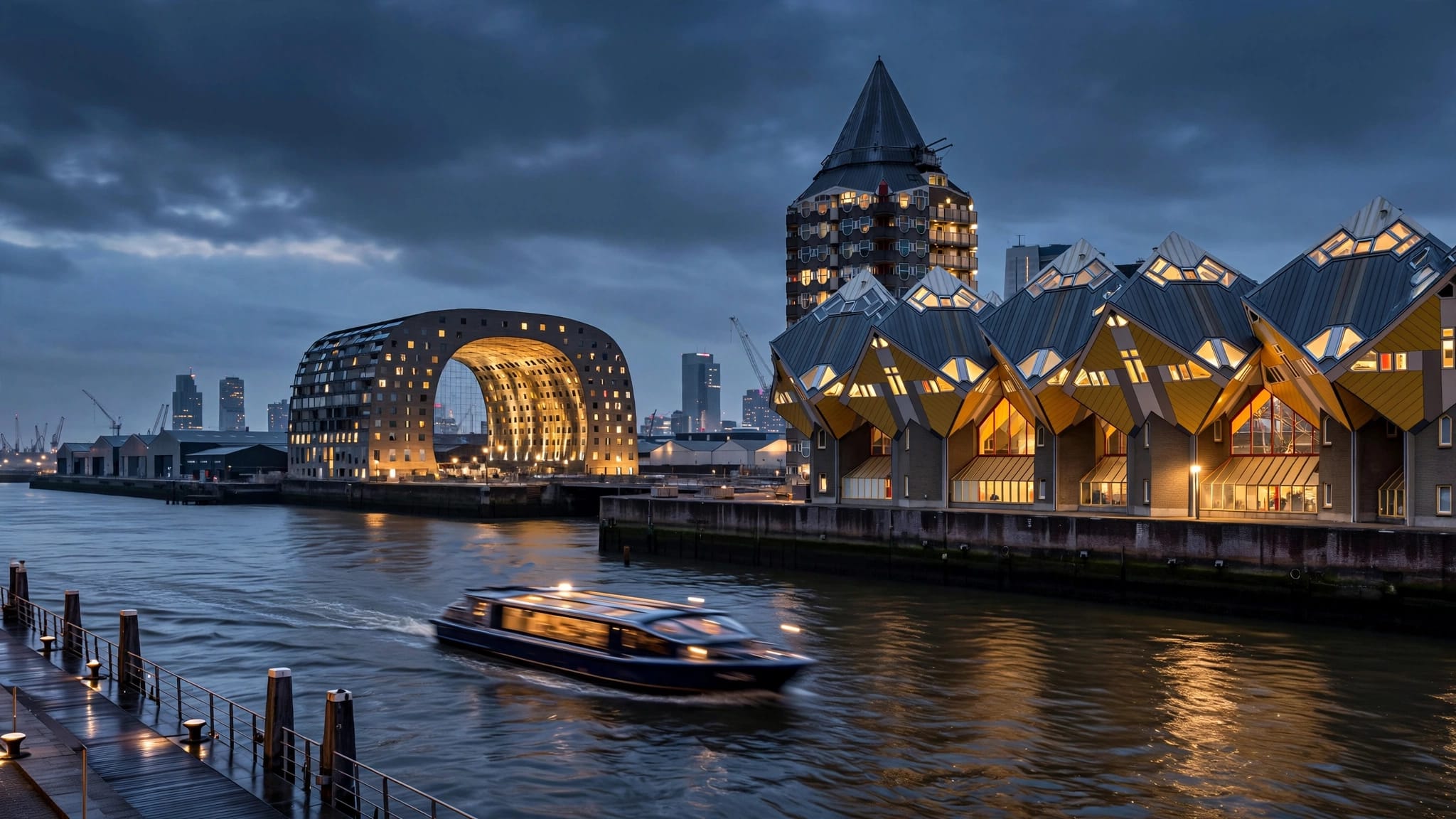
Begin at Markthal, close to Blaak station. The horseshoe-shaped building combines apartments, restaurants, and a covered food market under one enormous ceiling mural. Grab coffee, pastry, or a light breakfast here, but don’t turn the stop into a two-hour food crawl. You have a full day ahead.
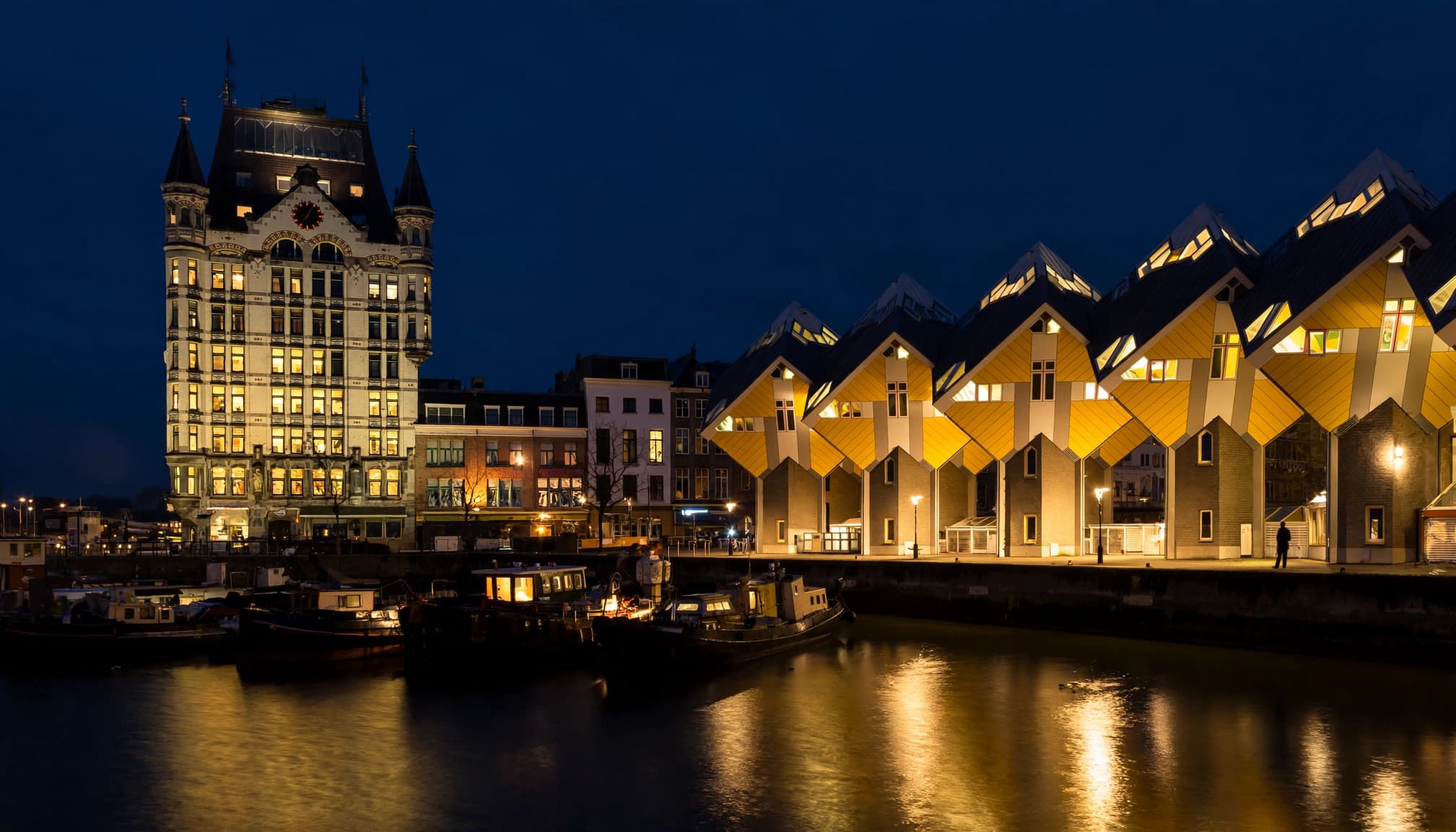
Walk next door to Piet Blom’s Cube Houses, completed in 1984. The 38 tilted yellow cubes look playful from the outside, then become much stranger once you understand that people actually live inside them.
The Kijk-Kubus show home at Overblaak 70 gives you a look inside. Go if unusual residential design interests you. Skip it if narrow stairs, low angles, and tight interiors will make the experience feel like work. The exterior tells most of the story, and the surrounding public space is free.
Afternoon: Oudehaven and the Maas
Continue toward Oudehaven, where the prewar Witte Huis rises beside the historic harbor. Built in 1898, it was one of Rotterdam’s earliest high-rises. It survived the 1940 bombing during World War II, which destroyed much of the city center.
This is Rotterdam at its best, harbor water, expressive modern buildings, and no attempt to make any of it match.
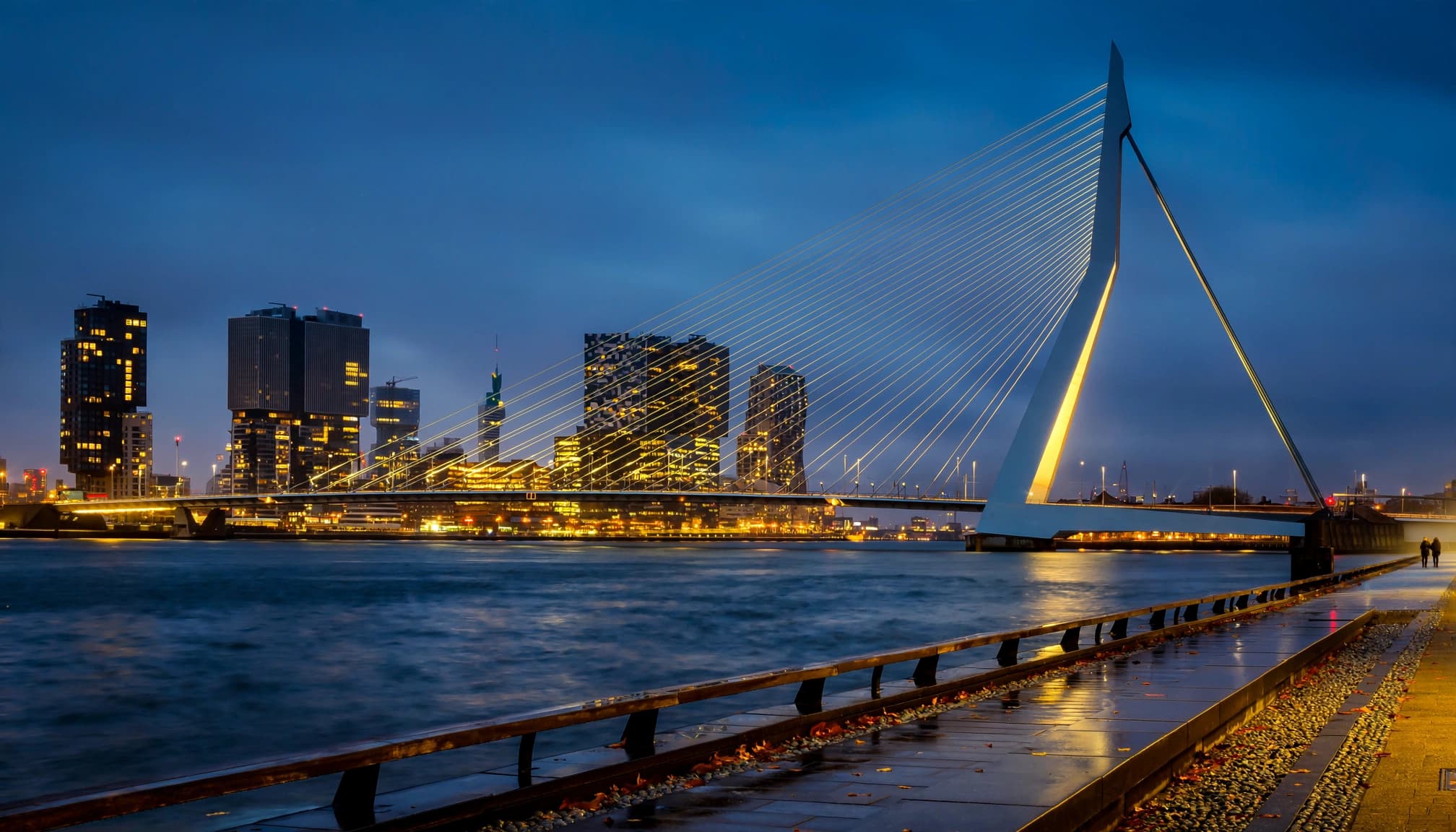
Later, make your way toward the Erasmusbrug. The white bridge, known locally as The Swan, frames the city without needing a long explanation. Walk part of it if the weather is good. The river breeze earns its place after an indoor morning.
Evening: Cross the River for a Better Finish
A water taxi is more than transport here. It is one of the few city rides that makes the journey part of the night. Rotterdam’s Water Taxi network has dozens of stops citywide; check the official site for current fares and booking options.
Book or request one for the move toward Kop van Zuid or across the river. You get skyline views, the Erasmusbrug from below, and a far better transition than another underground ride.
Day Two: Design, Museums, and a Proper Night Out
Day two should have a slower start. Rotterdam rewards energy, but it also rewards pacing. Don’t stack three major museums and call it culture.
Start With Coffee and Museumpark
Have breakfast at Lilith Coffee, then head toward Museumpark. The area offers a different architectural rhythm, with institutions, green space, and thoughtful design instead of harbor drama.
Depot Boijmans Van Beuningen is hard to miss. Its mirrored bowl reflects the city, sky, and people moving around it. Check the official Depot Boijmans Van Beuningen page for current opening hours and timed-entry rules before booking.
If art isn’t your priority, walk through Het Park instead and keep the afternoon loose. The Euromast is nearby if you want a wide skyline view. Check its official page for opening hours and weather-related viewing conditions. Don’t pay for a view of low cloud without checking visibility first.
Give Dinner Its Own Window
For dinner, move toward Witte de Withstraat. This is the right part of town when you want options without committing to a formal, drawn-out night. The street has bars, casual rooms, galleries, and enough movement to keep the energy up.
Book one proper dinner reservation. Don’t hold three options across town. Rotterdam looks manageable on a map, but tired feet and a late reservation can ruin a good meal fast. Check relevant venue pages for current opening hours before you go.
If you want something more casual, build the evening around small plates, natural wine, and a long table rather than chasing a famous dish. The city’s food scene is strongest when you follow a neighborhood, not a viral list.
Day Three: Delfshaven, Katendrecht, and the River’s Edge
Your final day should show Rotterdam’s contrast. The modern center is only one version of the city.
Morning: Let the Historic Quarter Feel Different
Take the tram or metro west toward Delfshaven. This historic pocket survived the wartime destruction that reshaped the center, and it feels almost like a separate Dutch city.
Brick bridges, canal-side warehouses, gabled facades, and small boats replace the steel-and-glass intensity of central Rotterdam. It is not a full-day destination. That is the point. Give it a slow morning, coffee, and time to walk without a hard route.
Delfshaven works best before lunch, when the light is softer and the streets still feel calm.
Afternoon: Katendrecht and Fenix
Return toward the river and head to Katendrecht. This former port neighborhood has a more creative, food-first feel than the center. It is the kind of place where lunch can slide into a drink without anyone checking the time.
Fenix Museum, the migration museum on the waterfront, is worth considering if the subject interests you. Before visiting, check the official 2026 website for the museum’s current name, ticketing details, and opening times.
The neighborhood’s former warehouses, river views, and changing industrial edges give the afternoon some texture. It is also a better place to slow down than trying to cram in one more headline attraction.
Where to Eat Without Turning the Trip Into a Reservation Spreadsheet
Rotterdam’s food culture has range, but not every meal needs to become a production. Think in layers: one memorable dinner, one market stop, one excellent breakfast, and room for whatever looks good.
Markthal is ideal for grazing, a snack, or a quick lunch. It isn’t where I’d plan your biggest meal. The space is the experience, and it can get busy.
For restaurant research close to your hotel, Rotterdam Tourism’s local restaurant listings are a useful starting point. Confirm menus, service times, booking policies, and recent reviews directly with the restaurant before you commit.
A few rules keep the food side of this Rotterdam itinerary on track:
- Keep dinner near your first bar, especially on Friday and Saturday nights.
- Book a rooftop or river-view table in advance if the view matters to you.
- Save one meal for Katendrecht, where the pace feels more local and less rushed.
- Leave a little white space for coffee, fries, a pastry, or a spontaneous drink.
The strongest meal isn’t always the one with the longest online waitlist. It’s the one that fits the night you want.
Rotterdam’s Late Bars and Live-Music Energy
Rotterdam doesn’t force you into one nightlife district. That’s good news if you want a night with some shape to it.
Start With Cocktails, Not a Bar Crawl
Witte de Withstraat is the easy opening for drinks, particularly if you want to feel the city warming up around you. Arrive early enough to get a table, then decide whether you want a second stop or a full night out.
For cocktails, Amehoela is a popular city-center option. The Rumah is another good call if rum is your thing and you want a smaller neighborhood bar feel.
Kop van Zuid has the skyline version of the night. A rooftop drink near the Erasmus Bridge is worth considering once, especially at sunset. Check current availability before reserving in warmer months, since these tables can disappear early.
Put Live Music on the Calendar First
If music matters, treat the show as the anchor. Check the official calendars for Bird, Rotown, Annabel, and Vessel 11 before making dinner reservations.
Programs, entry rules, and opening hours can change. Confirm the current details directly with the venue before finalizing your plans.
Vessel 11 is especially fun because it is a bright-red lightship moored near Wijnhaven. It has food, drinks, and a calendar that can include live music and events. Check the current lineup before you go.
This is the right rhythm: dinner nearby, one intentional bar, a confirmed show or DJ set, then a direct ride home. You don’t need to see every neighborhood in one night.
For travelers planning a birthday, group weekend, or music-centered city break, custom day-by-day itineraries can bring hotel location, reservations, venue timing, and late-night transport into one plan.
Practical Details That Protect the Trip
Rotterdam is easy once small friction is handled before it becomes annoying. Check current RET or NS guidance, then load payment options, save your hotel address, and keep a portable charger with you.
Water taxis are great for a memorable crossing, but they’re on-demand transport, not a casual hop-on ferry. Service, pickup, payment requirements, and availability can vary. Review the booking and payment details before the trip, especially if you’re traveling as a group.
Spring and early autumn are the sweet spots. You get outdoor tables, better walking weather, and fewer peak-summer crowds. Winter works too if architecture, museums, and cocktail bars are the point, but book a hotel with a comfortable lobby or bar. Dark afternoons arrive early.
A quick spending guide helps set expectations:
| Trip Style | Best Use of Your Budget | Where Not to Cut Corners |
|---|---|---|
| Value-focused | Market food, transit, neighborhood walks | Central hotel location |
| Food-first | One destination dinner and strong coffee | Reservations and late transport |
| Design-led | Museum tickets, water taxi, rooftop drinks | A well-located hotel with good sleep |
Don’t overpay for a distant hotel with extra square footage. A smaller room near your dinners and bars gives you more of Rotterdam when it counts.
Frequently Asked Questions
Is three days enough for Rotterdam?
Three days is enough to see Rotterdam’s major architectural landmarks while still leaving time for museums, historic neighborhoods, and late evenings. The key is to group each day by area instead of moving across the city for every stop.
Where should I stay in Rotterdam?
The city center, Witte de Withstraat, and the Museumpark edge are the easiest choices for a first visit. Choose Kop van Zuid if you prefer river views and newer hotels, but expect late-night wandering to require a little more planning.
Is Rotterdam easy to explore without a car?
Yes. Walk between nearby sights, then use RET trams and metro for cross-city routes; taxis or ride-shares are useful after a long dinner or late show. A water taxi is worth considering when you want a memorable river crossing rather than just the fastest route.
Which neighborhoods should I include in a three-day itinerary?
Start with Blaak, Oudehaven, and the Maas for Rotterdam’s modern architecture, then give Museumpark and Witte de Withstraat a full day. Finish with the historic atmosphere of Delfshaven and the food, waterfront, and warehouse character of Katendrecht.
Do I need to book restaurants and nightlife in advance?
Book one proper dinner, especially on Friday or Saturday, and reserve rooftop or river-view tables if the setting matters to you. If live music is important, check the current calendars for venues such as Bird, Rotown, Annabel, and Vessel 11 before fixing your dinner plans.
The Rotterdam You Will Remember
The best Rotterdam itinerary is not a race between landmarks. It is a city break built around momentum, a market hall in the morning, river light at dusk, a dinner worth lingering over, and a late bar that feels like the right ending.
Give the architecture your attention. Keep the neighborhoods connected. Leave enough space for a second drink, an unexpected live set, and a walk home while the city is still glowing.