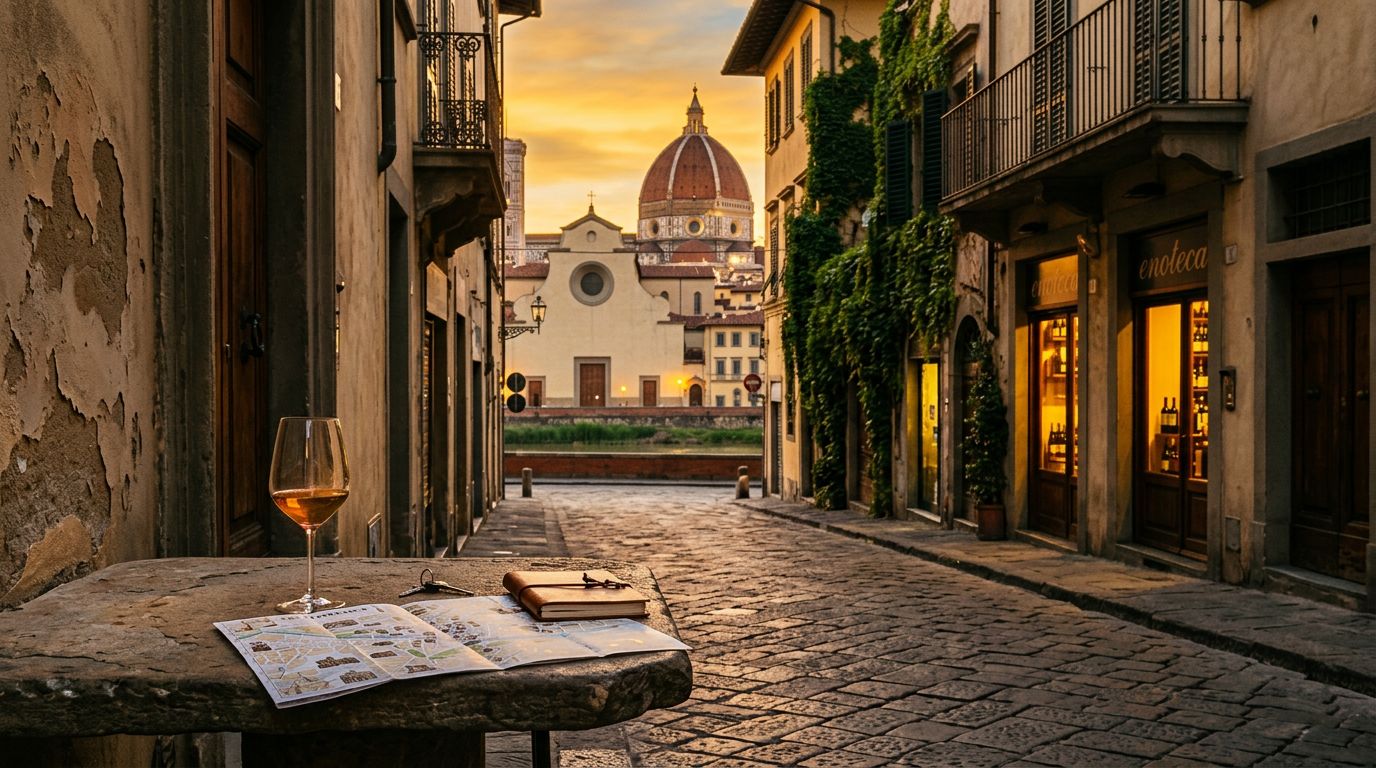
Choosing where to stay in Florence is a decision that defines your entire trip, yet it is surprisingly easy to get wrong. You might book a polished hotel near the Duomo, only to spend every night crossing the Arno River for the authentic wine bars and dinners you actually wanted to experience.
For a trip built around long walks, serious bottles of wine, and evenings that do not end in a taxi queue, where you stay in Florence matters more than your sightseeing list. Pick the neighborhood that fits your nights, not just the one with the most famous view.
The right base keeps your mornings loose and your final glass of wine close to home.
Key Takeaways
- Choosing where to stay in Florence depends on your travel style, but Oltrarno remains the strongest all-around choice for wine-first travelers who want Santo Spirito, San Frediano, and the river within an easy walk.
- Sant’Ambrogio and Santa Croce work well for market mornings, local energy, and later wine bars, offering a more authentic atmosphere while remaining within reach of the San Marco neighborhood.
- Centro Storico is the right pick for a first visit to the historic center for landmark access, but choose a side street rather than a room facing the busiest squares.
- Santa Maria Novella is the most practical move for easy access to the train station, offering polished hotels and quick, convenient travel into the heart of the city.
- A cheaper room far outside the historic center often stops being cheap after late taxi rides, tired walks, and missed dinner reservations start adding up.
What Makes a Florence Base Work
Florence rewards a tight radius. The streets are made for walking, and the best parts of the city happen between major sights like the Uffizi Gallery or the Accademia Gallery. You might find a coffee bar with locals pressed against the counter, a hidden wine window on a back street, or a small piazza where you linger because the evening is simply perfect.
The issue is not distance. It is friction.
A museum entry runs late, or your lunch becomes a long one, as it should. Suddenly, the wine bar you saved is 35 minutes away on foot, and dinner sits on the other side of the river. That is how a relaxed Tuscan night turns into a struggle with logistics.
Build your stay around the nights you want. If your plans include cellar door style enotecas, Santo Spirito dinners, and a scenic stroll over the Ponte Vecchio after dark, sleep in or near Oltrarno. If you care more about the Duomo and an easy first visit, stay central but avoid the loudest streets.
A local guide to the best neighborhoods in Florence is useful for comparing your options. However, your final choice should come down to your personal rhythm: early market mornings, museum heavy afternoons, or late tables within walking distance of where you keep your luggage.
One anchor, one neighborhood cluster, one dinner worth showing up for. Florence doesn’t need more.
Oltrarno for Santo Spirito Nights and Better Wine Bars
If your Florence trip tilts food-first, Oltrarno is where to stay. Oltrarno sits south of the Arno River and includes the vibrant Santo Spirito, San Frediano, the area around the Pitti Palace, and quieter residential streets that still feel lived-in after the day-trippers leave.
This is where the city gets looser. You can spend an afternoon exploring the Pitti Palace or the Boboli Gardens, then drift across the Arno River toward Via Maggio, Borgo San Frediano, or Piazza Santo Spirito without needing to reset your whole day.
Wine is the reason to stay here. Le Volpi e l’Uva, just over the river near Ponte Vecchio, is a serious opening move for regional bottles and small plates. It is closed Sundays, and its limited seating goes quickly. Show up near opening rather than hoping a table appears at 8:30 p.m.
Il Santino on Via di Santo Spirito has the kind of tiny, warm room that makes you commit to one more glass. Enoteca Spontanea, on Via Maggio, is a sharper late-afternoon choice if you want natural-leaning bottles and hot food once the evening starts.
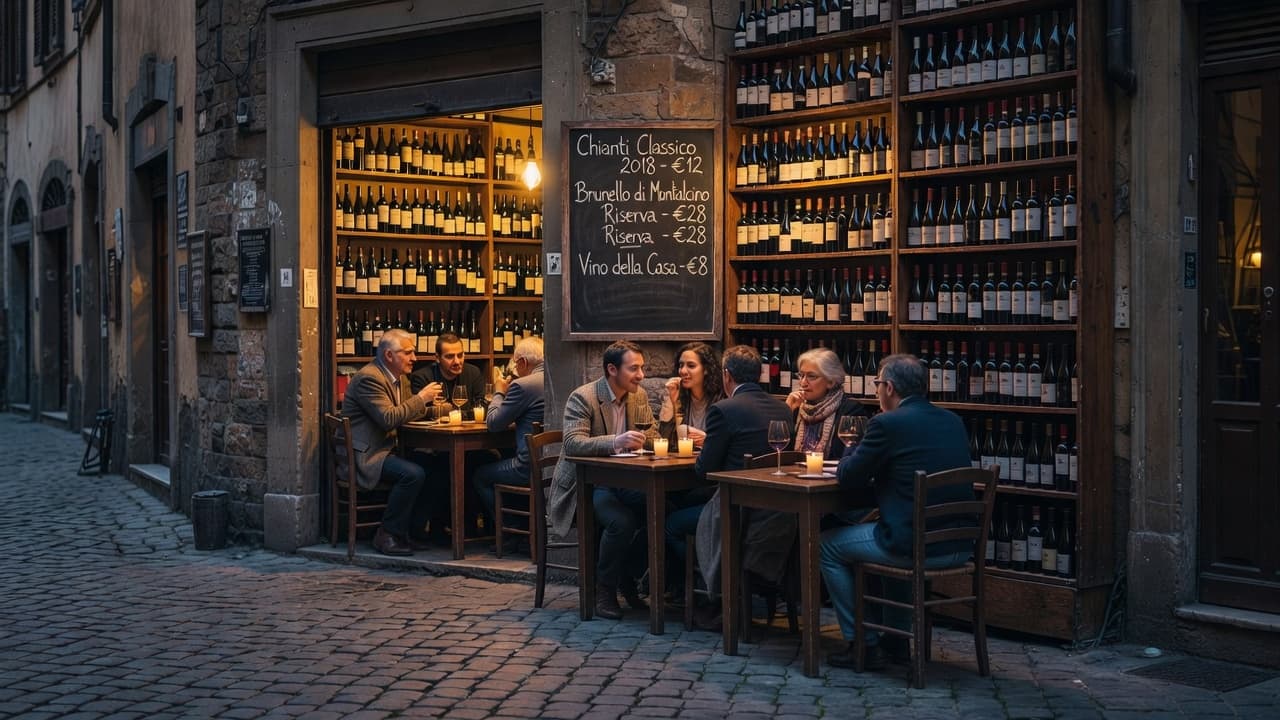
Santo Spirito has noise, especially on weekends. That is the point for some travelers. If you like energy but value sleep, stay five to 10 minutes away from the piazza instead of directly on it. The streets around Via Maggio, Borgo Tegolaio, and the Pitti side of the neighborhood give you a softer return home.
SoprArno Suites and similar boutique hotels work for travelers who want design without a formal hotel mood. Hotel Lungarno is the polished splurge near Ponte Santa Trinita, with the river and central Florence right outside. AdAstra suits a slower, more residential version of Oltrarno, though it is farther from the main sights.
Oltrarno is not the cheapest option. It is the option that buys back your evenings.
Sant’Ambrogio and Santa Croce for Market Mornings
Sant’Ambrogio is the better call if you want Florence with more local movement and less postcard pressure. It sits east of the center, close enough to walk everywhere, but it does not feel like every street was built for a guided tour. While the area is rich in Renaissance history and stunning architecture, it offers a more authentic atmosphere that appeals to those who want to avoid the intensity of the tourist-heavy districts.
Start with the Sant’Ambrogio market area. Grab breakfast, browse food stalls, then walk toward Santa Croce, the Bargello, or the river. This side of Florence works at street speed. You do not need to force it.
The wine scene has range here, too. Vineria Sonora on Via degli Alfani is a strong late-night option, with a producer-focused list and hours that often run until 1 a.m. It is closed Mondays, so do not make it your only plan. Nota di Vino near Piazza Santa Croce is an easy stop for a glass and a bottle to take back to your room.
Santa Croce itself is beautiful and well placed, though the streets closest to the basilica can feel busy. Stay a few blocks north or east if you want a calmer sleep. Hotel Bernini Palace brings old-school grandeur near the center, while Hotel Orto de’ Medici gives you a quieter garden setting tucked away in the San Marco district between Sant’Ambrogio and the city center.
This is also a smart base for travelers who want an active evening without a overwhelming nightlife scene. You can have dinner near Sant’Ambrogio, get wine at Vineria Sonora, and enjoy a pleasant stroll home that is within comfortable walking distance.
For first-time visitors seeking another perspective before booking, this Florence area comparison breaks down the trade-offs for those deciding where to base their trip.
Centro Storico for First Visits, Santa Maria Novella for Ease
The historic center is the obvious answer for a first trip. Staying in the Centro Storico keeps you within walking distance of the Duomo, Piazza della Signoria, the Uffizi Gallery, and the river. Morning walks are effortless because every turn through the historic center produces remarkable Renaissance architecture, a carved doorway, a chapel, or a crowded espresso counter. You are also perfectly positioned to visit the Accademia Gallery or spend your mornings exploring the stalls at San Lorenzo and the food scene at the Mercato Centrale.
Still, do not confuse central with effortless. Rooms facing Piazza del Duomo, Via dei Calzaiuoli, or the busiest lanes around Piazza della Signoria can be loud well after dinner. Ask for an inward facing room, confirmed air conditioning, and current comments about soundproofing.
Hotel Calimala is a good Centro Storico pick if you want a modern room and rooftop energy. Hotel Savoy is for the traveler who wants classic luxury at the heart of the action. The Brunelleschi Hotel works when the Duomo matters more than a low key neighborhood feel.
Wine bars here can be good, but you need to be selective. La Prosciutteria on Via dei Neri is easy for a casual wine and cured meat stop, but do not build the whole night around the busiest tourist lanes. Cross the river or walk toward Sant Ambrogio when you want the room to feel less performative.
Santa Maria Novella is the more operational choice. It is ideal if you arrive by train at the main station, have an early departure, or want larger luxury hotels without sacrificing access to the center. The Place Firenze and Hotel Santa Maria Novella both put you near the train station while keeping the historic core within a short walk.
Here is the honest comparison:
| Area | Best for | Night feel |
|---|---|---|
| Oltrarno | Wine bars, dinners, creative streets | Social, romantic, lived-in |
| Sant’Ambrogio | Markets, local food, later drinks | Relaxed, younger, less staged |
| Centro Storico | First visits and landmark access | Busy, beautiful, tourist-heavy |
| Santa Maria Novella | Train logistics and refined hotels | Convenient, calmer after dark |
A broader Florence hotel and neighborhood guide can help if you are comparing individual properties. But do not let a five star lobby outweigh a bad location for your actual plans.
Book the Room Like the Night Matters
Florence has a high number of beautiful rooms with hidden drawbacks. While you might dream of a room with a view, it can sometimes mean enduring constant traffic noise. A historic building often comes with the charm of antiquity but the lack of an elevator, and staying too close to a famous piazza can mean dealing with scooters, glass recycling, and the boisterous energy of the local nightlife outside your window at 2 a.m.
Before you book, check recent reviews for a few practical details:
- Confirm whether your room faces a street, a quiet interior courtyard, or a busy piazza.
- Ask about air conditioning if you are visiting from late spring through early autumn.
- Check the lift situation if you have heavy luggage or mobility concerns.
- Save your arrival plan before landing, especially if your hotel is inside a restricted-traffic zone.
- Keep at least one dinner reservation within walking distance of your hotel for the first night to settle in easily.
Florence is small enough to walk almost everywhere. Use taxis late in the evening, when your feet are done and your second glass of wine has made the walk back to your hotel feel longer than it is. The city does not need a complicated transit plan. It needs a good sequence.
Frequently Asked Questions
Is it necessary to stay in the historic center for a first visit?
While the Centro Storico provides immediate access to major landmarks like the Duomo and Uffizi, it is not strictly necessary. You can stay in neighborhoods like Oltrarno or Sant’Ambrogio and still reach the major sites within a short, scenic walk while enjoying a much more local atmosphere.
Which neighborhood is best for a quiet night’s sleep?
If you prioritize a peaceful environment, avoid hotels directly facing major piazzas or high-traffic tourist streets. Instead, look for properties in the residential pockets of Oltrarno or the quieter streets of Sant’Ambrogio, and always request an inward-facing room to minimize noise from the street.
Is renting a car a good idea for exploring Florence?
It is generally recommended to avoid renting a car if you are staying within the city, as historic centers are subject to strict traffic restrictions and parking is both limited and expensive. Florence is highly walkable, and the best way to navigate between wine bars, markets, and galleries is on foot or by using local taxis when necessary.
Final Thoughts
The right Florence hotel puts the best parts of the city within your reach. Ideally, you should be able to walk to a proper dinner, discover a bottle of wine with real character, and get back to your accommodation without needing to study a map under the streetlights.
For most wine-first travelers, Oltrarno is the strongest choice, as it places you within walking distance of the city’s most authentic enotecas. Sant’Ambrogio serves as a smart alternative when market life and a more local pace are your priorities. By choosing between these best neighborhoods to suit your evening style, you ensure that Florence takes care of the rest.
If your Italian food tour continues north, our Bologna guide covers where to stay for aperitivo, pasta, and late nights in Emilia-Romagna.